
A Month in Chile and a Clearer Path Forward
By Shayna Orens, DVM ’27
I was still in pajamas when I ran down to the beach.
Drone in one hand, a drybag slung over my shoulder, I picked my way over slick, uneven rocks from the cabin to the shoreline. Inside the bag: sterile petri dishes, swabs and tubes, zip ties, alcohol wipes, gloves—packed in anticipation of this exact moment. A spare battery, memory cards, an anemometer to check wind speed. Everything was ready to go.
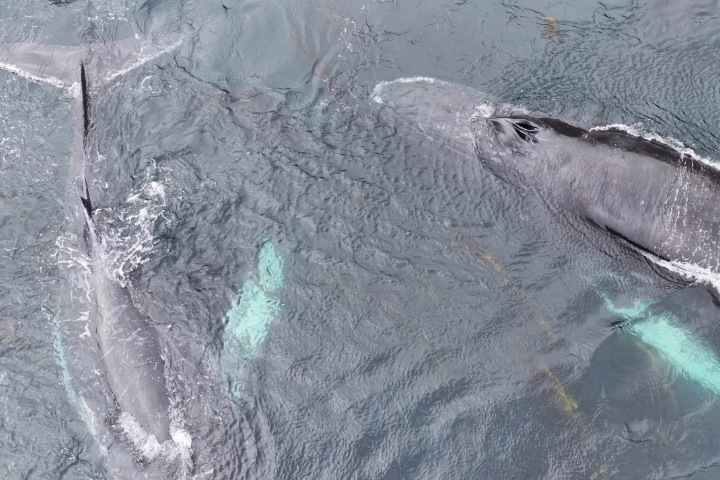
The call had come moments earlier over the radio. During early morning observations of the South American fur seal (Arctocephalus australis) rookery, two humpback whales were seen moving close to shore.
I jumped out of bed when I heard the radio.
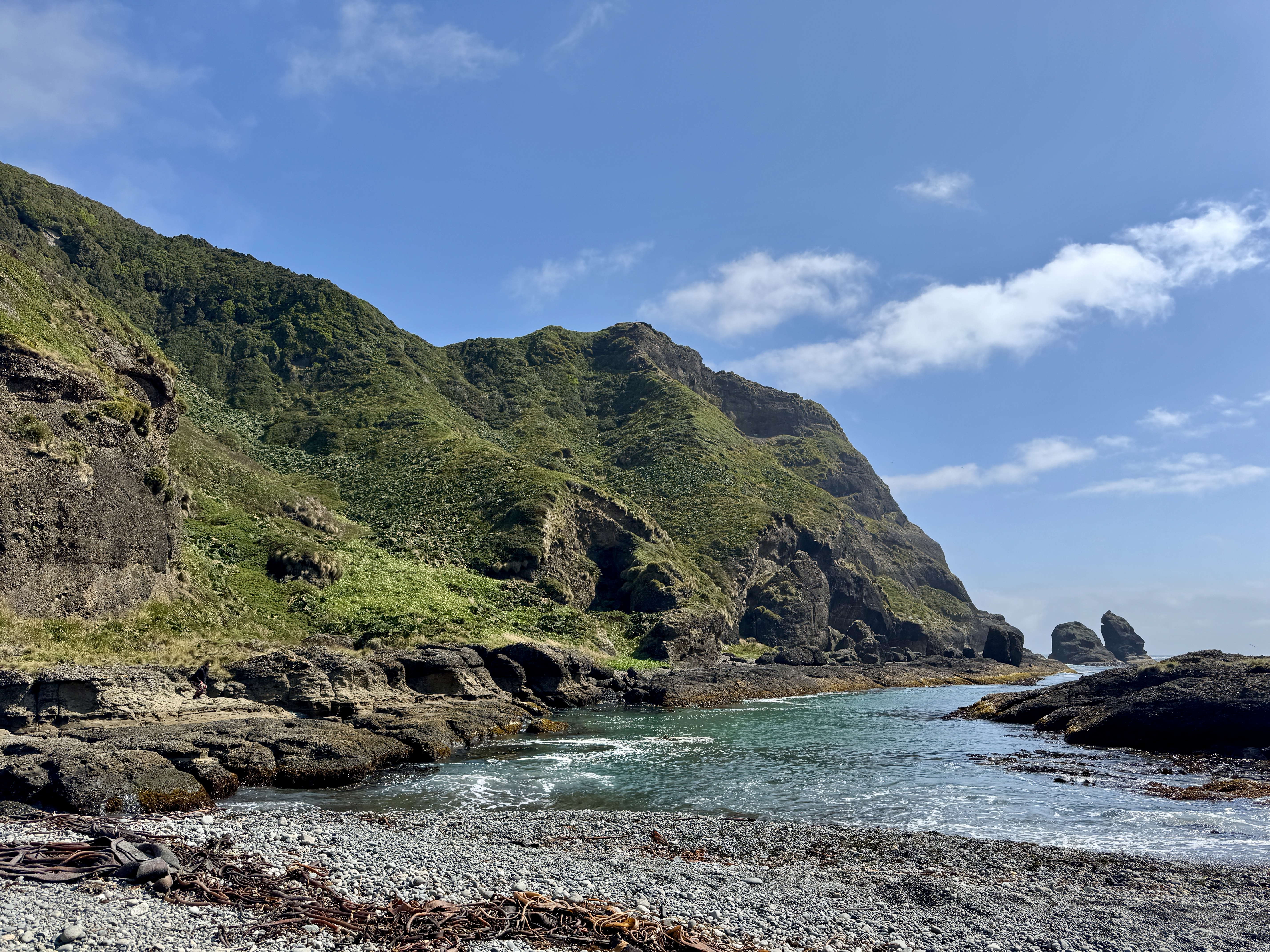
The sun was just beginning to rise over the steep, green cliffs, casting a soft light across the water, with kelp drifting just below the surface. The winds had died down, and the ocean was unusually calm. The whales were remarkably close.
It is deceiving how gently a 40-ton creature can move through these waters.
By the time I reached the beach, the rest of the team was ready. Fur seals called from the rookery just beyond, and offshore, two humpback whales surfaced in slow arcs. Within minutes, our sampling drone, MARVL (Marine Airborne Respiratory Virus Locator), was ready to launch.
This time, it might just work.
The drone lifted into the air, moving out over the water as the team helped me track the whales’ movements. When the moment came, we carefully positioned it over a surfacing whale to collect a blow sample.
I couldn’t believe it was happening.
Though this moment came and went quickly, it represented months of planning, design, and uncertainty.
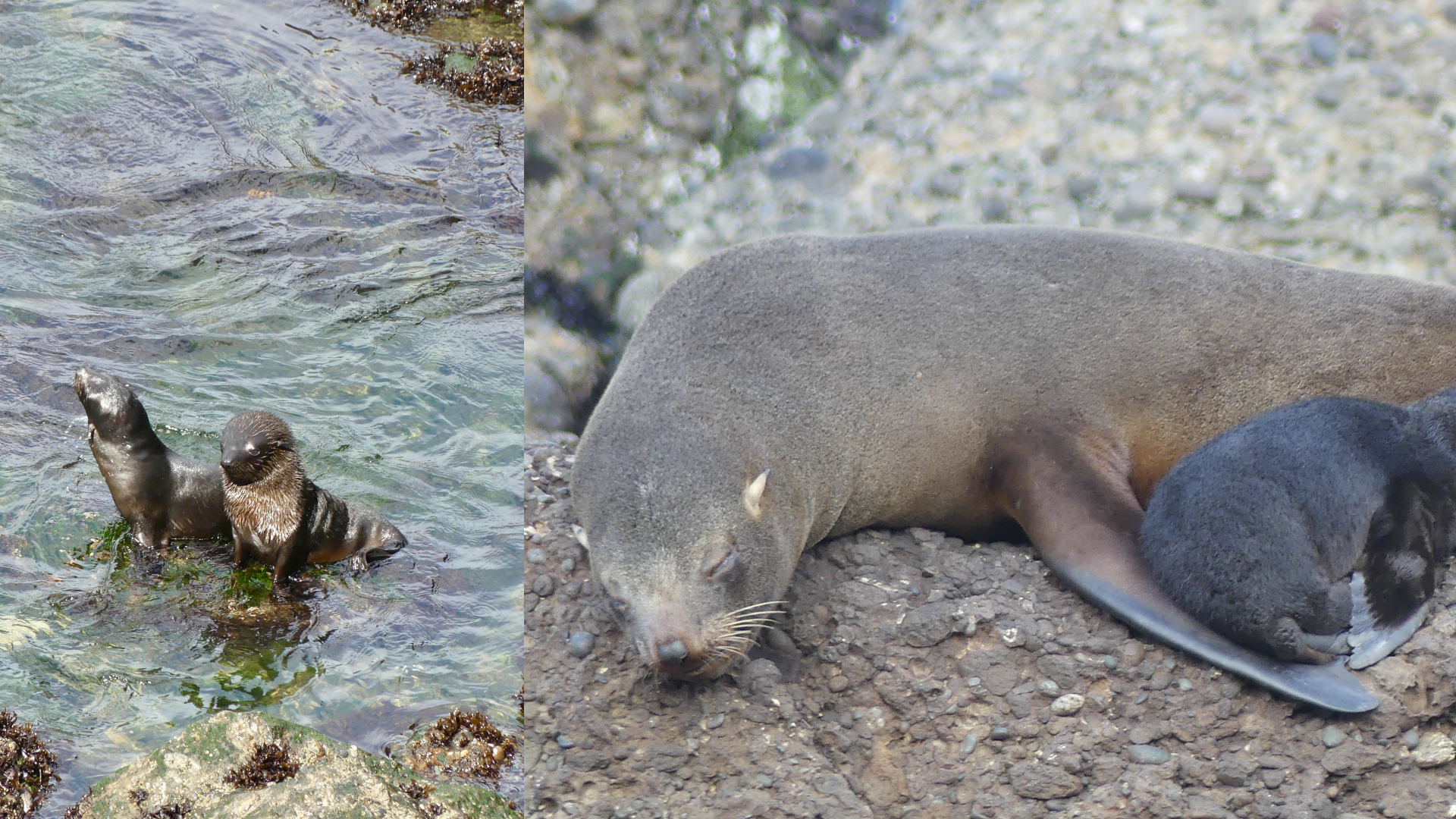
It felt surreal to be on this beautiful and biodiverse island in Patagonia, in awe of these creatures and the mysteries they hold about life and health in our oceans. These marine megafauna migrate among some of the last truly wild places on Earth. And I have the privilege of living at a time when technology allows us to learn about these animals and their health in new, less disruptive ways.
A privilege. I found myself returning to this word repeatedly. Being in the presence of so much life and in a place so vast and deeply important, I felt an immense responsibility and a profound obligation to protect these creatures and the planet we share with them. And beneath that, a sort of clarity, a sense that this is the work I need to keep doing.
My fieldwork on southern Chile’s remote Guafo Island, with four Navy officers as its only human inhabitants, began months earlier in the form of project design, logistics planning, and permit applications. Preparing for work in a remote marine ecosystem meant coordinating international travel, organizing and waterproofing supplies, and building a sampling strategy that could realistically function under unpredictable field conditions.
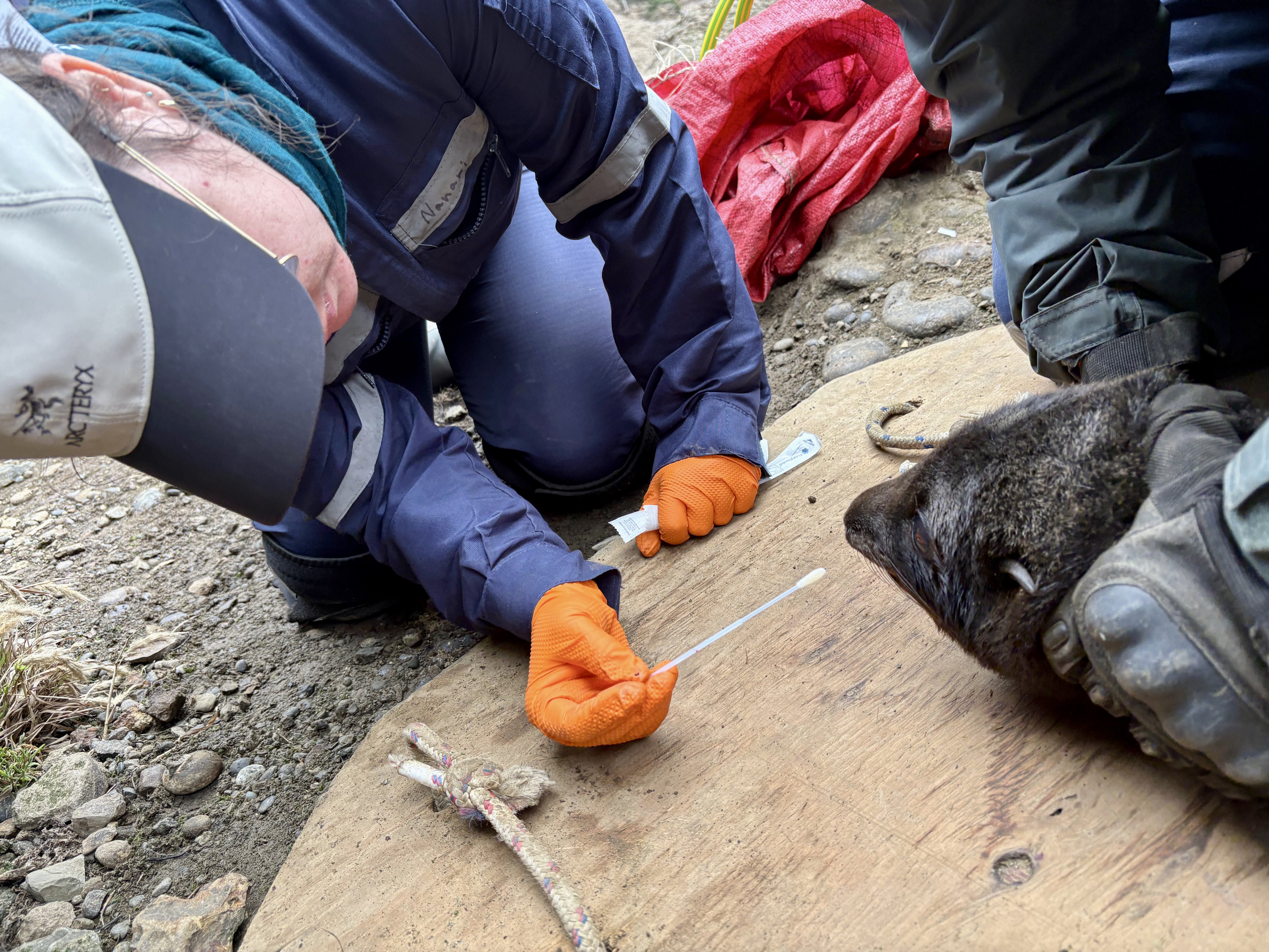
All of the planning was centered around one goal: evaluating less invasive sampling approaches for marine mammal pathogen surveillance. This included both pinniped swabbing protocols and a drone-based system designed to collect cetacean blow (what whales exhale through their blowholes). In the lab, we can evaluate how these different types of samples perform for pathogen detection. The broader goal is to inform scalable surveillance strategies across species.
The drone system required extensive collaboration. I worked with experts from the SeaDoc Society and San Diego Zoo Wildlife Alliance to design a functional sampling device that could be mounted onto a drone. Cornell engineering students at the Rapid Prototyping Lab helped me 3D print an initial prototype. The goal was to create something minimally invasive, field-friendly, and capable of collecting samples suitable for downstream molecular diagnostics. Much of that process involved working through constraints on paper without knowing exactly how those decisions would translate in the field.
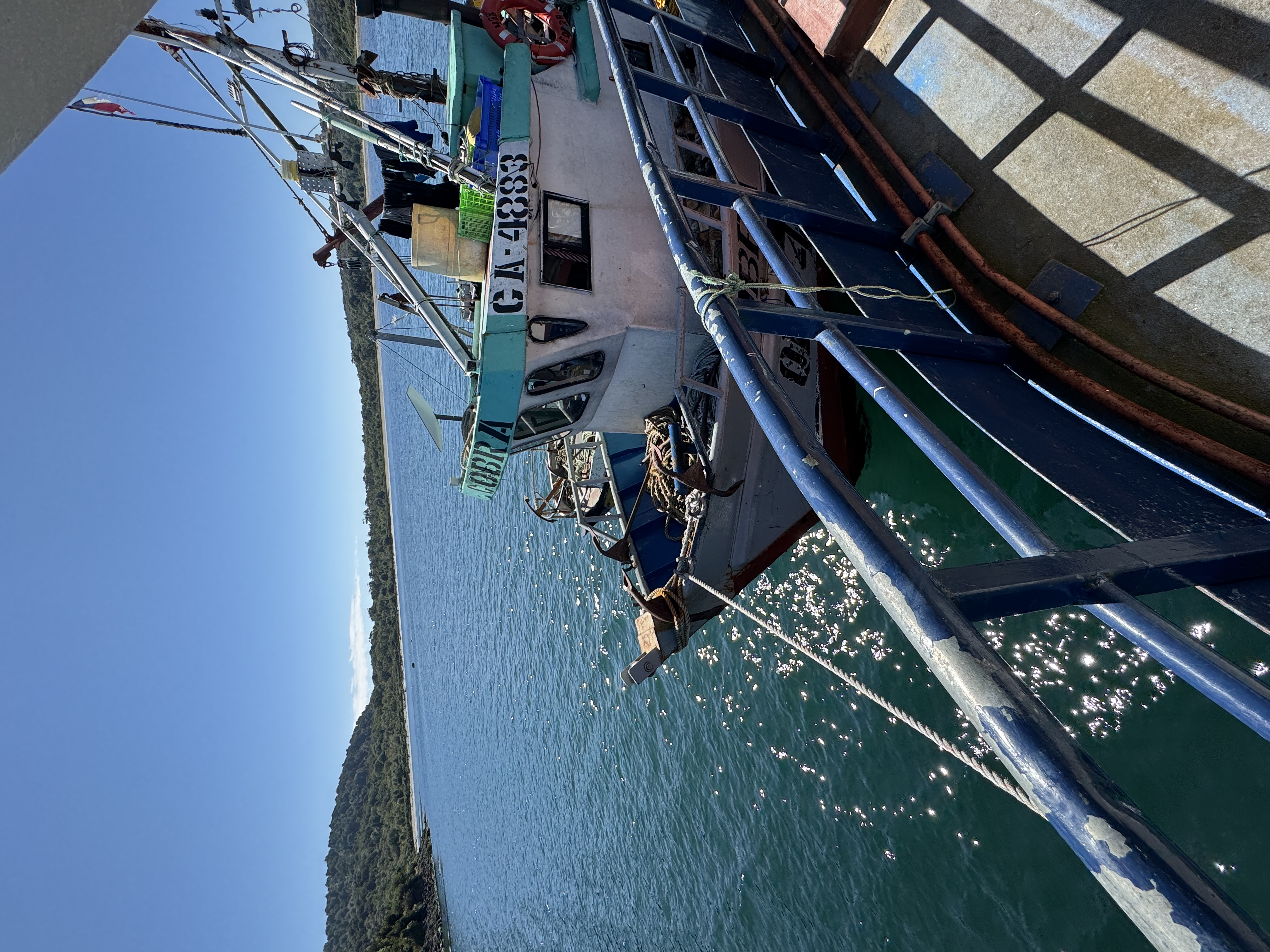
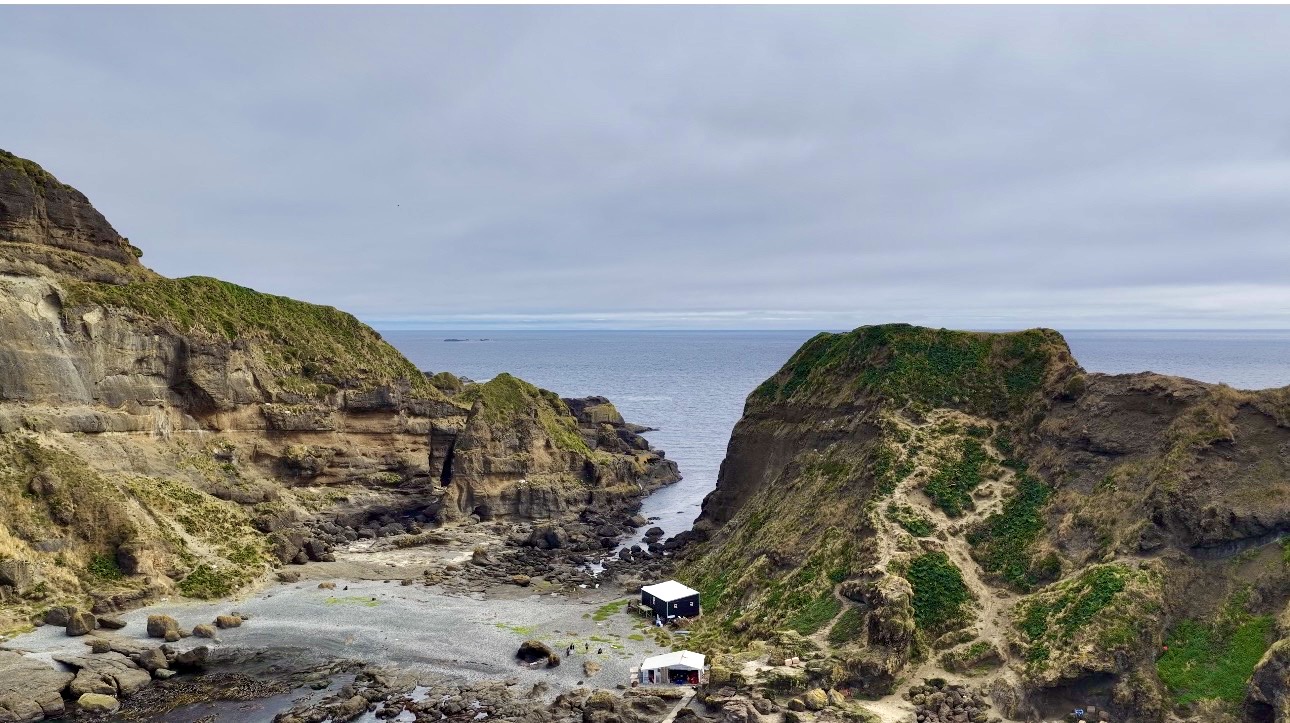
Getting to Guafo underscored what it takes to test ideas like this. Traveling from upstate New York involved multiple flights, long drives, and a final 9-hour boat trip to an island that is both isolated and intensely alive. The landscape is striking: rugged cliffs, dense fur seal colonies, seabirds overhead, and a coastline always in motion. It’s a place where research is dictated as much by the environment as by the study design.
And in the field, not everything works the first time.
Earlier in the trip, we had another call over the radio: a whale was spotted along the coastline. We moved quickly, setting up a launch site on the beach with the same sense of urgency. But once we assessed the conditions, it became clear the whale was too far offshore. Attempting a flight would have pushed the limits of the drone. I made the decision not to sample.
As exciting as it is to collect samples as a researcher, it is also crucial to know when not to do so.
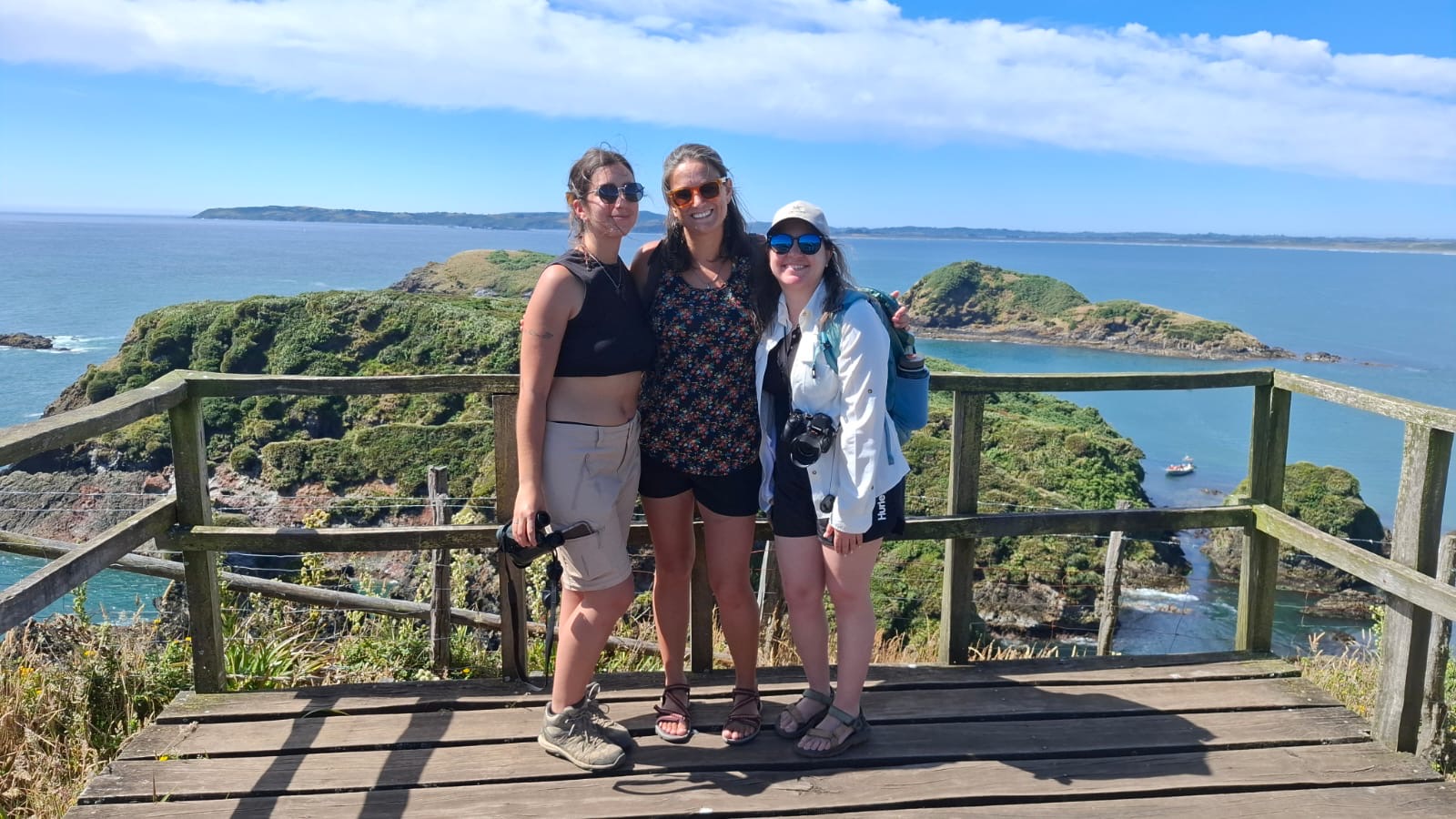
What made my work possible was the team of veterinarians and biologists that make up Guafo Science, a group that has been working in this ecosystem for over 20 years. I was surrounded by researchers and veterinarians who brought extensive experience in marine mammal health and field logistics, but who were equally committed to mentorship. They created space for me to maintain ownership of my project while offering the guidance needed to refine both my technical approach and scientific thinking.
Working in an international, interdisciplinary environment, and often in my second language of Spanish, also shaped how I approached collaboration. It showed me the importance of communication, adaptability, and trust when working across disciplines and cultures.
Looking back, that morning on the beach stands out, and not just because it worked. Everything came together that day: all the planning, the incredible collaboration, my team’s willingness to adjust in real time, and seeing the remarkable scenery of the island’s coastline from a new vantage point.
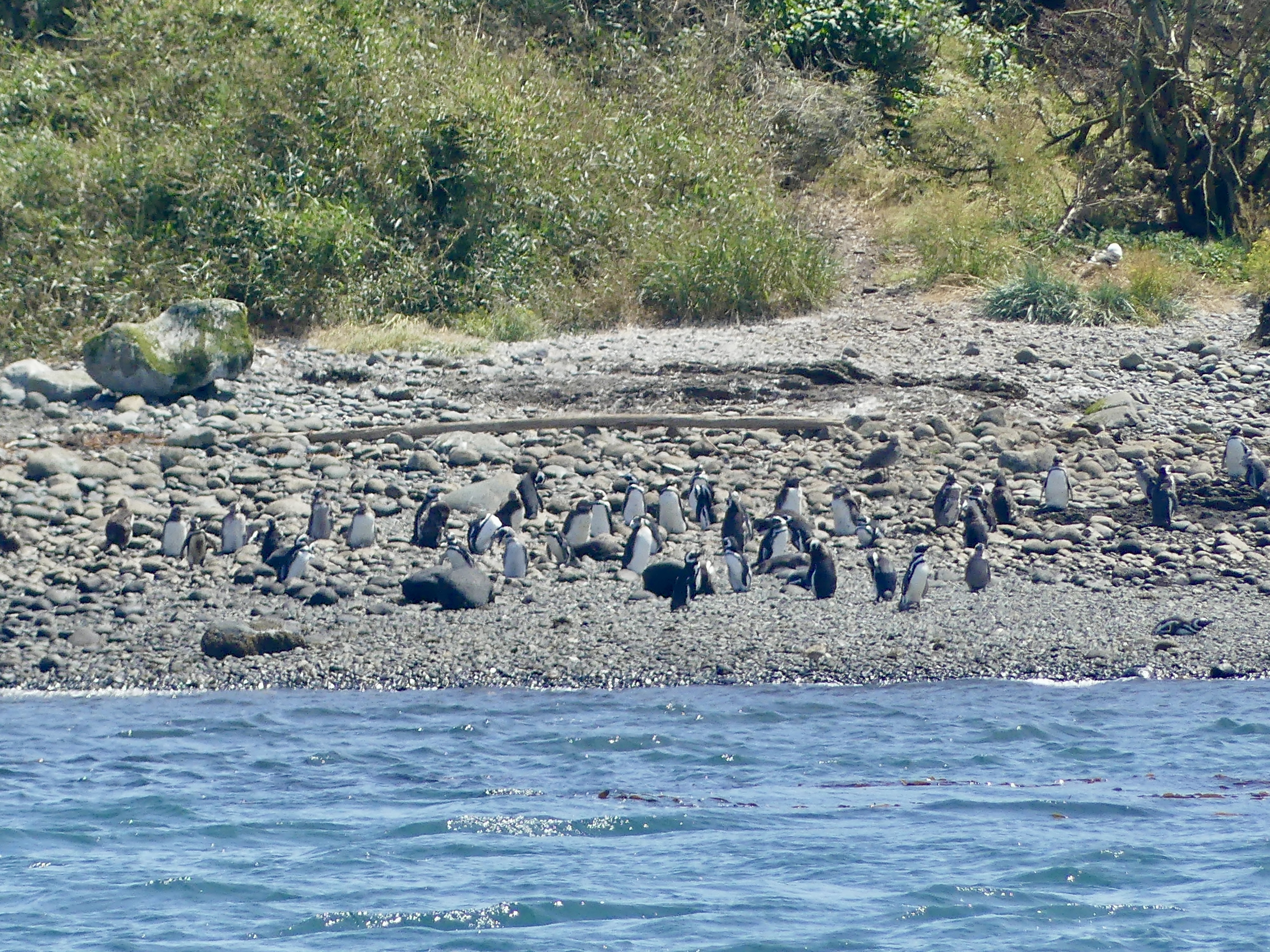
The month I spent in Chile brought together the different pieces of my training in a way that felt both challenging and clarifying. It showed me what it looks like to integrate clinical veterinary medicine with field-based research and pathogen surveillance, and it strengthened my commitment to building a career at that intersection.
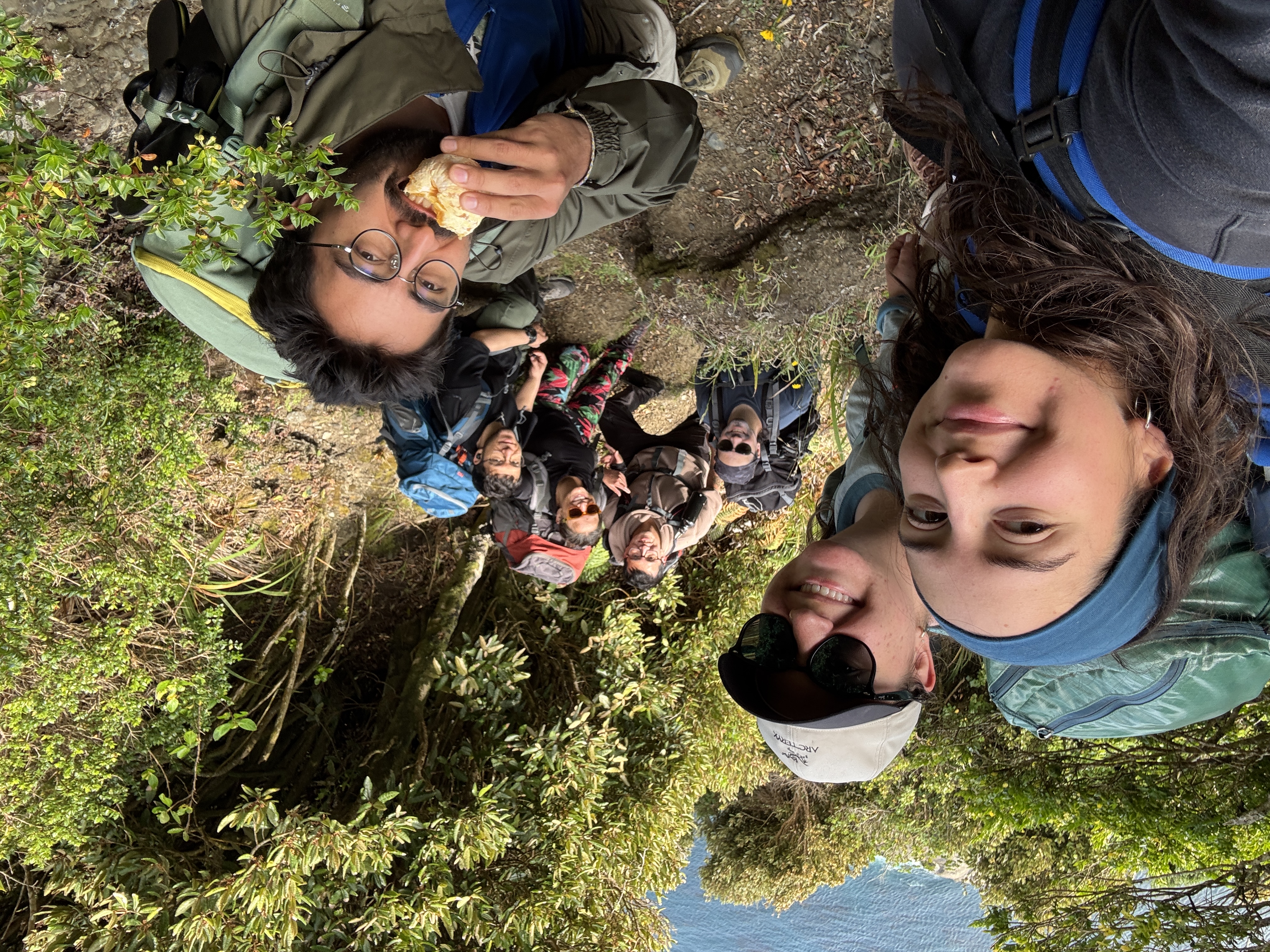
I am deeply grateful to the mentors, collaborators, and organizations, including the Cornell K. Lisa Yang Center for Wildlife Health, that made this formative experience possible.
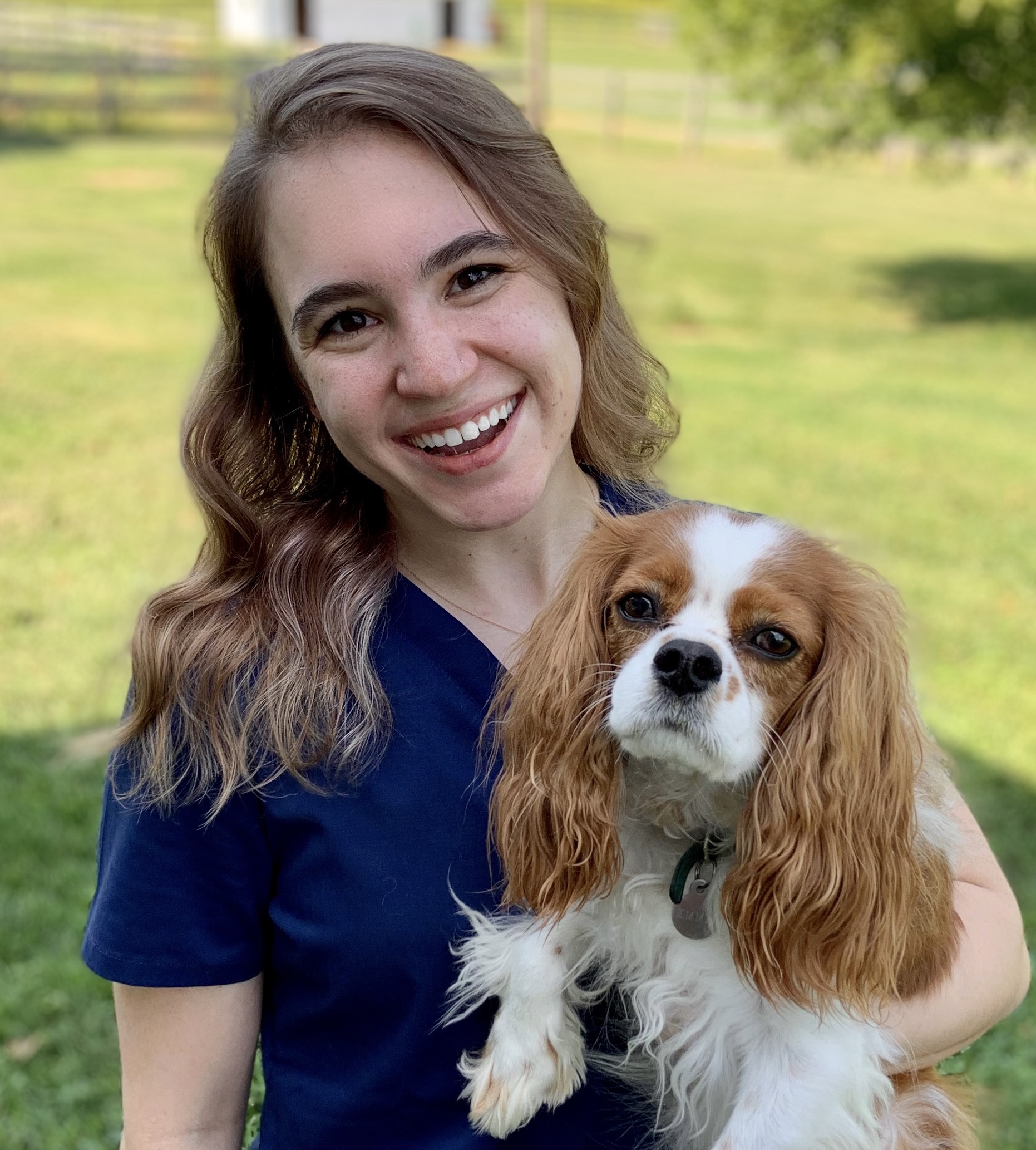
Shayna Orens, Class of 2027, is a DVM student at Cornell University’s College of Veterinary Medicine. She holds a bachelor’s degree in political science and sustainable development from Columbia University and a master’s degree in public policy from the University of Southern California. Shayna aspires to be a leader in the field of One Health. She seeks to bridge the social sciences with veterinary medicine by working at the intersection of clinical medicine, epidemiology, conservation, and public health. Shayna’s clinical interests are currently in zoo and wildlife medicine, neurology, and behavior.
Photos provided by Shayna Orens.
Please consider giving to the Cornell Yang Center for Wildlife Health Student Support Fund to help provide more hands-on experiential learning opportunities for students passionate about wildlife health and conservation.