Immersed in Wildlife Medicine at the Clinic for the Rehabilitation of Wildlife (CROW)
By Amy Yang, DVM '27
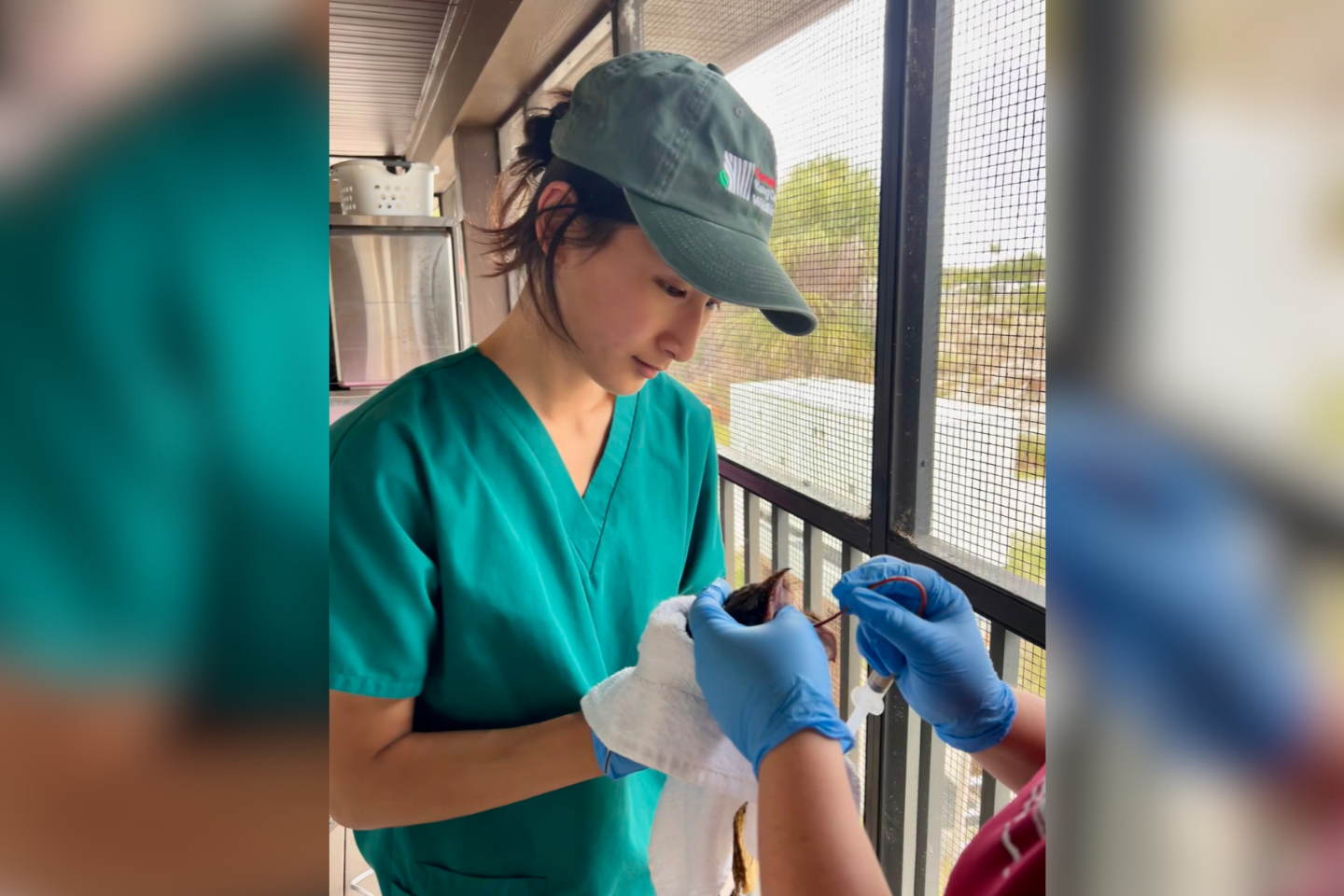
Thanks to the Cornell K Lisa Yang Center for Wildlife Health Student Support Fund, I spent four incredible weeks externing at the Clinic for the Rehabilitation of Wildlife (CROW) in Sanibel, Florida. For a veterinary student focused on wildlife and zoological medicine, it was one of the most formative experiences of my training so far.
What Is CROW?
CROW is a non-profit wildlife hospital built around four pillars: rescue, rehabilitation, research, and public education. The high-caseload teaching hospital treats over 200 species annually. Its patient population is roughly 60% avian species, including songbirds, shorebirds, raptors, and waterfowl; 30% mammals, most commonly squirrels, rabbits, raccoons, and opossums; and 10% reptiles, predominantly turtles and some snakes.
A highlight of my experience with CROW was the diversity of wildlife species I had never worked with before. Brown pelicans, royal terns, eastern screech owls, and Virginia opossums were a common sight in the ICU. On my very first day, I helped release a rehabilitated American white pelican into the J.N. "Ding" Darling National Wildlife Refuge, across the street from the hospital. It gradually joined a small flock of four others, just in time for the species' northward spring migration.
A Day in the Life of an Extern
A day at CROW is structured but rarely predictable. Mornings begin in the ICU, preparing medications while the doctors check all patients. Before treatments begin, the team gathers for hospital rounds, going over updates on each patient in the ICU, reptiles in rehabilitation, and animals in the outdoor enclosures. From there, students pair up with staff to begin treatments, starting with patients on three-times-daily care and then those on twice-daily care. Every patient interaction is supervised, with a strong emphasis on proper restraint techniques and minimizing handling and thus stress for both the animal and the handler. Once treatments are complete, all continuing care notes are entered into Wildlife Rehabilitation MD (WRMD), the online medical database that tracks every patient's progress from intake to final disposition.
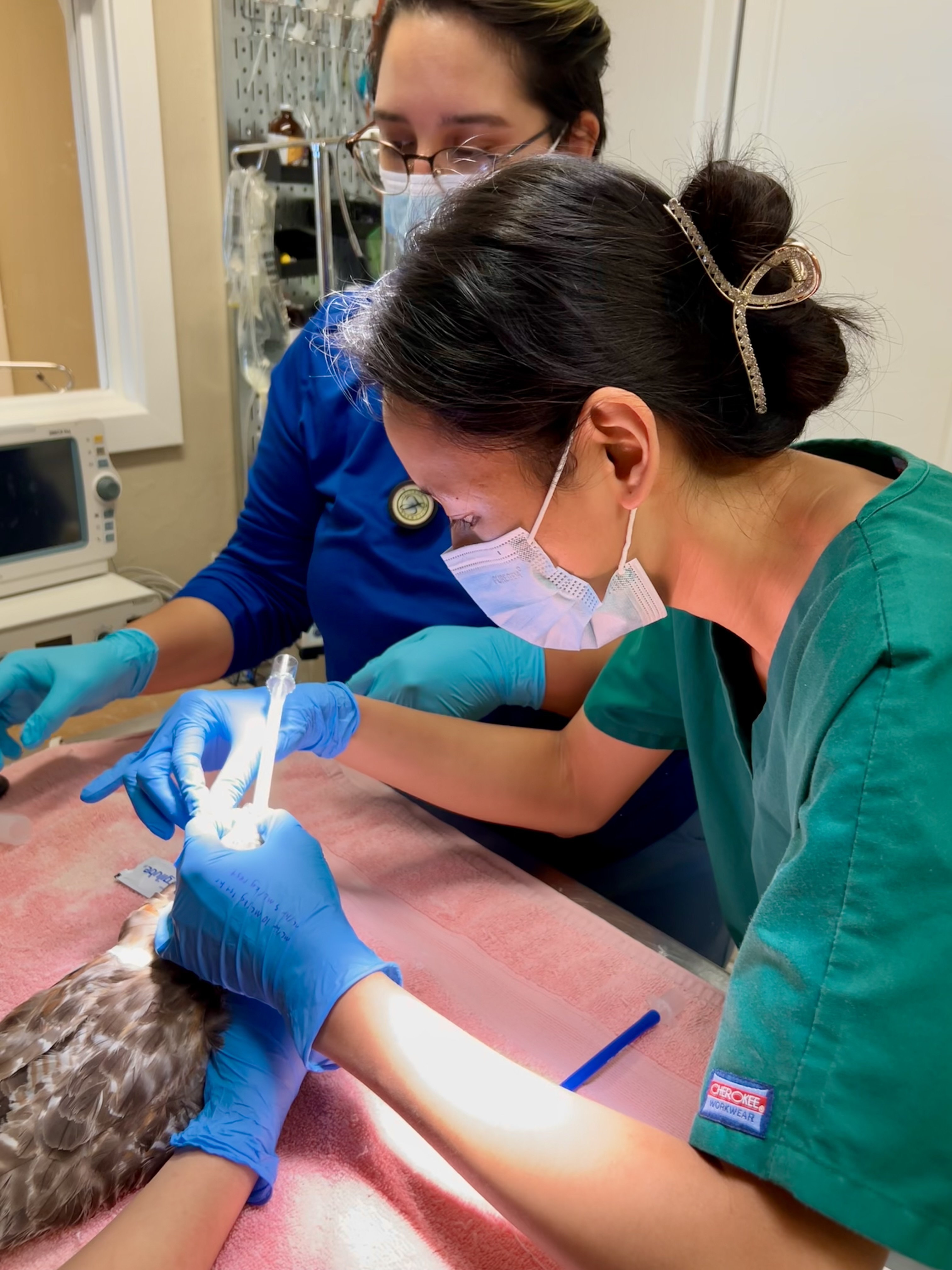
Patient intakes run from 12-5 PM, so the pace starts picking up considerably midday when animals start to arrive via concerned citizens or volunteer drivers who collect patients from small animal practices.
During intakes, students are assigned one of two primary roles. The first is assisting the veterinarian during physical examinations: practicing restraint, recording exam findings, drawing up medications, writing notes in WRMD, and completing treatment plans. The second is performing humane euthanasia for patients whose injuries or illnesses are beyond treatment or preclude a reasonable quality of life in the wild. This involves ensuring an appropriate plane of anesthesia, following species- and weight-specific protocols, and completing accurate documentation afterward. When time allows during anesthesia, students are guided through practicing clinical skills such as catheter placement and venipuncture.
Afternoons wrap up with a second round of treatments, hospital cleanup, and student presentations, which the team calls "homework." Each student prepares a short presentation on a zoo, wildlife, or exotic animal topic of their choosing, ranging from anatomy and physiology to natural history and common diseases. As a veterinary student, I also used the exercise as a practical study tool for the North American Veterinary Licensing Examination (NAVLE).
What I Learned and Why It Matters
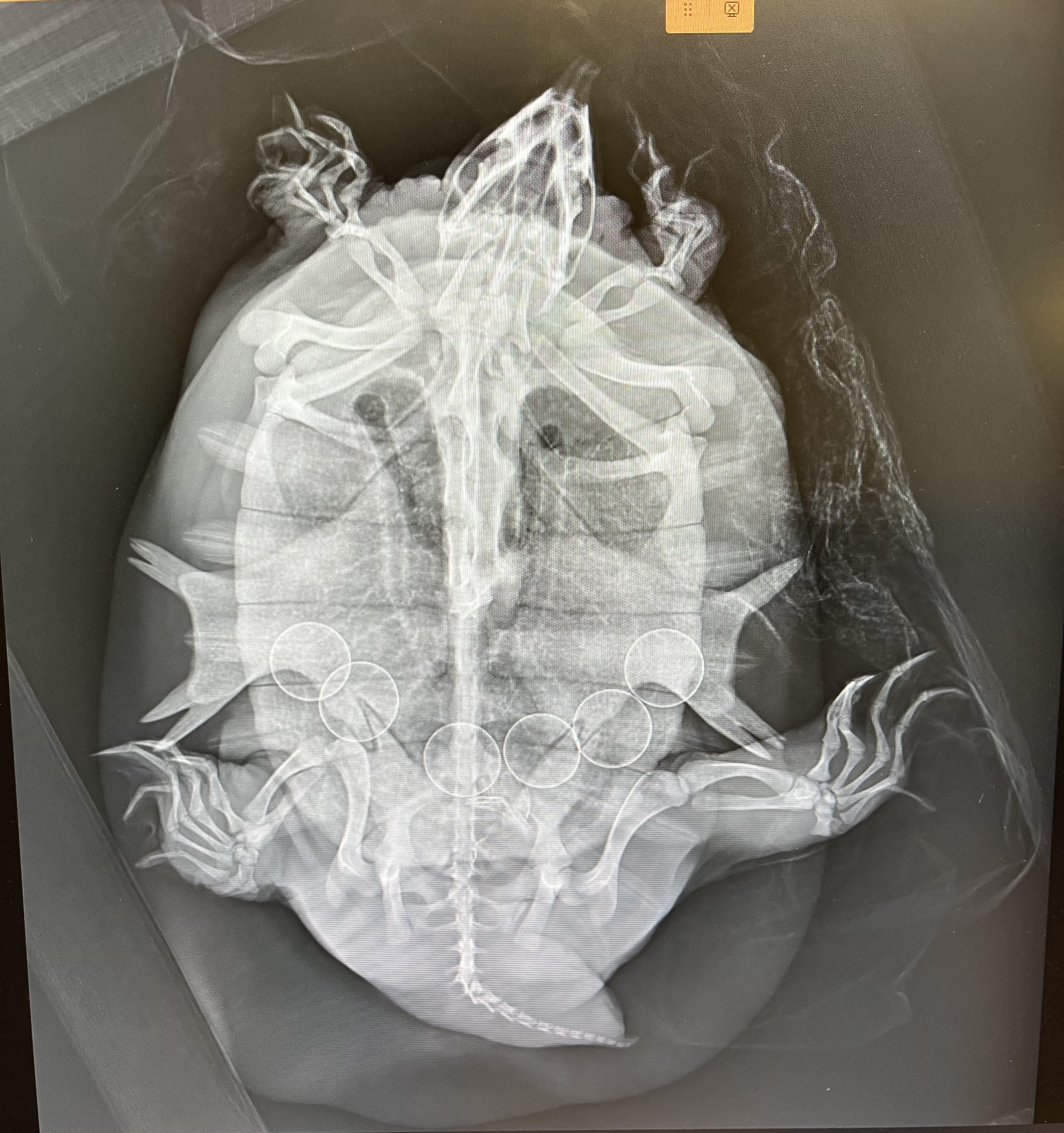
CROW filled several significant gaps in my clinical training. Working in a high-volume teaching environment exposed me to emergency triage and real-time clinical decision-making in ways that classroom learning simply can't replicate. I received hands-on training in assisted feeding, ICU care, fluid and medication administration, anesthesia monitoring, radiograph and cytology interpretation, and surgical assistance. The doctors and technicians were consistently generous with their time and eager to teach, even within the fast-paced environment.
I also greatly value the opportunity to gain supervised experience with rabies vector species such as raccoons and bats, which I had not previously worked with. CROW's rigorous biosecurity protocols and PPE requirements provided a safe learning environment for working with a category of wildlife I'll almost certainly encounter throughout my career.
In addition to participating in hospital rounds and assisting with wildlife releases, each student prepares and delivers a 30-minute presentation to the veterinary staff on a case or topic of their choosing. I presented on proventricular adenocarcinomas, a type of stomach tumor, in penguins, reviewing the published literature and exploring what current cases reveal about this disease.
Looking Back… and Forward
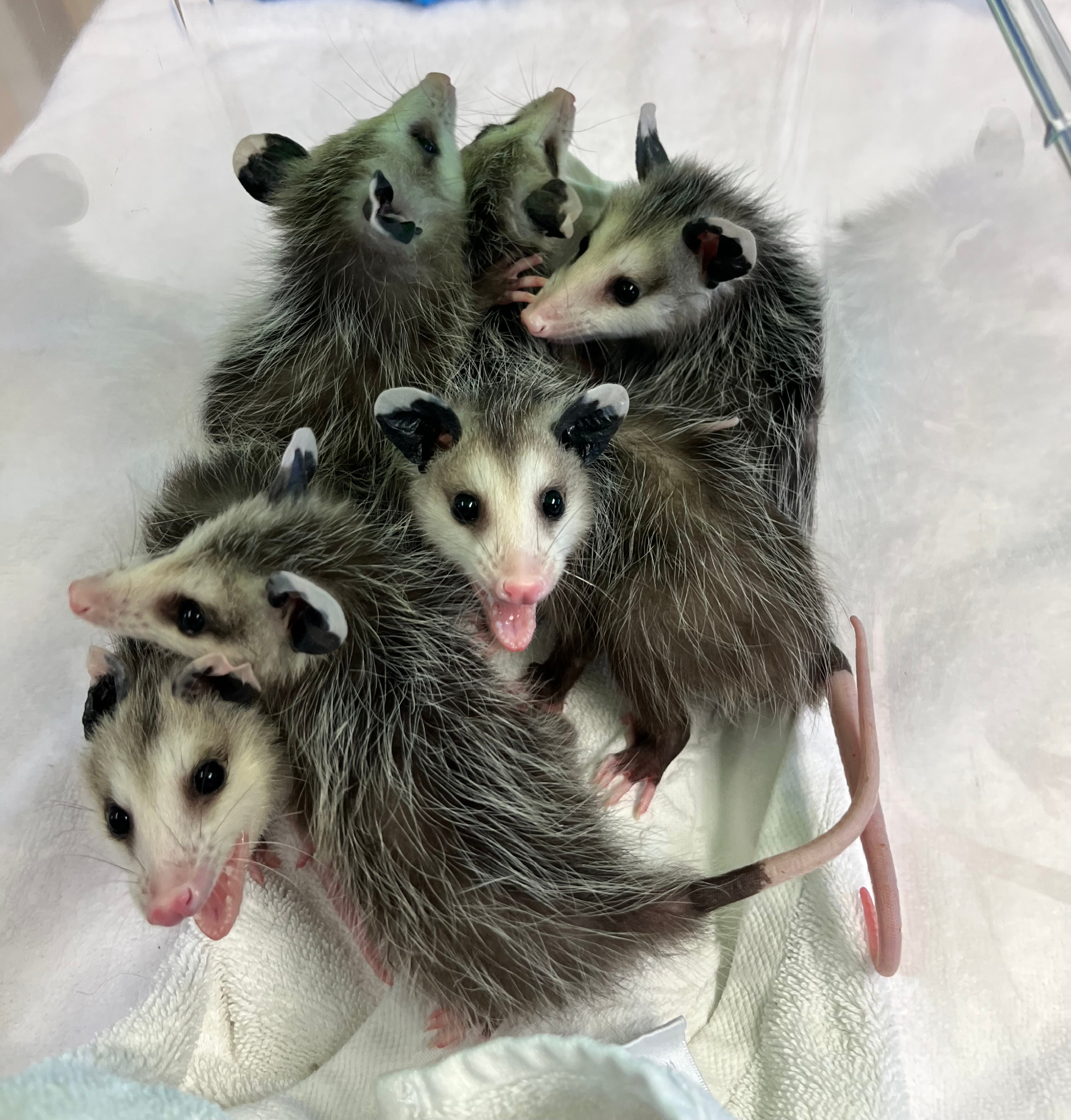
Four weeks pass quickly when every day brings something new: a species I’d never handled, a clinical skill I’d never practiced, or a case that tests everything I’ve learned so far. But beyond the exposure to a breadth of procedural skills and species, CROW provided me with a clearer sense of direction.
The doctors and veterinary staff at CROW were not only exceptional at what they do, but also generous mentors. Even in the midst of fast-paced, high-caseload days, they consistently made time to answer questions, explain their clinical reasoning, and provide students with hands-on learning experiences. That culture of teaching, embedded in the hospital's daily rhythm, showed me the kind of environment I want to work in.
Talking with each doctor about their career path was unexpectedly clarifying. I had previously believed that pursuing a career in wildlife and conservation medicine was a single, well-defined path. Hearing about the choices the team members at CROW had made and the experiences that shaped them helped me see that there are many ways to contribute meaningfully to animal health, making my own career aspirations feel both achievable and deeply meaningful. Those conversations reinforced what I've been working toward. I want to be a clinician who can contribute to the health of individual animals and the broader ecosystem, all within a teaching hospital setting that will shape the next generation of veterinarians.
This externship underscored for me how much our work matters beyond the hospital walls. Every animal that leaves CROW and returns to the wild carries with it the collective effort of veterinarians, technicians, students, volunteers, and the community members that bring them in. That's conservation medicine in practice—not just treating individual animals but also participating in something larger. That's the work I want to do.
I would like to sincerely thank Jake Holshuh ‘67, DVM ’69, who sponsored this experience through the Student Support Fund.
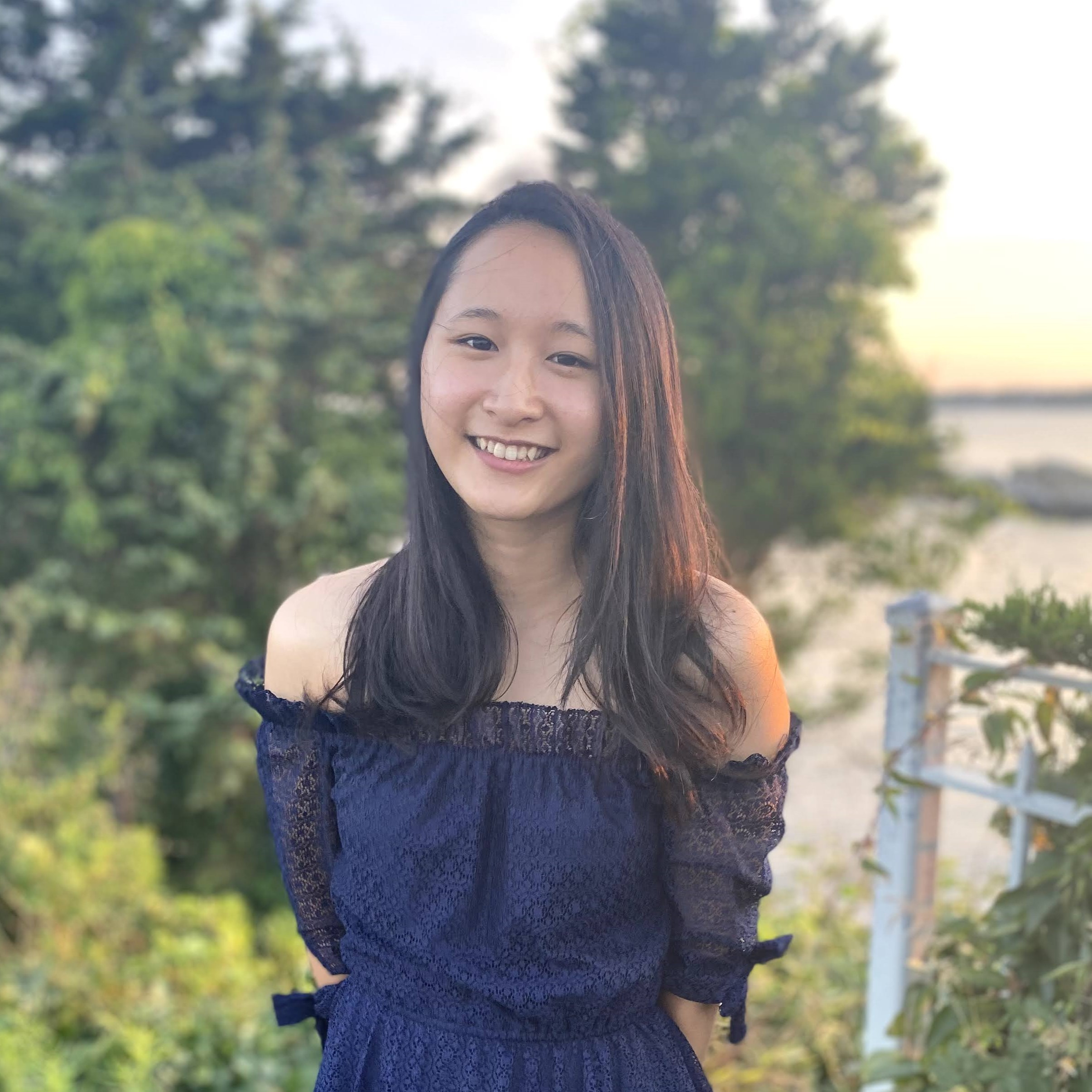
Amy Yang, Cornell University College of Veterinary Medicine DVM Class of 2027, originally from Rhode Island, hopes to use her knowledge of conservation medicine to address the biodiversity crisis and support vulnerable human and animal populations impacted by environmental change. She aims to accomplish this by working in a public zoo or aquarium, providing veterinary support to fellow conservation scientists, and becoming board-certified in zoological medicine.
Media provided by Amy Yang.
Please consider giving to the Cornell Yang Center for Wildlife Health Student Support Fund to help provide more hands-on experiential learning opportunities for students passionate about wildlife health and conservation.