
Advisory Council
The Advisory Council advises, assists, and advocates for the Cornell K. Lisa Yang Center for Wildlife Health on our efforts to enhance and expand our applied research and policy impact, technological capabilities, capacity-building efforts, and resource base.
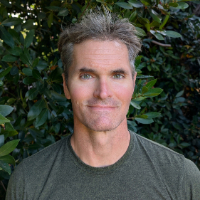
Rhett Butler
CEO, Mongabay
Rhett Ayers Butler founded Mongabay in 1999 with the mission of raising interest in and appreciation for wild lands and wildlife. For the first several years, he operated the project on his own, publishing thousands of stories and tens of thousands of photos. Today, Rhett serves as editor-in-chief and CEO of Mongabay, a nonprofit media organization with more than 125 staff across five bureaus and a network of roughly 1,000 correspondents in 80 countries. Its coverage ranges from conventional news to deeply reported investigative projects.
He also co-founded Tropical Conservation Science (acquired by SAGE Publications in 2016), an open-access academic journal that created opportunities for scientists in developing countries to publish their research, and the Tropical Forest Network (BATFN), an in-person professional community in the San Francisco Bay Area that convened more than 100 events and nearly 3,000 participants from 2009 to 2019.
Rhett has advised a wide range of organizations, including governments, multilateral development agencies, media outlets, academic institutions, foundations, and companies. He has been cited as a source by numerous international media outlets. He has served on the XPRIZE Visioneering Brain Trust, the Advisory Council of the K. Lisa Yang Center for Conservation Bioacoustics, and the World Economic Forum’s Futures Council, among other roles.
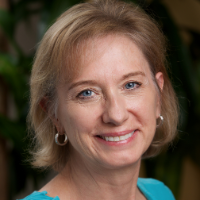
Ginette Hemley
Senior Vice President, WWF-US
Ginette Hemley is a globally recognized leader in wildlife conservation with more than 40 years of experience driving solutions to protect the world's most iconic species and ecosystems. As senior vice president for wildlife conservation at WWF-US, she oversees WWF's efforts to secure the future for some of the world's most threatened wildlife and critical landscapes, including the Eastern Himalayas and Greater Mekong regions of Asia, southern Africa, and the Great Plains of the United States.
An authority on endangered species and conservation policy, Hemley is a champion of forging strong, cross-sector collaborations that build momentum for conservation at every level. By mobilizing public will, influencing policy, and unlocking resources needed to sustain nature for generations to come, she has developed and delivered successful global recovery strategies for threatened wildlife.
Prior to this current role, she served as WWF's senior vice president for strategy and science, managing vice president for conservation, and director of TRAFFIC. Hemley holds a Bachelor of Science in Biology from the College of William and Mary, studied history and philosophy at Oxford University, and was an ELIAS Fellow at the Massachusetts Institute of Technology and Society for Organizational Learning.

Ted Mashima
Chief Strategy Officer, American Association of Veterinary Medical Colleges
Dr. Ted Mashima joined the American Association of Veterinary Medical Colleges (AAVMC) in 2008 and currently serves as Chief Strategy Officer. He previously served as the President and Executive Director of the Asian and Pacific Islander American Scholarship Fund, Associate Director for the Virginia-Maryland College of Veterinary Medicine’s Center for Public and Corporate Veterinary Medicine, and Projects Director for the National Association of Physicians for the Environment.
He has a bachelor’s degree in zoology from the University of Hawaii at Manoa and a DVM from Colorado State University. He completed an internship at Kansas State University and a residency in zoological medicine, with a wildlife emphasis, at North Carolina State University. He is board certified in both zoological medicine and veterinary preventive medicine and a distinguished fellow of the National Academies of Practice.
Previously, Mashima served as Vice President of the American College of Zoological Medicine, on the board of directors for the Alliance of Veterinarians for the Environment, and as a Research Associate with the Smithsonian Institution’s National Zoological Park. Mashima is co-editor of the book, The Rhino with Glue-On Shoes, and Other Surprising True Stories of Zoo Vets and Their Patients.
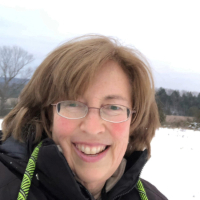
Laurel Neme
Environmental Consultant and Author
Dr. Laurel Neme is an environmental consultant and writer, as well as a trained economist. She has worked for the U. S. Treasury Department, USAID, NGOs and others on natural resource management and policy in Africa and elsewhere. Laurel is a regular contributor to National Geographic and Mongabay.com, and has published Animal Investigators, a nonfiction book on wildlife forensics as well as a number of wildlife-themed books for children. She holds a PhD from Princeton University and a Masters of Public Policy from the University of Michigan.
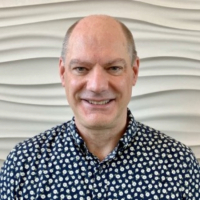
Ted Schmitt
Senior Director for Conservation, Allen Institute for Artificial Intelligence (Ai2)
Ted Schmitt is the Senior Director for Conservation at the Allen Institute for Artificial Intelligence (Ai2). He leads partner engagement for the OlmoEarth program, an open-source AI platform that delivers AI-powered planetary intelligence to accelerate action towards Nature-based Solutions. Ted has led programs, including EarthRanger and Skylight, to bring fit-for-purpose technology solutions to various terrestrial and marine conservation issues at Ai2 and its predecessor for over 15 years. He has worked extensively in Africa with field organizations applying technology to secure and manage protected areas.
Before joining Ai2, Ted was a Senior Program Officer for the Computer Science and Telecommunications Board at the United States National Academy of Sciences. He served as Business Development Director at several technology start-ups in Germany, Sweden, and the United States, leading the application of technology for impact on a range of issues. He started his career as a software engineer for IBM, earning patents and several technical achievement awards. Ted holds a Master of Arts in International Science and Technology Policy from George Washington University, a Bachelor of Science in Electrical Engineering, and a Bachelor of Arts in German from Purdue University.
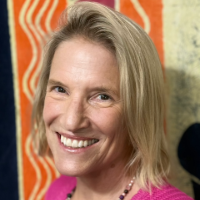
Peregrine (Peri) Wolff
Executive Manager, Wildlife Disease Association
Dr. Peregrine Wolff has worked with captive and free-ranging wildlife throughout her 30-plus-year veterinary career. After receiving her DVM from Cornell University (‘84), she spent time at Chicago’s Lincoln Park Zoo, the Minnesota Zoo, and led the opening team for Animal Health at Disney’s Animal Kingdom. In the mid-2000s, she switched to free-ranging wildlife and worked with the Oregon and Nevada state wildlife departments. She currently serves as the Executive Manager of the Wildlife Disease Association, the leading professional association of conservation scientists working in wildlife health.
She has served as the president of both the American Association of Wildlife Veterinarians and the American Association of Zoo Veterinarians, as chair of the U.S. Animal Health Association’s Committee on Wildlife, and as chair of the board for the Wild Sheep Foundation (WSF) and co-chair of their Conservation Committee. She is a member of the IUCN Caprinae Specialist Group. She currently serves on the advisory boards of the WSF and Cornell University’s College of Veterinary Medicine.
Passionate about advancing the science of wildlife health, welfare, and conservation, she has taught students and colleagues around the globe, supports the next generation, and hopes to convince people to care about the natural world around them.
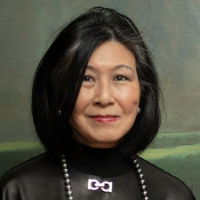
Lisa Yang
Retired Investment Banker and Philanthropist
Lisa Yang is an alumna (’74) and long-time supporter of Cornell, holding memberships in the School of Industrial and Labor Relations Dean’s Advisory Council and the K. Lisa Yang Center for Conservation Bioacoustics Advisory Council. She is also a current University Trustee and a life member of the Cornell University Council. As a visionary philanthropist, Lisa has emphasized that supporting and endowing the Center for Wildlife Health helps send a message that conserving our natural environment and abiding by more mindful economic practices are critical if we are to leave a viable planet for future generations.
Yang, who also received an MBA from Columbia University in 1976, retired in 2001 after a career in investment banking at the First Boston Corporation and Lehman Brothers. She was the lead donor to establish the K. Lisa Yang and Hock E. Tan Employment and Disability Institute at Cornell’s ILR School.
She is also co-founder of the Hock E. Tan and K. Lisa Yang Center for Autism Research at Harvard University, launched in 2019, as well as a suite of interlinked centers at the Massachusetts Institute of Technology operating as the Yang Tan Collective, with major investments in autism research; neuroscience; molecular, genetic and circuits therapeutics; integrative computational modeling; bionics; and global engineering and research.
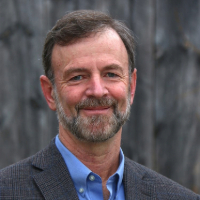
Peter Zahler
Director of Field Conservation, Zoo New England
Peter Zahler has over 35 years of experience working on bird and mammal conservation around the world, with a focus on temperate mountains and grasslands in the Central Asian region. His main interest is incorporating science into applied conservation and building and supporting multiple-component conservation program capacity (including community governance and government capacity building, wildlife monitoring and enforcement, protected area management, anti-poaching and wildlife trade interdiction initiatives, human-wildlife conflict mitigation, etc.). He designed, started, and ran major conservation programs in Pakistan, Afghanistan, and Mongolia, helped design a major program in Arctic Beringia (Alaska and Siberia), and he has supervised programs and projects in the Russian Far East, the Central Asia states, Papua New Guinea, Fiji, and Iran. He is a member of the IUCN Caprid Specialist Group, Cat Specialist Group, Antelope Specialist Group, Small Carnivore Specialist Group, Small Mammal Specialist Group, and World Commission on Protected Areas.
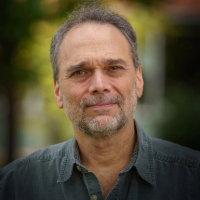
Steve Osofsky
Director, Cornell K. Lisa Yang Center for Wildlife Health
Dr. Steve Osofsky is a wildlife veterinarian and graduate of Cornell’s College of Veterinary Medicine (’89), with a focus on the conservation of free-ranging wildlife, as well as on the deeply intertwined relationships among environmental stewardship, system resilience, economic development, and human health and well-being. He is the Jay Hyman Professor of Wildlife Health & Health Policy at Cornell University's College of Veterinary Medicine, and is one of the pioneers of the One Health movement, having led the drafting of the core Manhattan Principles on One World, One Health in 2004.
He has developed, launched and managed some of the first major applied One Health programs, including the AHEAD (Animal & Human Health for the Environment And Development) Program (launched in South Africa in 2003) and the HEAL (Health & Ecosystems: Analysis of Linkages) Program (launched in 2009), which became the Planetary Health Alliance in 2016. As the only veterinarian serving on The Rockefeller Foundation-Lancet Commission on Planetary Health, he was able to bring his range of practical experiences (from both health and environmental conservation perspectives) to the task of shaping the highly interdisciplinary conceptual approach underpinning the field of Planetary Health.
Professor Osofsky previously held senior positions at the World Wildlife Fund (WWF) and the Wildlife Conservation Society (WCS), as well as with the Government of Botswana. He was also honored to serve as an American Association for the Advancement of Science (AAAS) Science and Diplomacy Fellow, working as a Biodiversity Program Specialist at the U. S. Agency for International Development (USAID). Steve shepherded the creation and launch of the university's Cornell K. Lisa Yang Center for Wildlife Health, which he now directs.