
Collaborations Across Ecosystems Support Wildlife Population Health in California
California is home to an extensive array of landscapes and wildlife: deserts with bighorn sheep and kit foxes, coastlines home to marine mammals and shorebirds, dense mountain forests hiding prowling mountain lions, and mountain meadows where wolf packs run. As a veterinary student, California’s natural beauty is matched only by its extensive network of government agencies, academic institutions, and non-profit organizations that regularly collaborate on wildlife disease surveillance, rehabilitation, and disaster response. This past January, I experienced this collaboration firsthand by spending four weeks in my dream externship: a joint program between the California Department of Fish and Wildlife (CDFW) and the Karen C. Drayer Wildlife Health Center at the University of California, Davis, School of Veterinary Medicine. I deepened my knowledge of wildlife disease and population monitoring by meeting dozens of veterinarians, biologists, and wildlife researchers who work across the state.
From Santa Cruz to Monterey
I spent the first part of my externship at the CDFW Marine Wildlife Veterinary Care and Research Center (MWVCRC), on the coast of the UC Santa Cruz (UCSC) campus. I was instantly immersed in learning about the complex web of threats to sea otter (Enhydra lutris) conservation through necropsies. Under the guidance of Dr. Melissa Miller, my first case was an adult sea otter with enlarged lymph nodes, which, combined with its presentation of neurologic disease during the rainy season, raised our suspicion for infection with Toxoplasma gondii. This parasite, whose definitive host is the domestic cat, can cause disease in sea otters when it enters the ocean through runoff.
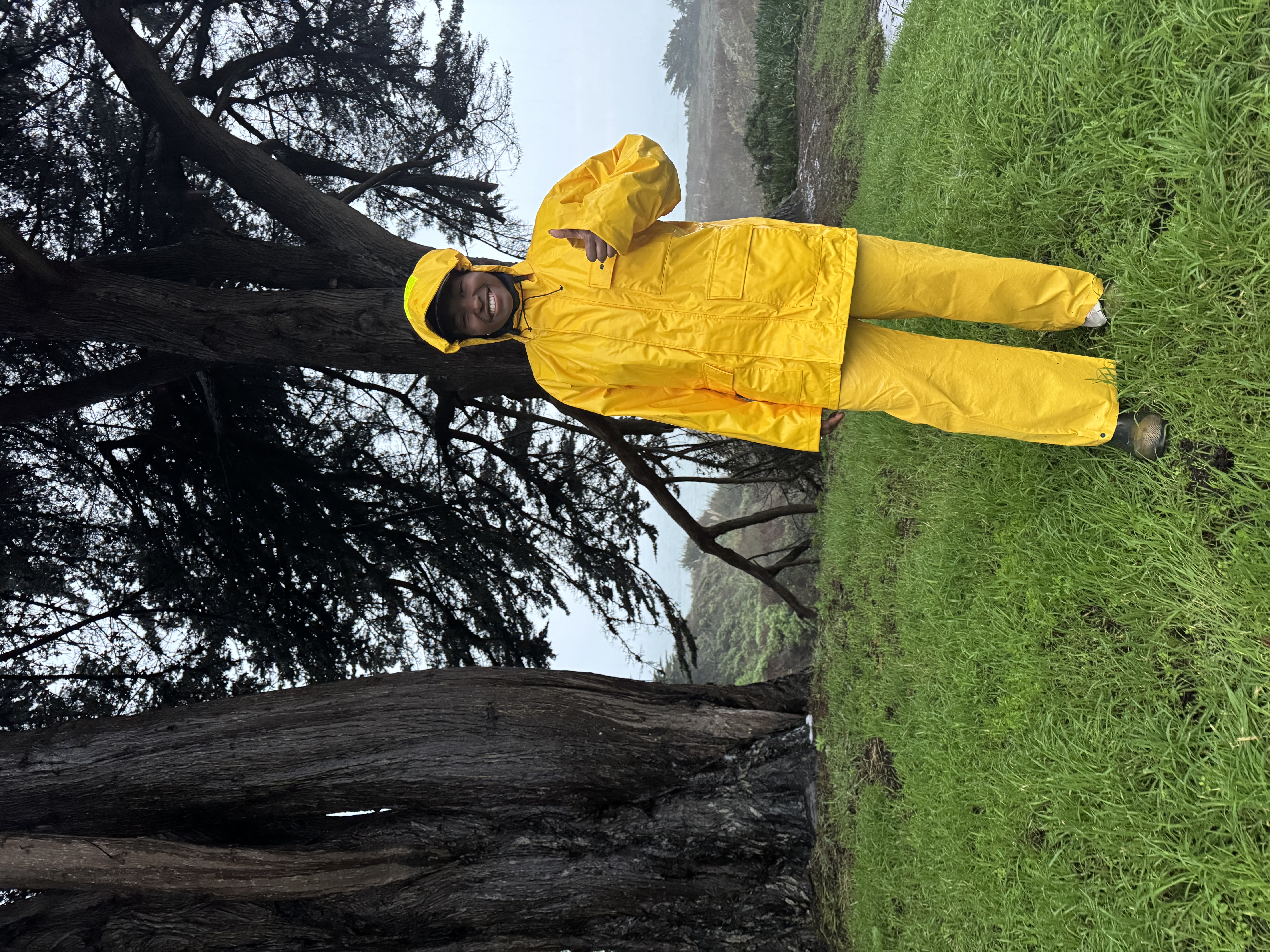
On the same day, I accompanied biologist Colleen Young to respond to a report of a sea otter stranding and to perform a beach survey. CDFW biologists walk stretches of beach in the greater Santa Cruz area each month to conduct wildlife carcass counts, which provide a baseline for monthly mortality to compare against during unusual mortality events. While we were on the beach for work, I couldn’t help but admire the beauty of the coastline as we climbed over rocks, watching pelicans dive into the surf and sea otters float along in the waves.
I also spent time with several partners of CDFW and UC Davis, including the Monterey Bay Aquarium and Monterey SPCA Wildlife Hospital. My time at Monterey Bay Aquarium included dedicated time to learn about its surrogacy program, in which female sea otters living permanently in captivity at the aquarium raise orphaned wild sea otter pups. Once the pups reach a certain age, they are released back into Monterey Bay.
While in Monterey, I also shadowed Dr. Amy Wells, an exotics and wildlife veterinarian who assists with recovery efforts for California condors (Gymnogyps californianus). These birds went completely extinct in the wild in 1987. A captive breeding program subsequently allowed them to be successfully reintroduced to Pinnacles National Park, but they still face an uphill battle to develop a self-sustaining wild population. Through my conversations with Dr. Wells, I learned that a key component of successfully conserving these raptors will be finding a way to reduce the use of lead ammunition. Of course New York State also sees lead ammunition’s impacts on wildlife (e.g., bald eagles and a range of other birds), with concerns for human health as well.
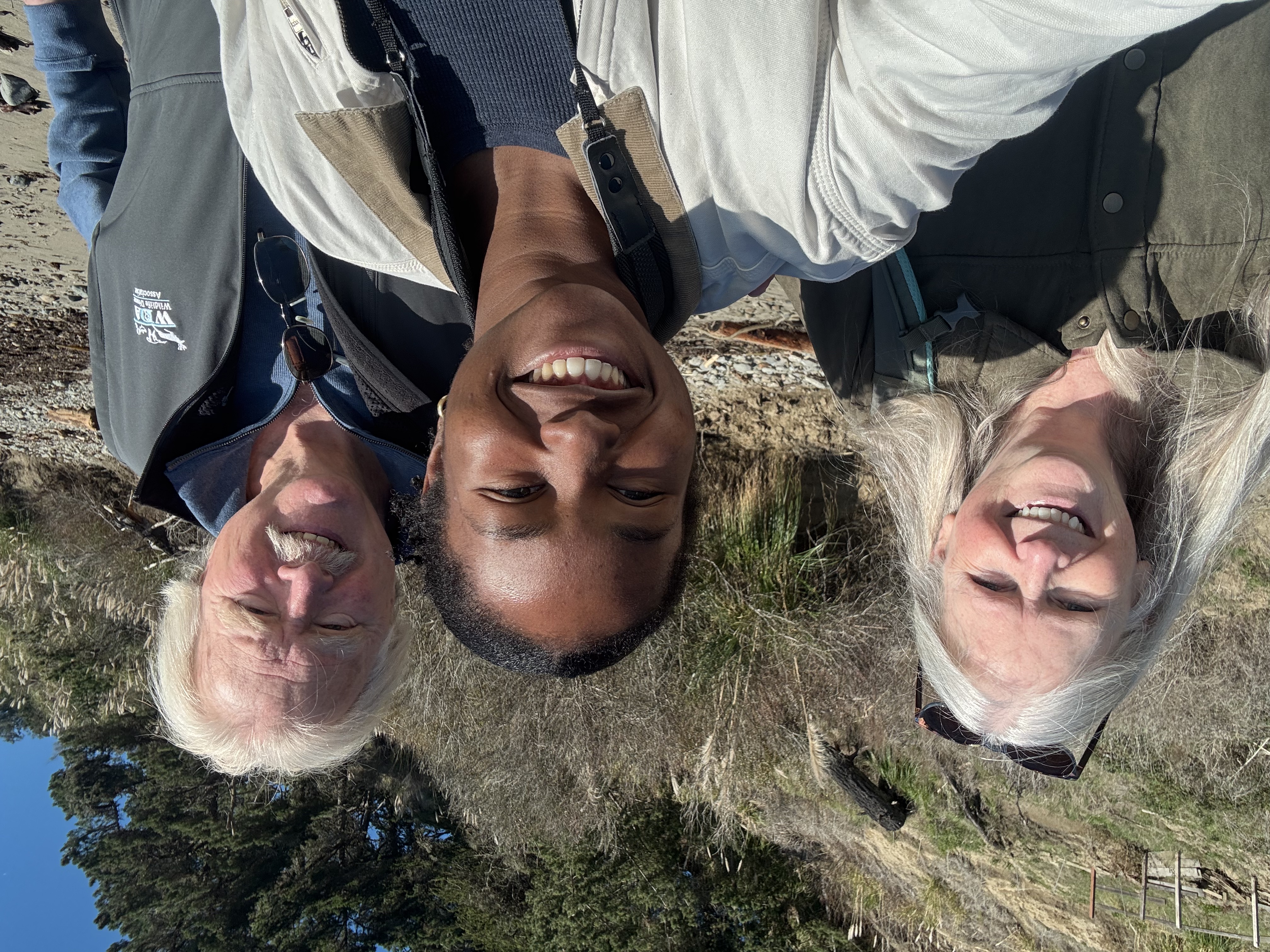
I concluded my time in Santa Cruz by meeting Dr. Dave Jessup, who has been a bedrock and guiding compass for wildlife agency work in California for decades. Each question I asked him yielded a story full of lessons and reflections, and I am sure I only scratched the surface of all there is to learn from him.
The Wildlife Health Laboratory
After Santa Cruz and Monterey, I traveled north to the Wildlife Health Laboratory in Rancho Cordova, where the highlight of my time was following a case of acute-onset neurologic disease in a mountain lion (Puma concolor) under the guidance of Dr. Deana Clifford and Dr. Claire Butkus. After CDFW received video footage of an adult mountain lion with complete paralysis in both hind limbs, I joined Dr. Megan Moriarty, mountain lion biologists from UCSC, and CDFW biologists to assess the lion in the field in Sierra Azul Preserve.
With a lot of teamwork, we successfully immobilized the lion, carried it up a steep hill to a safe location, and performed a full exam, including radiographs, under sedation in the field. This case was especially meaningful to me because, while it was difficult to see the lion suffering from paralysis, I was able to follow the case from the original videos captured by the field biologist to examining it in the field, interpreting radiographs, submitting samples for pathology, and receiving results from its necropsy and from bacteriology. This case also drew on multiple knowledge bases from my clinical rotations in veterinary school, such as safely immobilizing and monitoring an animal under anesthesia, performing a complete orthopedic examination, interpreting radiographs and adjusting positioning to acquire desired images, and using my knowledge of neuroanatomy to estimate the location of the spinal cord lesion. Once we had ruled out trauma, this case was also a great one to research and discuss toxic or infectious differentials for neurologic disease in wildlife.
At the Wildlife Health Laboratory, I also helped perform necropsies on a desert kit fox (Vulpes macrotis arsipus) and a mountain lion. I learned about CDFW’s efforts to monitor chronic wasting disease in deer and assisted with processing lymph nodes and other deer tissues submitted by hunters for testing.
Monitoring wolf movement in northeastern California
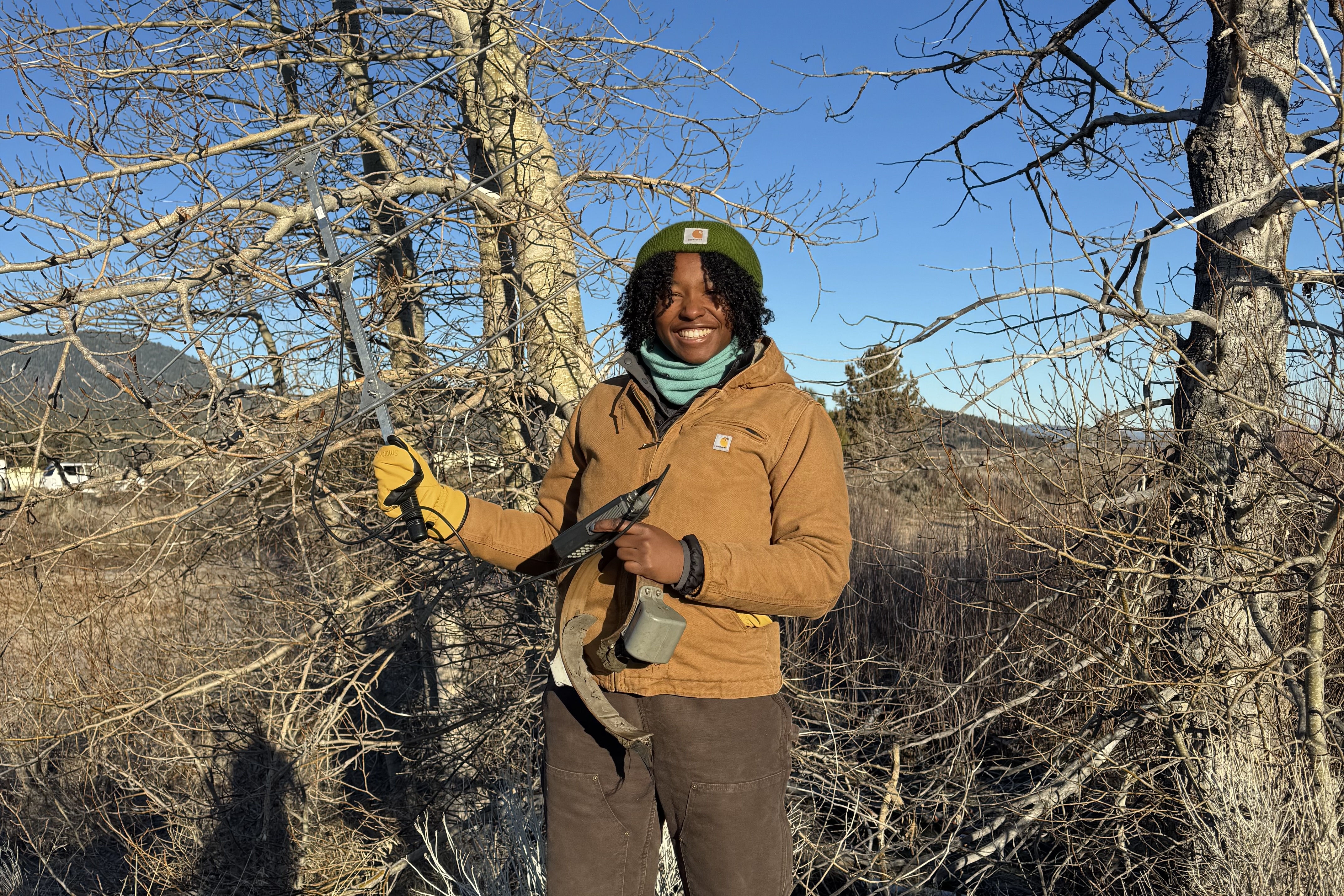
During my second week, I headed to the northeastern tip of California with the free-ranging wildlife health resident, Dr. Jane Riner, to participate in wolf and elk captures. These efforts are largely for collaring individuals within a pack to learn about their individual and herd activities. Wolves (Canis lupus) have only recently returned to California, and where they travel within the state and what they hunt are just as important to biologists as they are to ranchers, who own herds of cattle in the same regions. Monitoring wolf movements also allows biologists to maintain open communication with ranchers when wolves are on or near their property. In addition to learning from game veterinarian Dr. Emma Lantz and biologists, I used downtime at base camp to learn how to use telemetry to track collars and chat with the helicopter capture team, who contract with CDFW to safely and reliably capture, anesthetize, and obtain biological samples from elk in the field.
Coming full circle during Wildlife Week
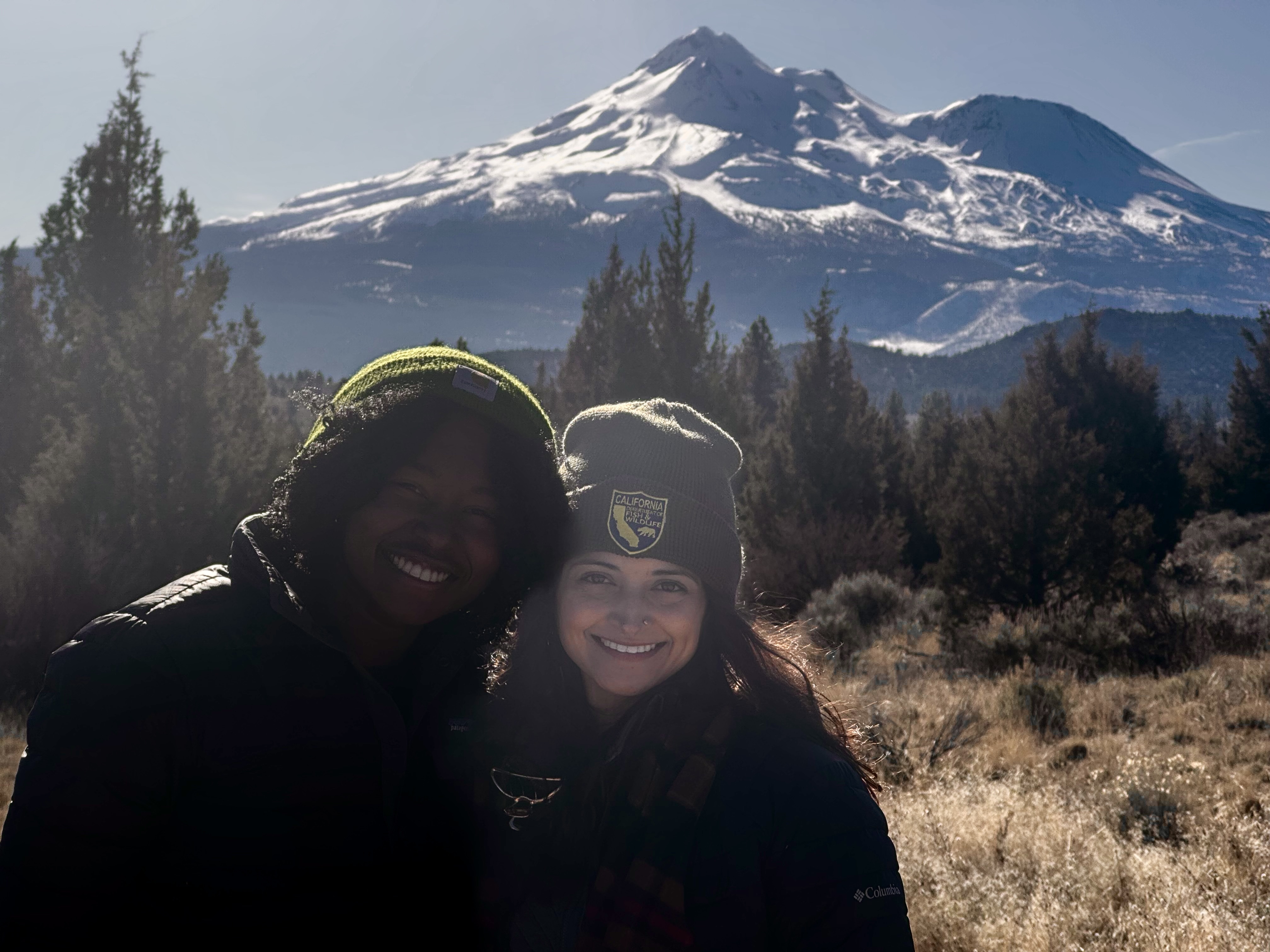
I spent the final week of my externship at UC Davis with Dr. Mike Ziccardi and Dr. Jamie Sherman, attending lectures and field trips as part of their “Wildlife Week,” a program embedded in their veterinary curriculum that is focused entirely on free-ranging wildlife and wildlife rehabilitation. I visited the San Francisco Bay Oiled Wildlife Care and Education Center, where we participated in an oiled wildlife care lab, practicing triaging and examining birds as if we were responding to an oil spill. We also took a field trip to Point Reyes National Seashore, where I learned about tule elk (Cervus canadensis nannodes) conservation.
This final week was especially meaningful because I attended a talk about Gorilla Doctors and met their now-retired chief veterinary officer, Dr. Kirsten Gilardi. This was a full-circle moment for me, as I had researched Gorilla Doctors and spoken with Dr. Gilardi on the phone as part of a project for a conservation course in college. The conversation I had with Dr. Gilardi about One Health and preventive medicine in 2018 ultimately led to my decision to pursue free-ranging wildlife medicine as a career.
This externship also piqued my interest in wildlife epidemiology. I had the opportunity to work with so many wildlife veterinarians who use rigorous research to inform their programs, leading to better outcomes for wildlife populations. I had briefly considered a PhD at the start of veterinary school, and after my time with CDFW and UC Davis, I have given more thought to the benefits of dedicating part of my career to the in-depth study of wildlife health and disease.
I am grateful to Jake Holshuh ‘67, DVM ’69, who generously sponsored this experience through the Cornell K. Lisa Yang Center for Wildlife Health Student Support Fund, and to the Karen C. Drayer Wildlife Health Center. This externship has prepared me well to continue working in wildlife health after graduation. I am inspired by the veterinarians I met not only to be dedicated to wildlife health, but also to “pay it forward” as I progress in the profession—to support those who come after me by helping them find opportunities for learning and growth.
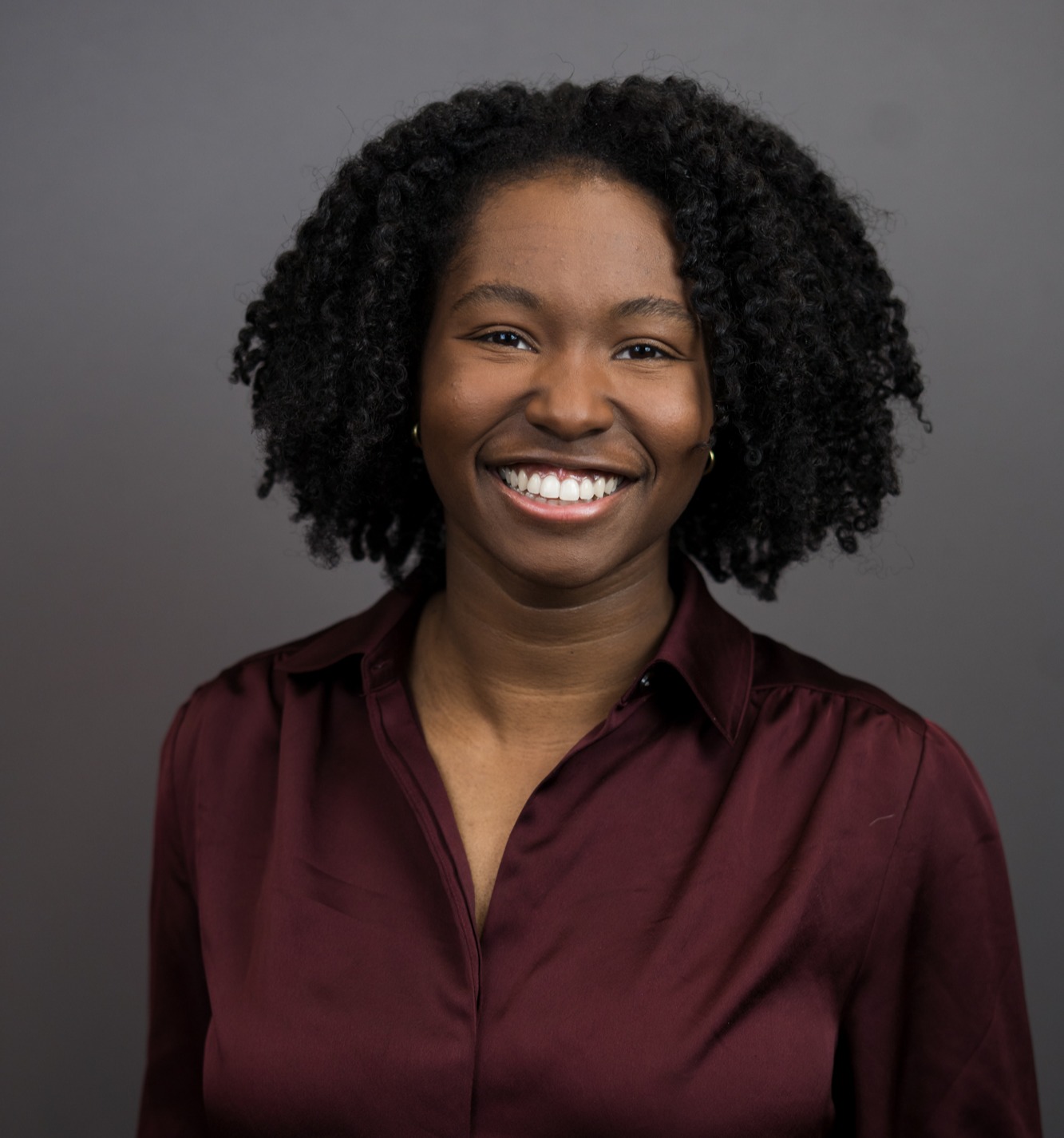
Victoria Priester is a DVM student in the class of 2026. She aspires to work as a wildlife veterinarian, focusing on research and rehabilitation of endangered species.
Photos provided by Victoria Priester.
Please consider giving to the Cornell Yang Center for Wildlife Health Student Support Fund to help provide more hands-on experiential learning opportunities for students passionate about wildlife health and conservation.