
Fledging as a Veterinary Extern at the Hawai’i Wildlife Center
By Allison Cao, DVM ‘29
About the Hawai’i Wildlife Center
I was lucky enough to spend four extraordinary weeks as a veterinary extern at the Hawai’i Wildlife Center (HWC). HWC has one goal: to support and protect Hawai'i's native terrestrial vertebrate species. For Hawai’i, this means all avian species and Hawai’i’s only native land mammal: the Hawaiian hoary bat (ʻōpeʻapeʻa). In addition to the main clinic serving the Island of Hawai’i (the “Big Island”), HWC also has satellite clinics on O‘ahu and Lāna‘i that together serve all the Hawaiian Islands.
HWC accomplishes a phenomenal feat of caring for birds of all shapes and sizes coming in from as far as Holanikū (Kure Atoll) to the Island of Hawai’i. This is even more impressive because HWC is the first organization of its kind in Hawai’i. HWC’s vision is a world where Hawai’i’s native species thrive in their environments, especially those that are infamously endangered. HWC couldn’t advance its mission and vision without its awesome, well-rounded team that provides its externs with nothing but patience and support.
Learning How to Piece Together a Case
From the very first day, Dr. Juan Guerra, DVM ‘13, HWC’s Director of Wildlife Rehabilitation and Veterinary Medicine, and his technicians welcomed me into a positive learning environment where I felt that my education was genuinely one of their priorities. Before long, I felt integrated into the team. It was incredible seeing the diversity of species that came through the hospital, including HWC’s first-ever Tristram’s storm petrel patient (ʻakihikeʻehiʻale), never mind actually helping to treat them!
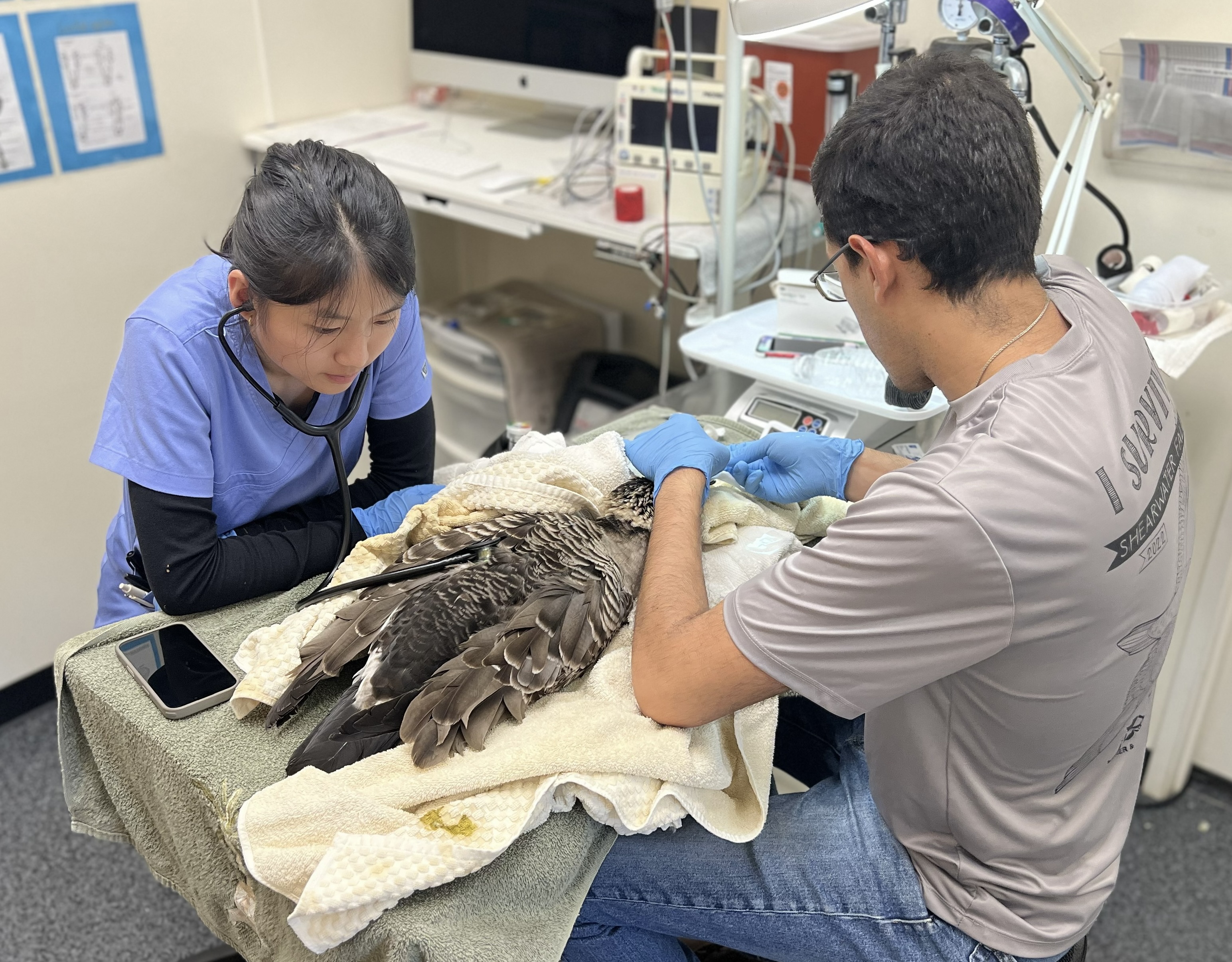
With one-on-one, hands-on instruction, I was soon accompanying Dr. Guerra in the intake room as he helped me develop proficiency in conducting a thorough avian physical exam, one of the most important tools for determining a diagnosis. I performed physical exams on a wide range of species, including a Hawaiian hawk (ʻio), a blue-billed white tern (manu o Kū), and a Hawaiian goose (nēnē). I not only developed and improved my physical exam skills, but I also gained experience in other clinical skills that will serve as an important foundation moving forward.
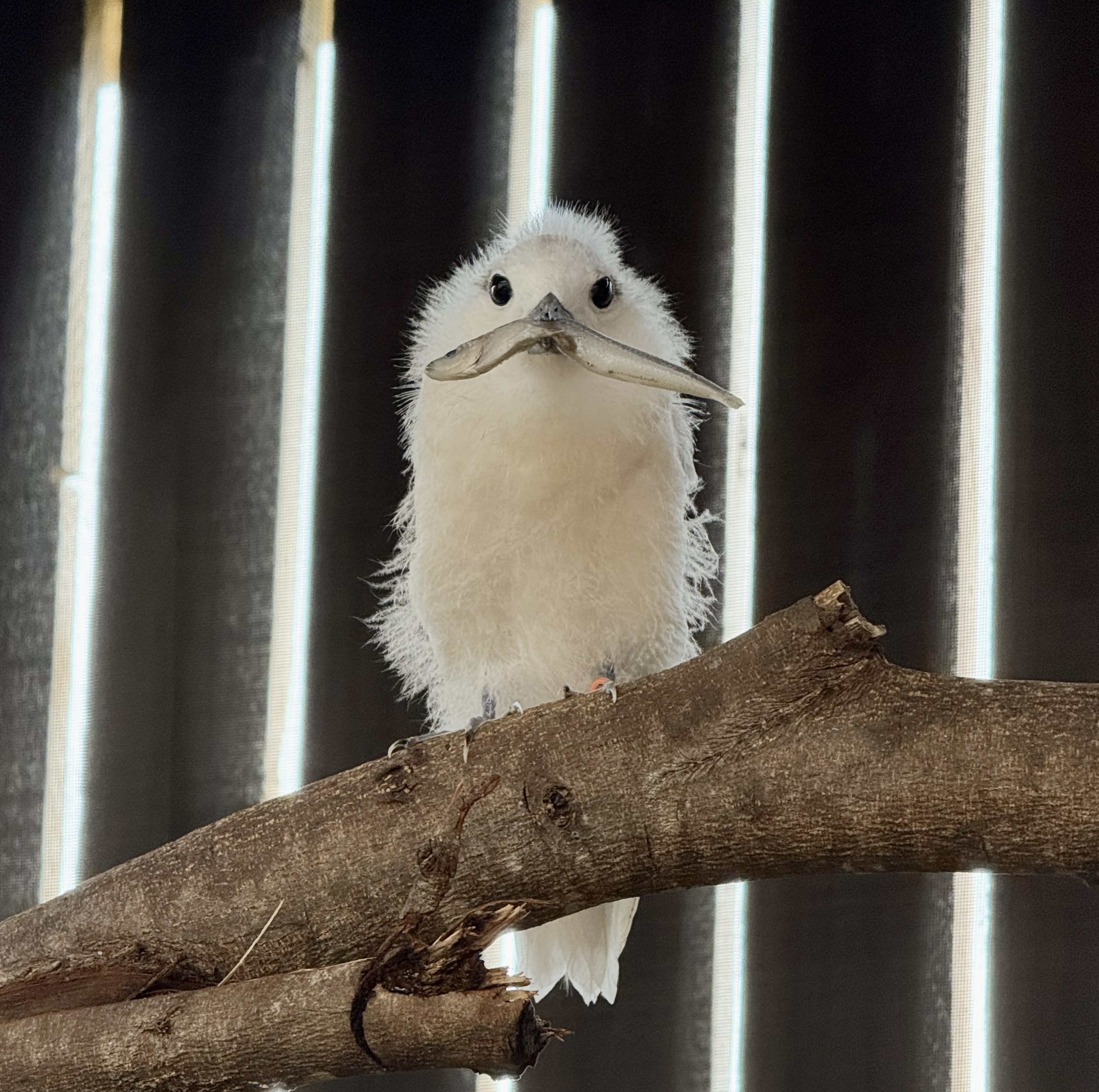
I learned how to properly restrain and “burrito” seabird species, and was taught to be mindful of where my hands were in relation to the patient for several reasons: to prevent breaking feather shafts, reduce contamination that could decrease waterproofing, and to avoid patient overheating. Proper restraint is especially important in species for which damage to primary flight feathers can reduce their prognosis, such as manu o Kū or Laysan albatrosses (mōlī). Booby (ʻā) species are another example for which proper restraint techniques are critical because they don’t have external nostrils, meaning that improperly restraining the beak can lead to asphyxia. Proper restraint techniques are also required for tube feeding or administering anesthesia, which I also gained experience in across a range of species.
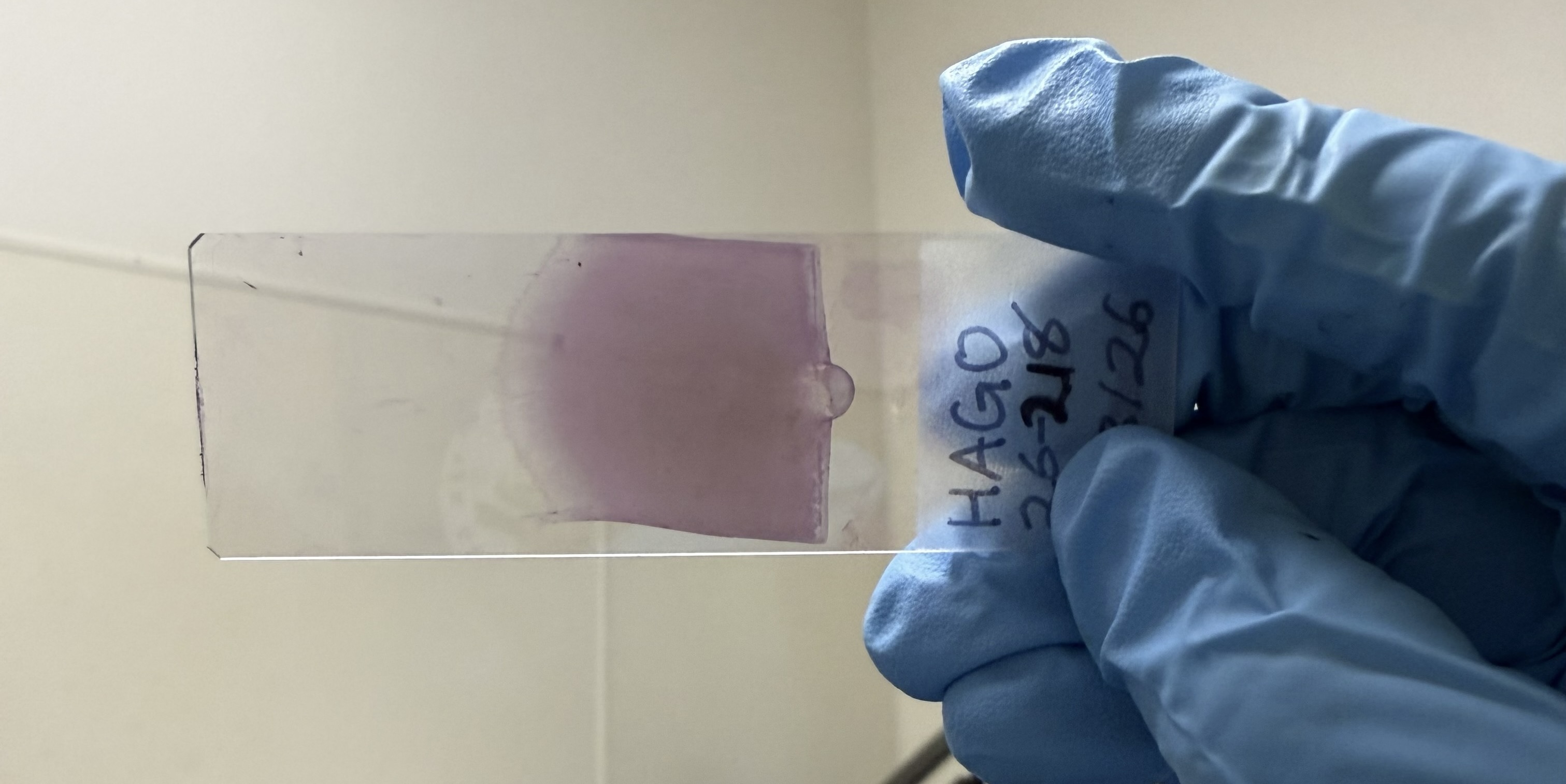
With Dr. Guerra and the technicians’ help and supervision, I built my confidence in solo tube-feeding, monitoring patients under anesthesia, positioning them for radiographs, and actually reading the radiographs. One goal I set for myself during this externship was to become comfortable with avian blood draws. I had plenty of opportunities to practice drawing blood from the medial metatarsal vein and, occasionally, the ulnar vein. I quickly learned that a quick, steady poke was necessary. The blood samples I helped collect were used to determine packed cell volume and total protein values, and to yield estimated total and differential white blood cell counts.
I was incredibly grateful for the chance to develop a range of clinical and laboratory skills. It was even more rewarding to see these procedures culminate in the release of a rehabilitated animal. Holding a Bulwer’s petrel (ʻou) and watching it gather the courage to leap off and fly toward the horizon, until it blipped out of sight, is a moment that I’ll carry with me forever.
HWC and its team are a major reason that I feel more confident as a veterinary student moving forward. This externship has equipped me with skills that I will continue to use as I pursue a career in avian and wildlife medicine.
A New Perspective on Wildlife Medicine
Wildlife medicine and rehabilitation already come with unique challenges, but practicing them in Hawai'i presents additional difficulties. There, invasive and introduced species outnumber native species, so many public calls were about common mynas, saffron finches, common waxbills, and other species that aren’t threatened in the same way many native Hawaiian species are. Although taking calls wasn’t part of my role as a veterinary extern, I would often hear team members patiently explain that the finder’s bird was non-native and why HWC couldn’t take it in as a patient, since HWC cares for threatened, endangered, or endemic species or subspecies. Listening to these calls and observing how the team conducted themselves opened my eyes to how wildlife medicine ultimately stems from community and kindness.
Another major conservation challenge that Hawai’i faces is its unique ecology. Island ecosystems are so unique that the majority of their species evolve as influenced specifically by the conditions on the island(s) they inhabit. Although this creates incredibly diverse wildlife, it also means that these highly specialized species are often not well-suited to face human-caused problems, including invasive species introductions, disease transmission, artificial light pollution, and more.
Additionally, losing even a few individuals could threaten a rare species, introducing another layer of complexity to patient care when it comes to the difficult decision of whether to continue treatment or perform euthanasia. Dr. Guerra and his technicians walked me through the thought processes behind each of these decisions. Sometimes, the best care in wildlife medicine is knowing when what you can provide is not enough. I now have a much better understanding of the various factors that must be considered when deciding whether to continue treating a patient.
Despite the hard days and difficult decisions, I was reminded of HWC’s mission whenever there was a success, no matter how big or small.
Despite the hard days and difficult decisions, I was reminded of HWC’s mission whenever there was a success, no matter how big or small. From a patient’s first successful tube feeding to radiographs showing improvement, it was a joy to follow a patient through recovery. I will never forget working with a nēnē that had suffered a beak fracture due to a golf course-related accident. Because of its injury, we had to tube-feed it twice a day, every day, in addition to offering a normal salad diet. After each tube feeding, we placed a few pieces of solid food, such as blueberries or corn, into its beak. Some pieces would simply fall out; others it could swallow. Over time, the nēnē began swallowing the pieces consistently, until one day I watched it eat on its own. I will always remember the excitement that I felt simply watching this goose eat out of a bowl.
Dr. Guerra and his team provide outstanding, high-quality care for the HWC’s patients, and it was an honor to be part of that.
Conservation in the Field
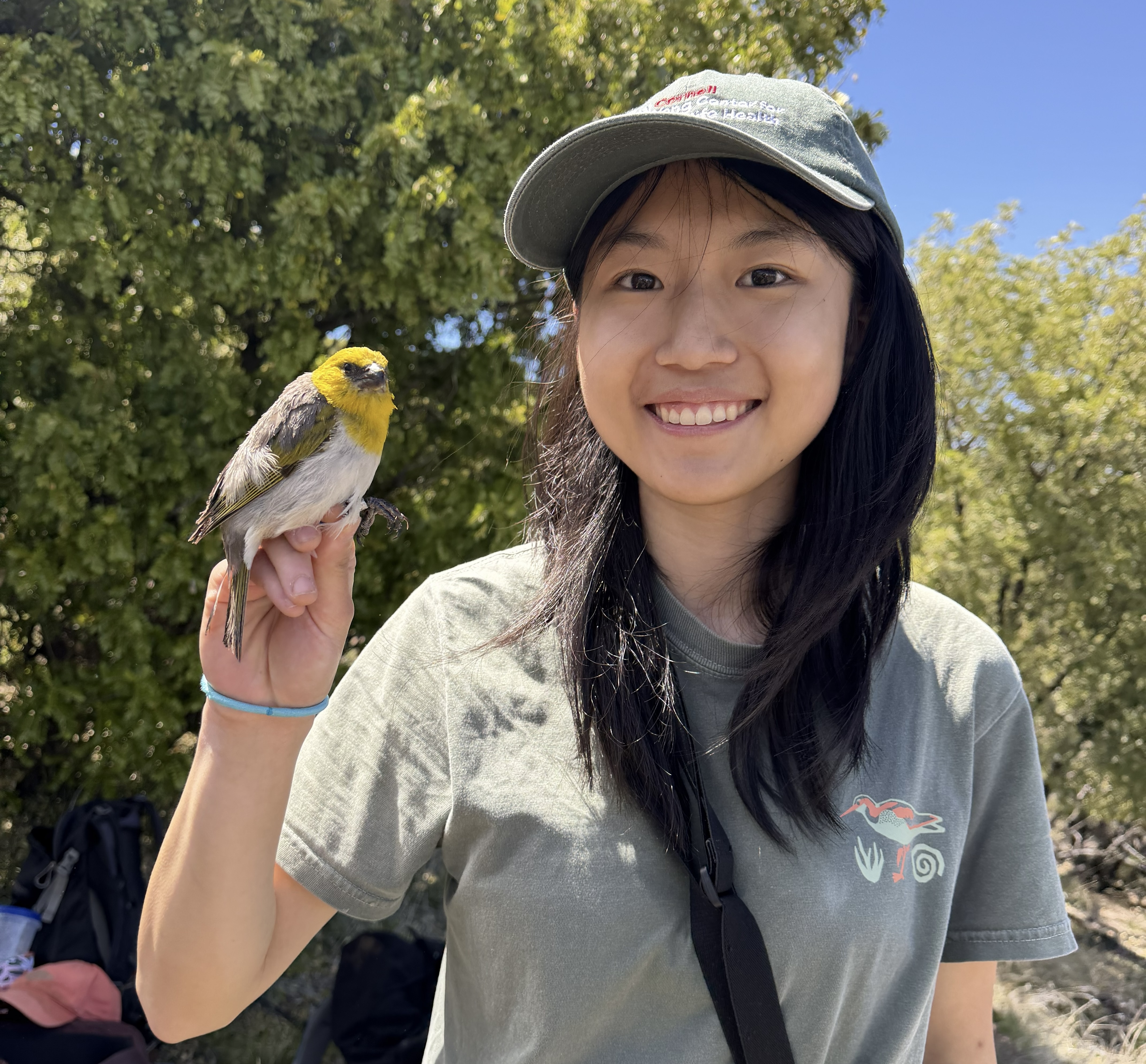
When the schedule allowed, I was also privileged to join Division of Forestry and Wildlife biologists Alex Wang and Adrian Burke for on-the-ground conservation efforts involving Hawaiʻi’s endangered songbirds. I couldn’t imagine a better way to spend my days than accompanying them for banding and nest-monitoring for Palila, Hawaiʻi ʻamakihi, Hawaiʻi ʻākepa, ʻakiapōlāʻau, ʻōmaʻo, and Hawaiʻi ʻelepaio. We hiked the steep, loose rubble of Mauna Kea at 10,000 feet and navigated through dense forest, taking each step carefully to avoid trampling native plants. Seeing the knowledge and physical work that go into fighting the extinction of these species, and the biologists behind all of that work, was awe-inspiring. Their generosity in sharing their work with the community was also amazing. I am so grateful to have met and learned from Alex, Adrian, and their skilled teams.
I would like to thank Dr. Juan Guerra and the HWC team for their kindness in welcoming me and shaping my externship into an experience that I will carry with me forever. This experience was made possible by the generous support of Jake Holshuh ‘67, DVM ’69, through the Cornell K. Lisa Yang Center for Wildlife Health's Student Support Fund. I cannot thank them enough.
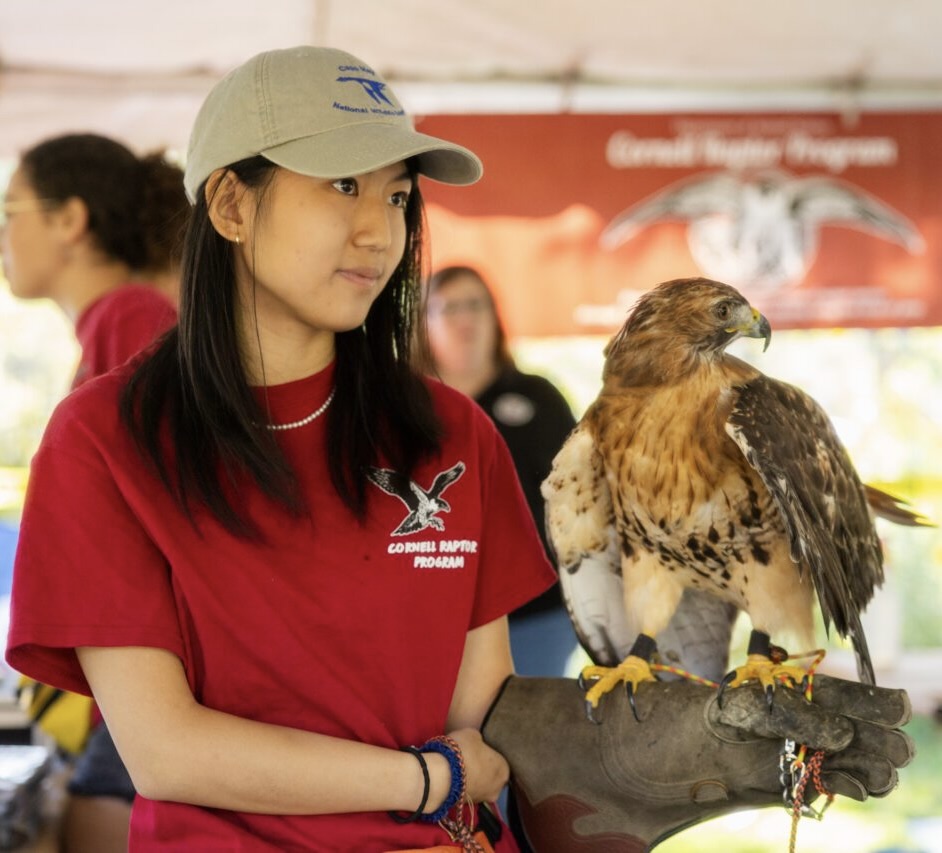
Allison Cao, Class of 2029, is a veterinary student at the Cornell University College of Veterinary Medicine. She grew up as a birder in South Jordan, Utah, and received her undergraduate degree in animal science from Cornell University. She hopes to follow her passion for birds into a career in conservation and wildlife medicine.
Media provided by Allison Cao.
Please consider giving to the Cornell Yang Center for Wildlife Health Student Support Fund to help provide more hands-on experiential learning opportunities for students passionate about wildlife health and conservation.