
Flags, Fish, and Focus Groups: A Summer Studying Ocean and Human Health in Timor-Leste
By Jordan Schween, MPH ‘27
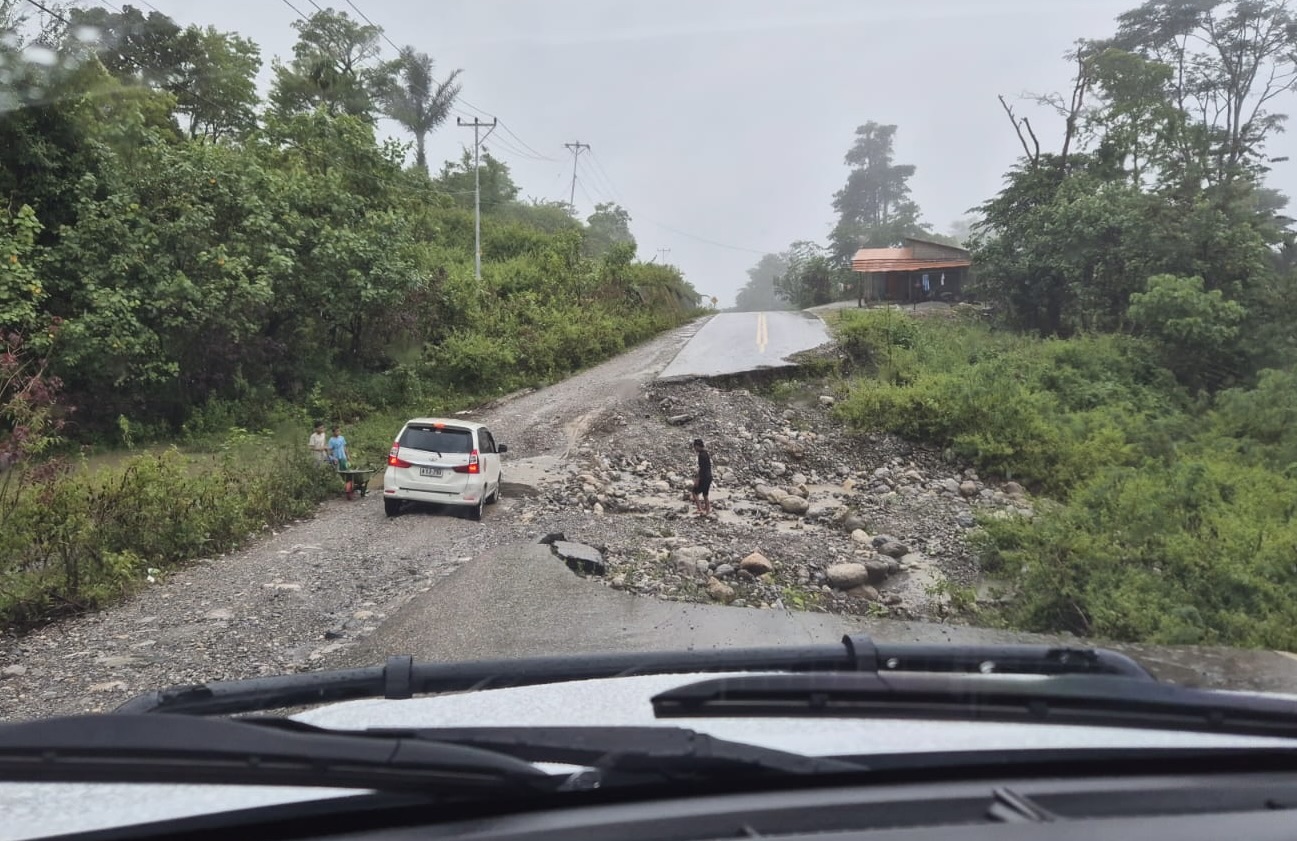
The road to Timor-Leste's coastal villages will teach you a few things fast, the first being perspective. Our travel schedule had hit more than one rough patch before we could even begin fieldwork, and we joked that it had been a bumpy road. Turns out, I did not know what bumpy meant. Pavement gives way to dirt, dirt yields potholes on top of potholes, and every so often, a landslide has dropped a stretch of road a foot below the rest, creating one large, uneven step that tends to give everyone a stumble. Goats, cows, and dogs also claim the right of way without apology.
Back at the guesthouses, you learn just as quickly to fill a bucket before you leave, since there’s no guarantee there will be running water when you return, and nobody wants to be the person who forgot. And through it all, attached to kiosk fronts, poles, trees, and even the microlets (local minibuses), were flags. Not the flag of Timor-Leste, but the flags of countries I'd never expected to see represented within a small island nation on the other side of the world. It was World Cup season, and Timor-Leste, it turns out, loves football.
A Place Where the Ocean Feeds Everyone
Timor-Leste sits inside the Coral Triangle, a region in the tropical waters of Southeast Asia that is known for its abundance of fish and seafood. Home to more than 3,000 aquatic species and roughly half of the world's coral reefs, it is one of the most biodiverse marine places on Earth. For many coastal households here, fish and seafood are a convenient source of easy-to-absorb nutrients essential for health. The area’s biodiversity shows up not only in its ecosystems, but in the livelihoods of the residents as well. However, the rate of biodiversity loss in this region is among the highest in the world, threatening both the health of the ocean and the communities who rely on it, many of which already face high rates of malnutrition.
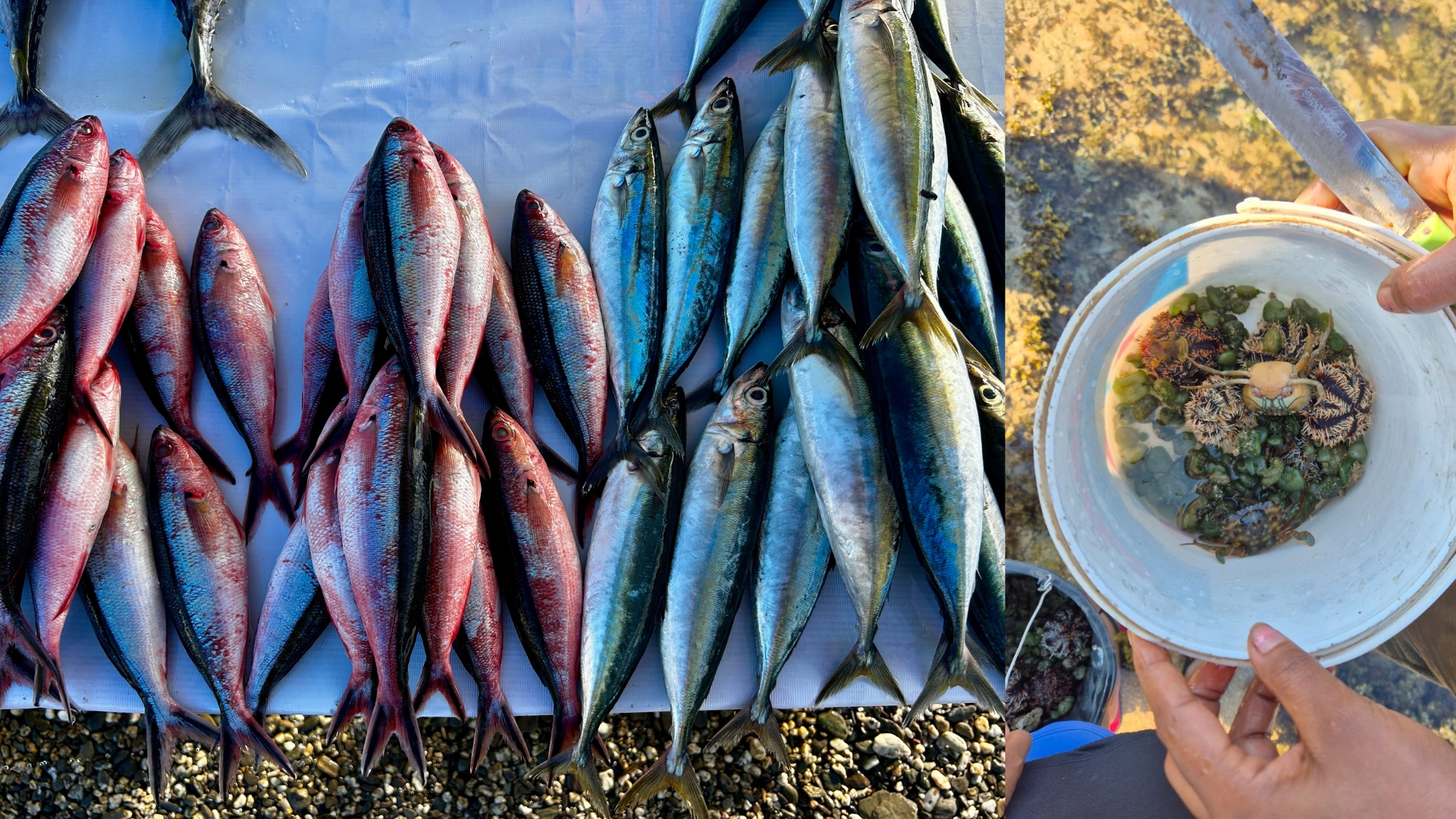
I came to Timor-Leste as part of a larger project, led by Cornell Atkinson Postdoctoral Fellow Dr. Lydia O’Meara and funded by the Cornell Atkinson Center for Sustainability and Cornell K. Lisa Yang Center for Wildlife Health, to test whether a simple mobile phone survey can track nutrition in hard-to-reach coastal households, and by extension, offer us insights about the health of the ocean they depend on. My part focused on the qualitative side: gathering information from individuals to understand how people actually experience a changing ocean, and whether a new monitoring tool could fit into the food security and fisheries governance systems they already trust.
My background is in psychology, and if that field has taught me one thing, it's that no one can fully understand the why behind another person's choices or circumstances. You have to ask, and more importantly, you must listen to the answer. That's what drew me to qualitative research: it treats people's lived experience as evidence, rather than just color around the "real" data. Paired with a long-standing interest in how climate change is reshaping our oceans, this perspective led me to pursue a Master of Public Health focused on environment, climate, and health, and to Timor-Leste this summer.
Earning the Right to Ask
None of this would have happened without WorldFish's team in Timor-Leste, some of the kindest people I've worked with. As an NGO with strong footholds in nutrition-sensitive fisheries, WorldFish’s collaboration was instrumental to this project. Their team not only helped us engage with communities and navigate translations, but they also helped us interpret context and understand how different cultures shaped each community. This context matters when you are trying to grasp people’s circumstances in ways a translation app or a survey instrument alone never could. Our partnership became especially important when a health emergency pulled my supervisor away for nearly a month. WorldFish's team kept the project moving and made sure I wasn't navigating a new country on my own.
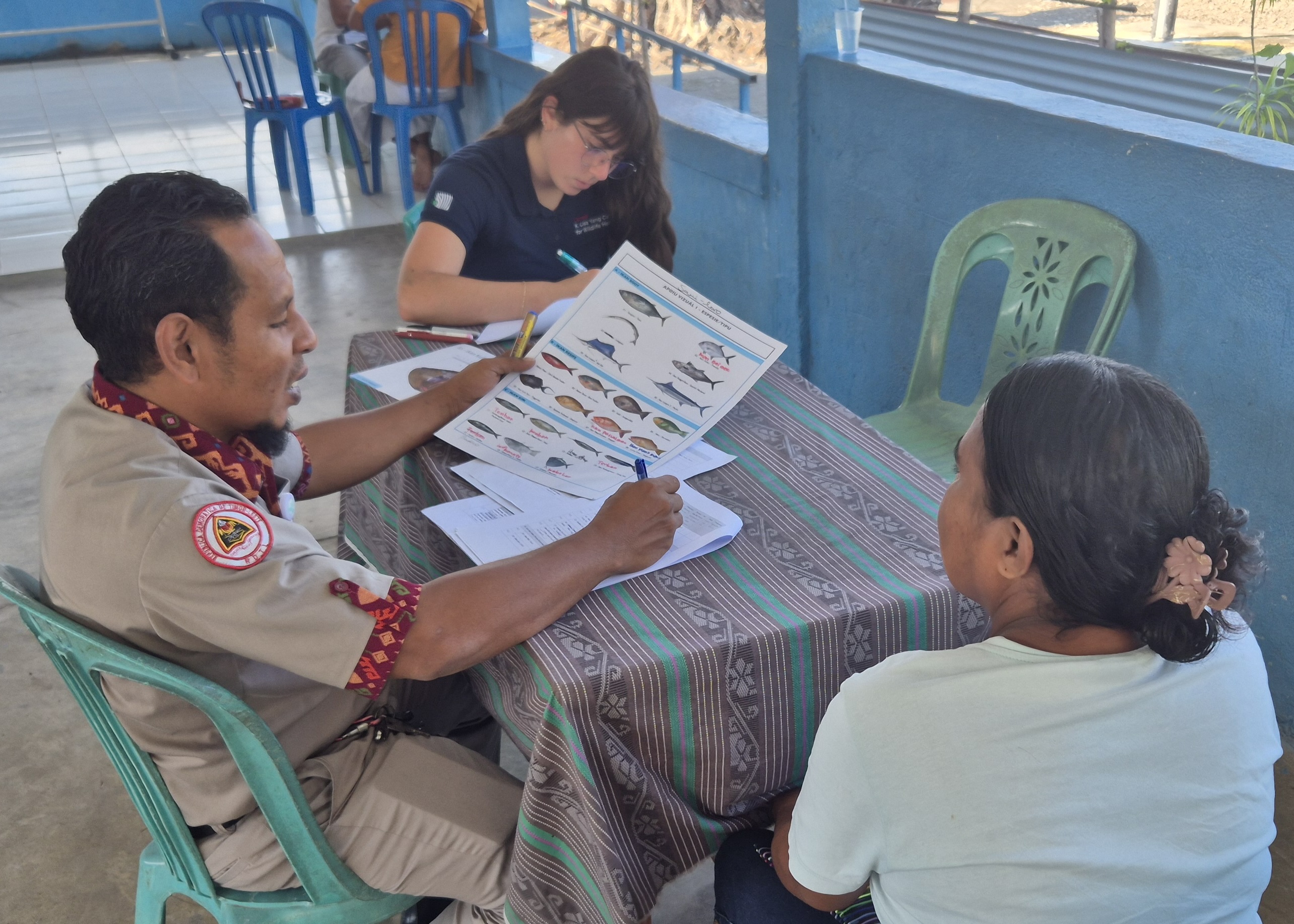
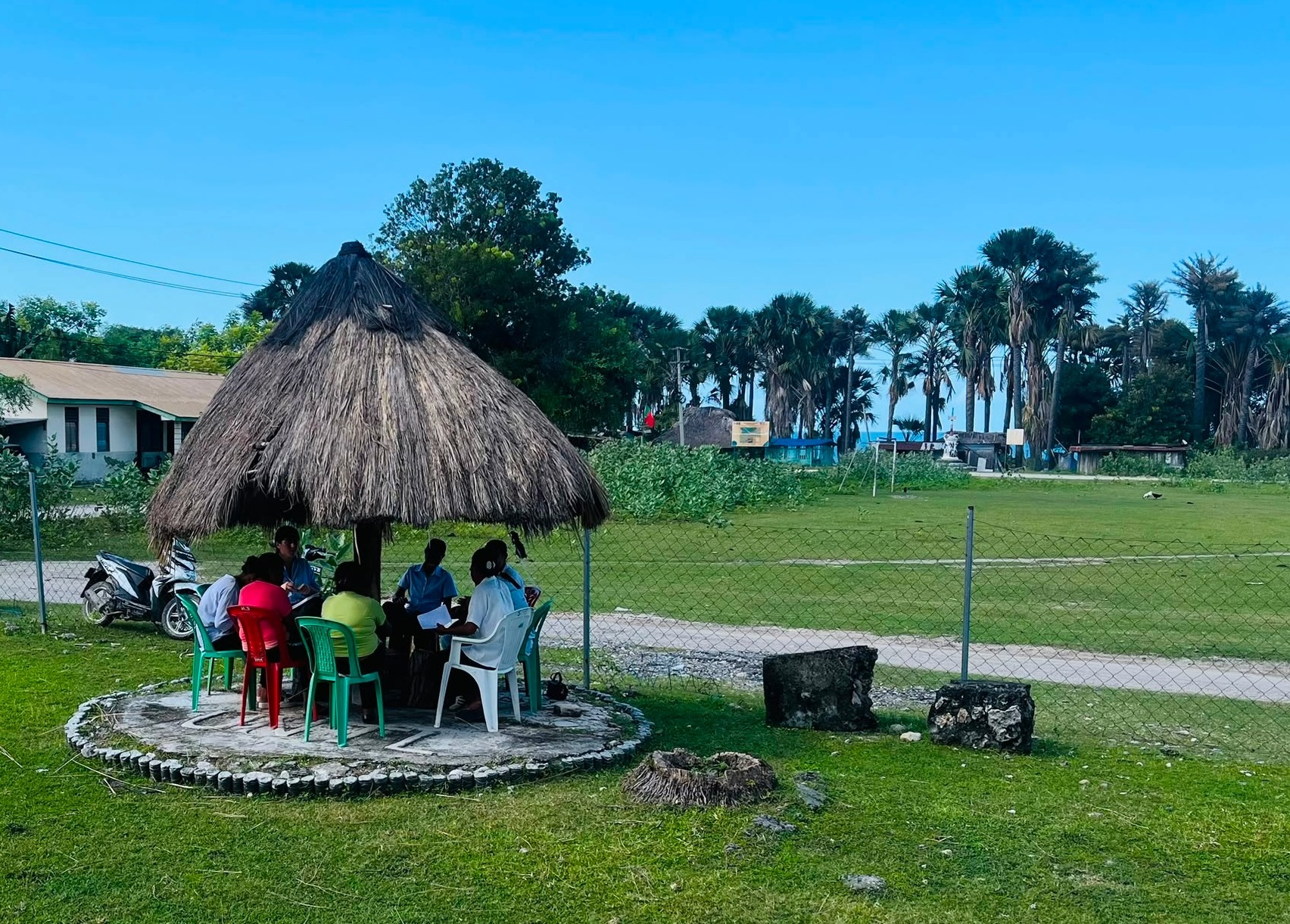
Once in the field, we refined survey translations for the different dialects in each village, worked with enumerators to prepare focus group discussions and pre-test surveys, and co-led interviews with key informants. In each village, we split focus groups by gender so we could clearly hear men's and women's perspectives on family life, fishing, and food.
I expected the language barrier to be the hardest part of this work, but time with these communities taught me something different: some of the best rapport-building happens by accident, and it has nothing to do with language at all.
On the morning of our first focus group discussions, we sat wondering why so few people had shown up. Then, we realized the Portugal-Croatia World Cup match was on, and everyone was watching. Instead of heading back to the office to wait it out, we joined them. People held phones or propped them up wherever they could, and as more people trickled in, the watch party grew.
We used halftime to our advantage by quickly introducing ourselves and the project, and listening to a few words from the village chief. We ate, cheered for Portugal as they won, and only after the match ended did we get into the focus group discussions.
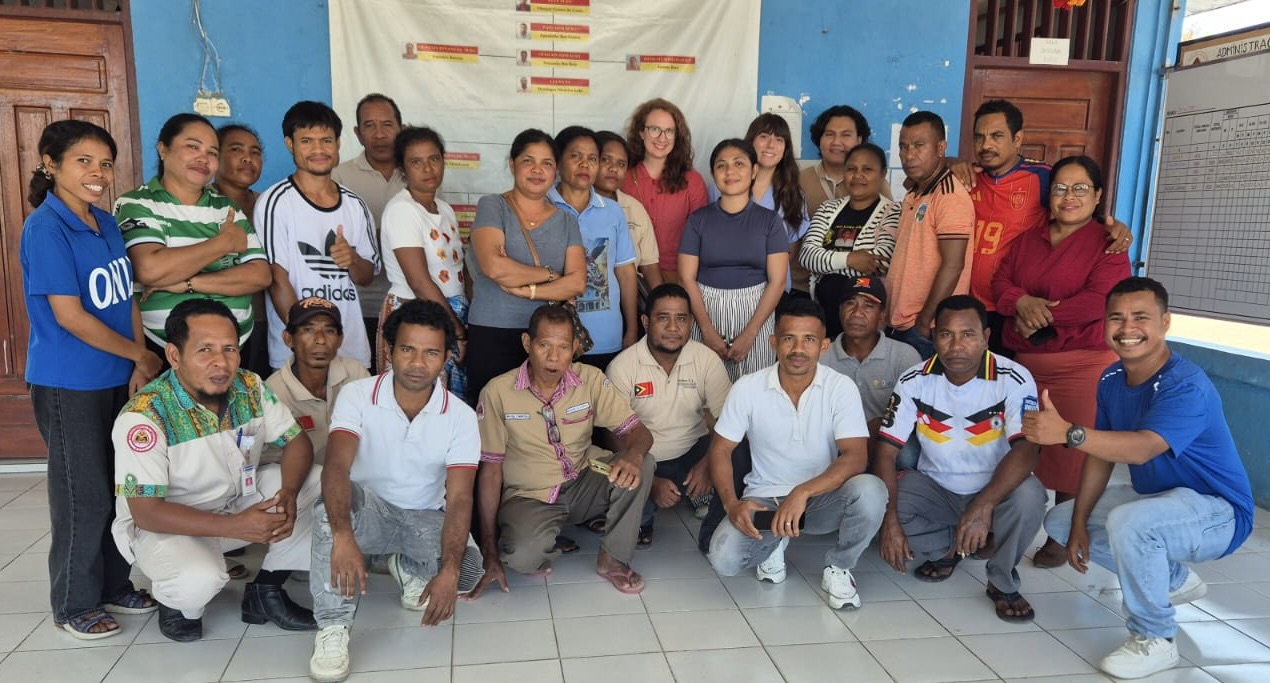
This start to the day did more for the research than any formal introduction could have. By the time we sat down for interviews, we weren't strangers here for research. We had begun building the bridge to become acquaintances over a shared interest. Participants seemed visibly more at ease, and that feeling showed in the richness of the discussions.
Taking the time to do formative research makes a difference.
We could have easily used the interview guide we designed back in Ithaca, unchanged. But we would have missed what we learned only by being there: that a question that makes perfect sense in English can mean nothing, or the opposite, in the local language. Because we were there and listening, we picked up important context, like a fish species missing from our lists, or different villages calling the same fish by different names. These are relationship-based communities. These relationships are built face-to-face, and the data reflects that. Meeting the village chief, engaging in small talk before the real discussion starts, and showing up for a football match had nothing to do with my research questions, yet everything to do with earning the trust to ask them and the privilege of hearing answers.
One Village, One Health: What Comes Next
As a public health student, I've learned that a "simple" tool is never actually simple. It has to work with no internet connection, mean the same thing across a dozen dialects, and have every assumption checked against the place it's meant to work in. This summer's fieldwork was the formative aspect that feeds into the bigger question: Can a low-cost, phone-based tool, one that works even with limited connectivity and low literacy, tell us something reliable about both marine biodiversity and household food security? If it can, it could offer what the Coral Triangle needs: a way for communities that depend on these waters to monitor them on their own terms, while providing the government with timely evidence they need in order to help.
My job now is to make sure the quantitative diet and ecological data, as well as the lived reality, coalesce. The goal is to develop a tool that healthcare workers, fisheries co-management groups, government ministries, and fishing households alike can use and trust.
This is the kind of work I want to keep doing. Before this summer, "One Health" was a framework I'd read about—the idea that human, animal, and environmental health are inseparable. After a summer of listening and learning, it's no longer just a framework to me. Now, it's how I think about a problem. This summer also helped me put words to something I've believed for a while: communities on the front lines of climate change, the ones who'll feel it first and hardest, should be the starting point for this work, not an afterthought.
But I don't think that's where it ends. A monitoring tool built with a fishing village in Timor-Leste doesn't just help that village adapt to a changing sea; it's a model other coastal communities facing the same pressures can use. It’s a small piece of something bigger: a step toward learning how to slow the damage, not just learning to live with it.
This work wouldn't have been possible without funding from the Cornell Atkinson Center for Sustainability, the Cornell K. Lisa Yang Center for Wildlife Health, the Mario Einaudi Center for International Studies, and the Southeast Asia Program (SEAP) Audrey Kahin Research Grant; the leadership of Dr. Lydia O'Meara and Dr. Katie Fiorella, associate professor in Cornell’s Department of Public and Ecosystem Health; and the guidance of WorldFish's team in Timor-Leste, who all taught me as much about this place as I hope I contributed to the project. I'm grateful to all of them, and to the communities who let a stranger with a lot of questions sit down at their table. I'll be thinking about them for a long time.
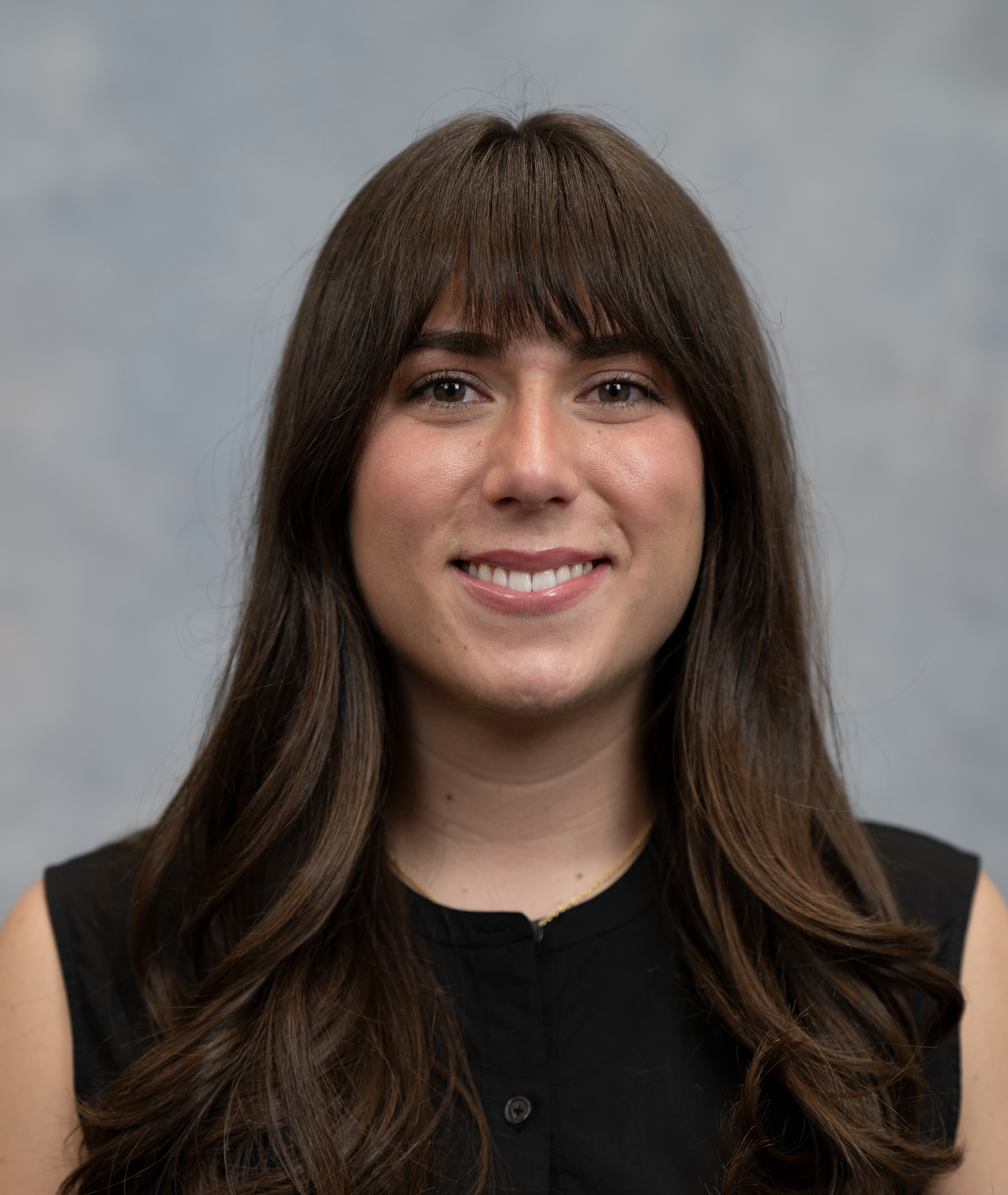
Jordan Schween is a Master of Public Health candidate (MPH '27) at Cornell University’s College of Veterinary Medicine, concentrating in Environment, Climate, and Health. She is interested in the intersection of One Health, climate science, and global health practice, and hopes to build a career helping communities understand and navigate the effects of climate change on natural resources.
Photos provided by Jordan Schween.
This is one of our first blogs from a student in the Cornell Master of Public Health Program, part of a pilot effort expanding the circle of beneficiaries of the Cornell Yang Center for Wildlife Health Student Support Fund.
Please consider giving to the Cornell Yang Center for Wildlife Health Student Support Fund to help provide more hands-on experiential learning opportunities for students passionate about wildlife health and conservation.