
Exploring One Health Perspectives with Working Dogs for Conservation (WD4C)
By Jessica Park, DVM ‘29
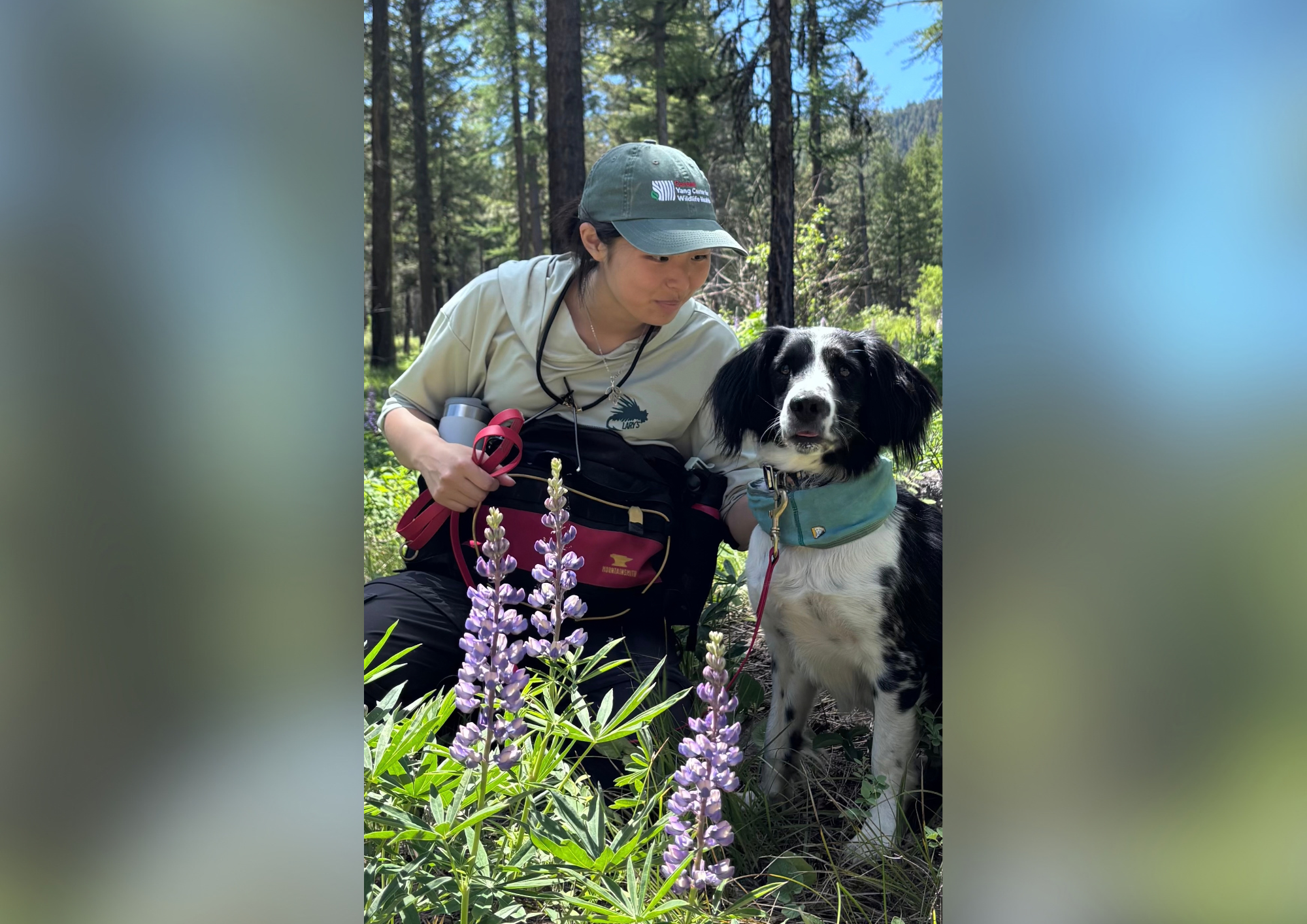
“Moose, too far!”
Though I feared the rain would muffle my call, seconds later I heard the tinkling bear bell, followed by a feathery flag whirling above the shrubs—that is, the tail of a very special dog. My wildlife scat detector returned for the moment, but he was impatient to continue his work, and so we trekked onward up the mountain. While each step through the waist-high grasses squelched, the rain did not dampen Moose’s enthusiasm, and after weeks of working alongside him, I couldn’t help but feel the same.
I was with Moose and my mentor practicing scat surveys. We were not far from the Working Dogs for Conservation (WD4C) headquarters in Turah, Montana, where Moose has lived since his transition from shelter pup to working dog. He is trained on various target scents: wolf, mink, otter, spotted skunk, and blunt-nosed leopard lizard…
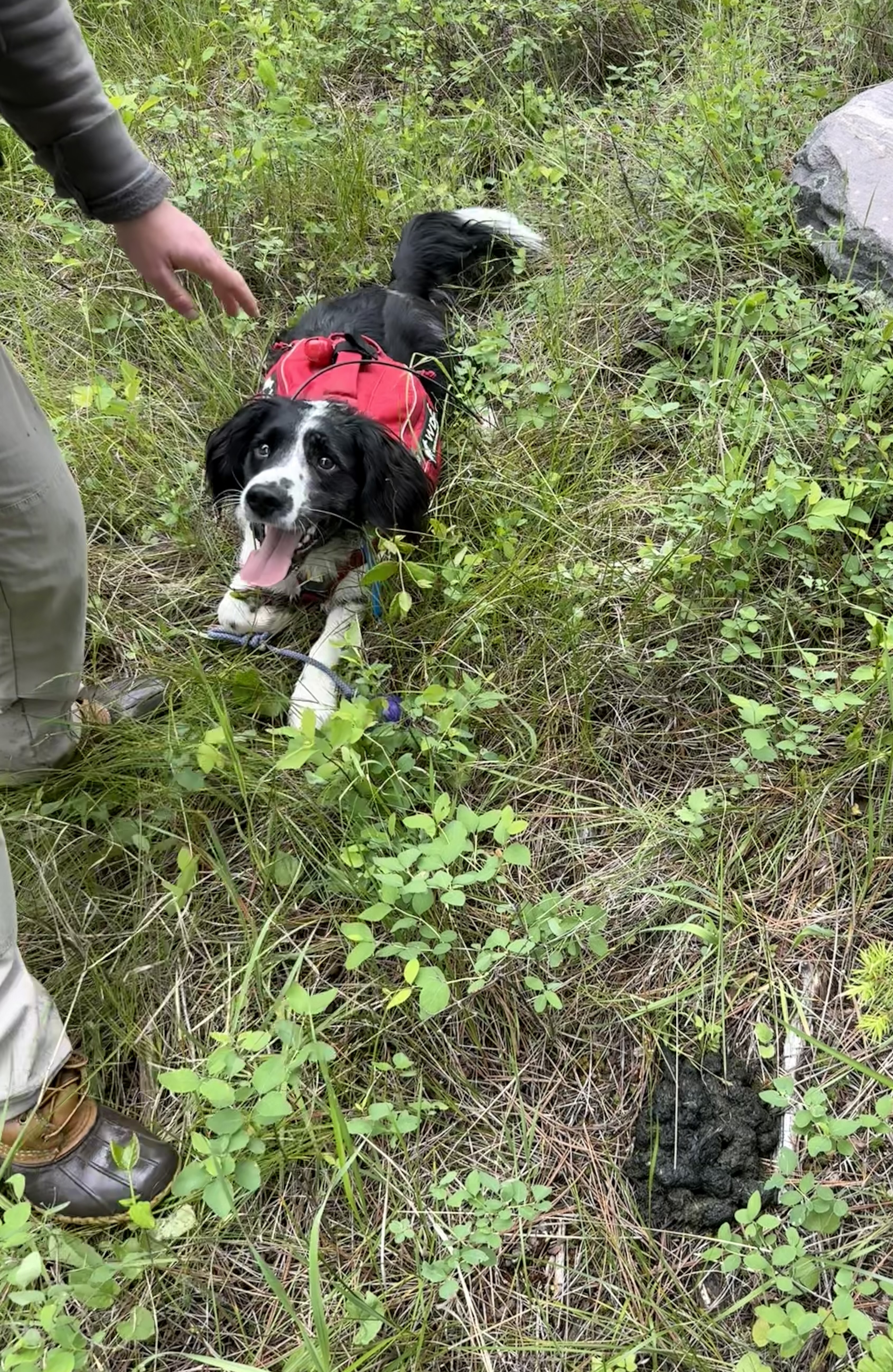
But that particular day, we were on the hunt for bear.
And Moose knows when he is on it.
Tail helicoptering, Moose made a sharp turn into the brush, and we took his lead. When he came into view, he was seated politely with a pile of dark scat at his feet. Black bear. A happy Moose beside black bear loot.
“Good job, Moose!”
The pup leapt to his feet as I retrieved a ball from my training pouch. As Moose reveled in his prize, I marked down the scat’s location in my notebook.
Partners of WD4C use this dog-sourced data on bear demographics, diet, and distribution to inform wildlife crossing locations and policy changes, such as requiring bear-proof trash cans in areas where bear and human populations overlap, for the health and safety of both.
I considered this incredible impact as I tossed the rubber ball across the beautiful mountain landscape, scanning for a glimpse of our target species through the trees. My gaze flicked from the tree line to the happy Moose at my feet. All this incredible impact, I thought, for the bliss of a dog playing fetch in the rain.
Welcome to Working Dogs for Conservation
WD4C was founded in 2000 by Dr. Megan Parker, Alice Whitelaw, Aimee Hurt, and Dr. Deborah Woollett. What started 26 years ago as the shared dream of four women to combine a passion for conservation with the unique abilities of working dogs has since gone international to help wildlife globally and inspire the foundation of similar organizations within this growing field.
I’ve been following WD4C’s revolutionary work since I was in high school, amazed by their successes ranging from wildlife disease and endangered animal detection to anti-poaching law enforcement and invasive species management. So, when I met WD4C’s executive director Pete Coppolillo at a Cornell guest lecture, I already knew I wanted to work with the organization. Just over a year later, after many Zoom meetings and emails sorting out logistics, I bought a plane ticket to Missoula—funded by the Cornell K. Lisa Yang Center for Wildlife Health—to make that dream a reality.
My time with the organization exposed me to many facets of their work. There was the messy day-to-day of training and caring for around a dozen goofy, high-drive dogs as well as their current conservation projects. Though I had primarily sought to contribute to their wildlife health work, I came away with a lot more: an introduction to working dogs, a better understanding of the challenges of fieldwork, and a more personal relationship with the One Health concept.
A Little Bit of Everything, Please!
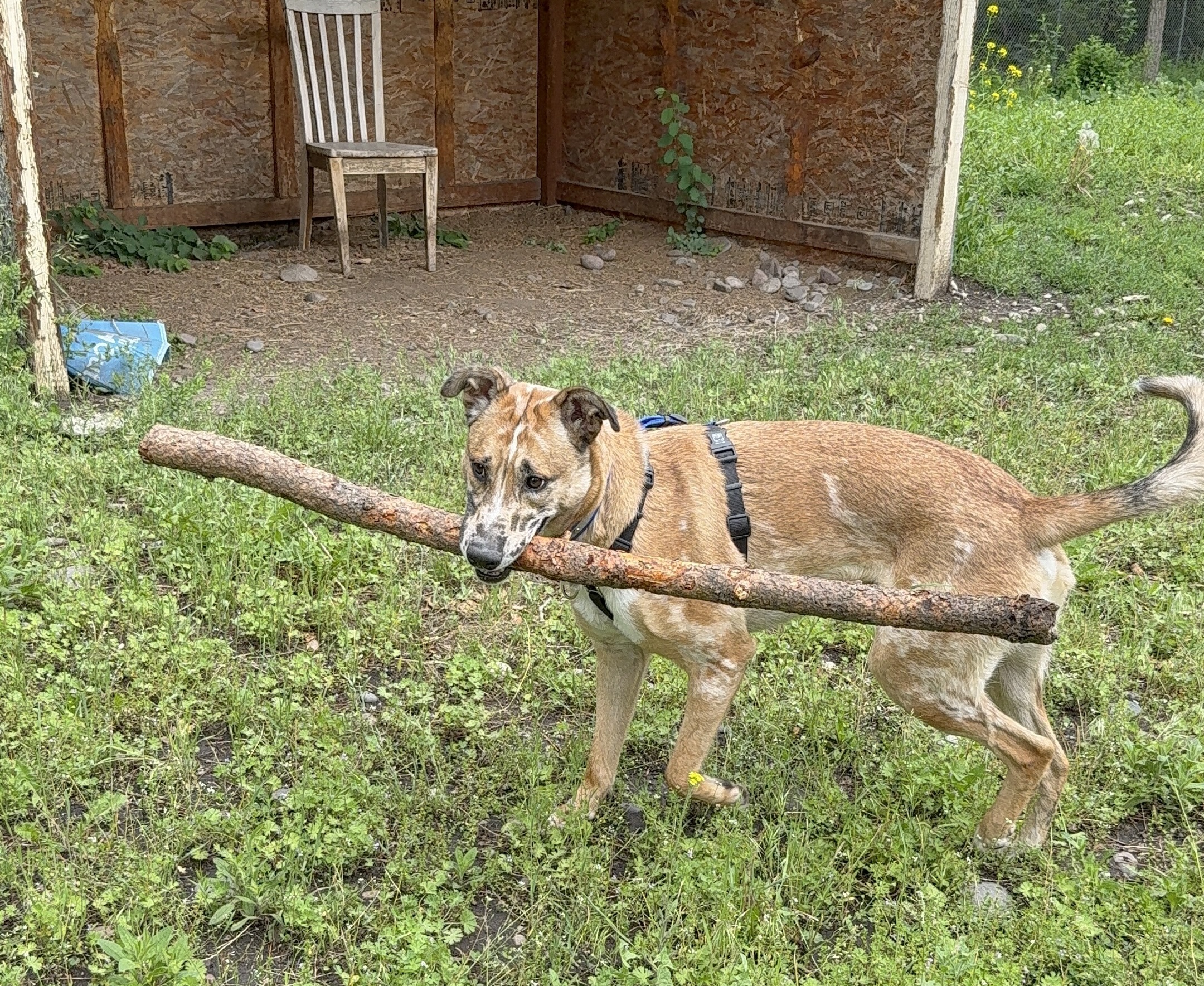
The second I walked through the door, the first dog I met playfully punched me in the chest. Dude is one of WD4C’s newer recruits. He looks like the phrase “et cetera,” with his long legs, his spotted coat, his wonky butterfly ears and skinny whip tail. In many ways, my time in Turah was like Dude: a joyful cobbling of things, complete with all the challenges and milestones of starting something new in a new place.
I learned a lot alongside Dude—following his journey through developing a fitness routine, practicing increasingly difficult searches for his target scent, getting used to distractions like chickens and ground squirrels, and learning to trust his humans after a year of shelter life. Watching his growth showed me that training a dog for conservation work requires immense hard work, thoughtfulness, love, and adaptability.
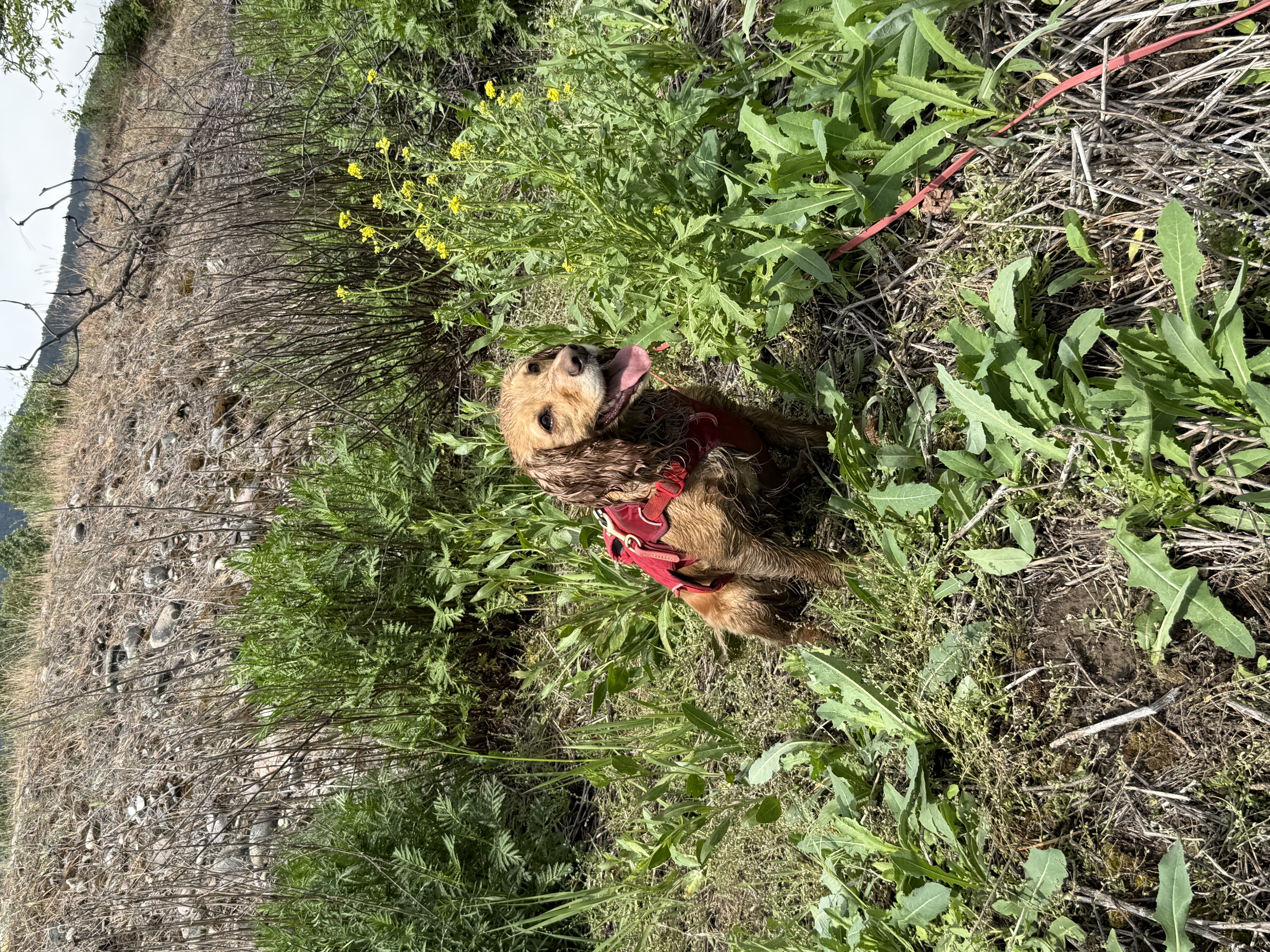
As WD4C’s first ever veterinary intern, my schedule was always variable. Some days, I was in the field with Moose and my mentor, Paige, searching for bear; or with Melissa (the human) and Quinn (the spaniel) looking for invasive pepperweed; or with Amanda and Ngaio (the humans) and Sully (the coltriever) learning to identify invasive rush skeletonweed. Other days saw me in the Shop, the building where dog training happens, working with Moose or Dude on obedience training or fitness routines that exercise both muscles and brains to prepare them for maneuvering smoothly on a project.
Then there was a bit of everything else. I helped to design a pilot study measuring and managing heat stress in the dogs, explored Missoula, read about past WD4C projects, learned more about Indigenous culture, got to know the unique personalities of each dog, “be-frenemied” the mice sharing my trailer…. And, of course, I also got exposure to the gamut of fascinating wildlife health projects that WD4C is involved in.
The True Story of One Health: Shared Healing
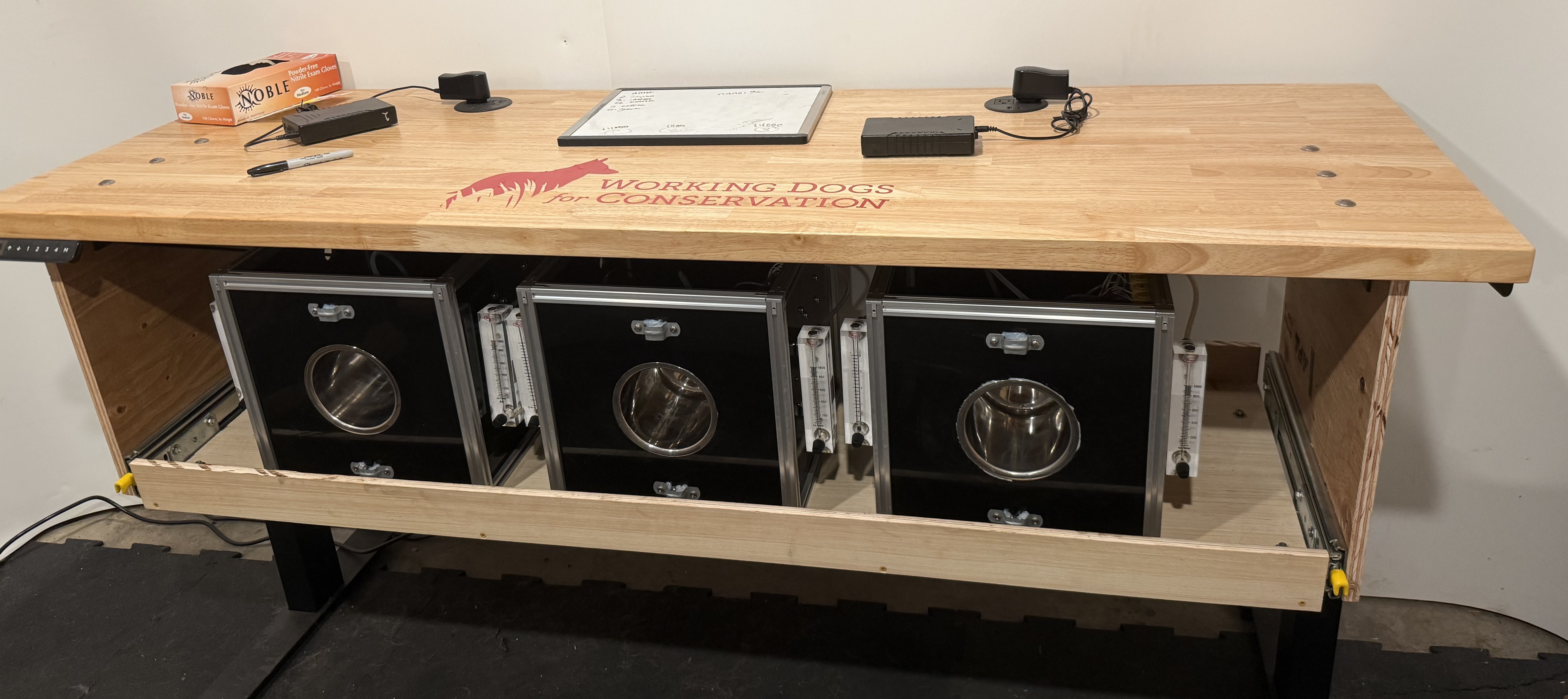
One of the tools I learned about in detection dog training was the olfactometer—a computer-randomized tool that can present subtle target scents to the dog at one of three scent-presenting boxes. Its primary use at WD4C is for training dogs to identify samples containing trace concentrations of compounds derived from Mycoplasma ovipneumoniae, a bacterium that causes respiratory disease in domestic and wild sheep. WD4C is working to apply it to Mycoplasma bovisas well—a similar pathogen affecting cattle and wild ungulates—as a One Health initiative to protect livestock, wildlife, and human livelihoods.
Some other wildlife projects that inspired me were WD4C’s work with endangered species reintroduction and monitoring. They have collected data for projects looking at reintroduced black-footed ferret populations, the recolonization of wolves and grizzlies throughout Idaho and Montana, the impact of pesticides on San Joaquin kit foxes, and even the presence of elusive Sumatran rhinoceroses in Indonesia.
But the project that impacted me the most was one I hadn’t known about before arriving. On my first day of work, I met the founder of Indigenous Vision, Souta Callinglast, and her dog, Kiinii, who had come to Turah for routine training. In partnership with WD4C, Indigenous Vision was leading a project that used mink and otter scats to determine pollutant concentrations throughout the Blackfoot Reservation.
Being aquatic predators, otters and mink bioconcentrate, or accumulate, contaminants like heavy metals that may be present in the water. The hope is that analysis of scats detected noninvasively by the dogs can reveal where pollutants have entered the food web—both to monitor local wildlife health and to inform the local Amskapi Pikuni foragers of where it is safe to collect food and fibers.
And that’s when it clicked for me.
That’s the impact I want to have for people and wildlife. At last, the One Health concept had transformed from abstract knowledge to the real feeling. What had drawn me to WD4C to begin with? What had drawn me to veterinary medicine at all? Each of WD4C’s projects had a common thread I have been subconsciously following my whole life: the story of shared healing.
Here were dogs rescued from shelters, now flourishing, collecting crucial data that allow humans and wildlife to heal and thrive together…
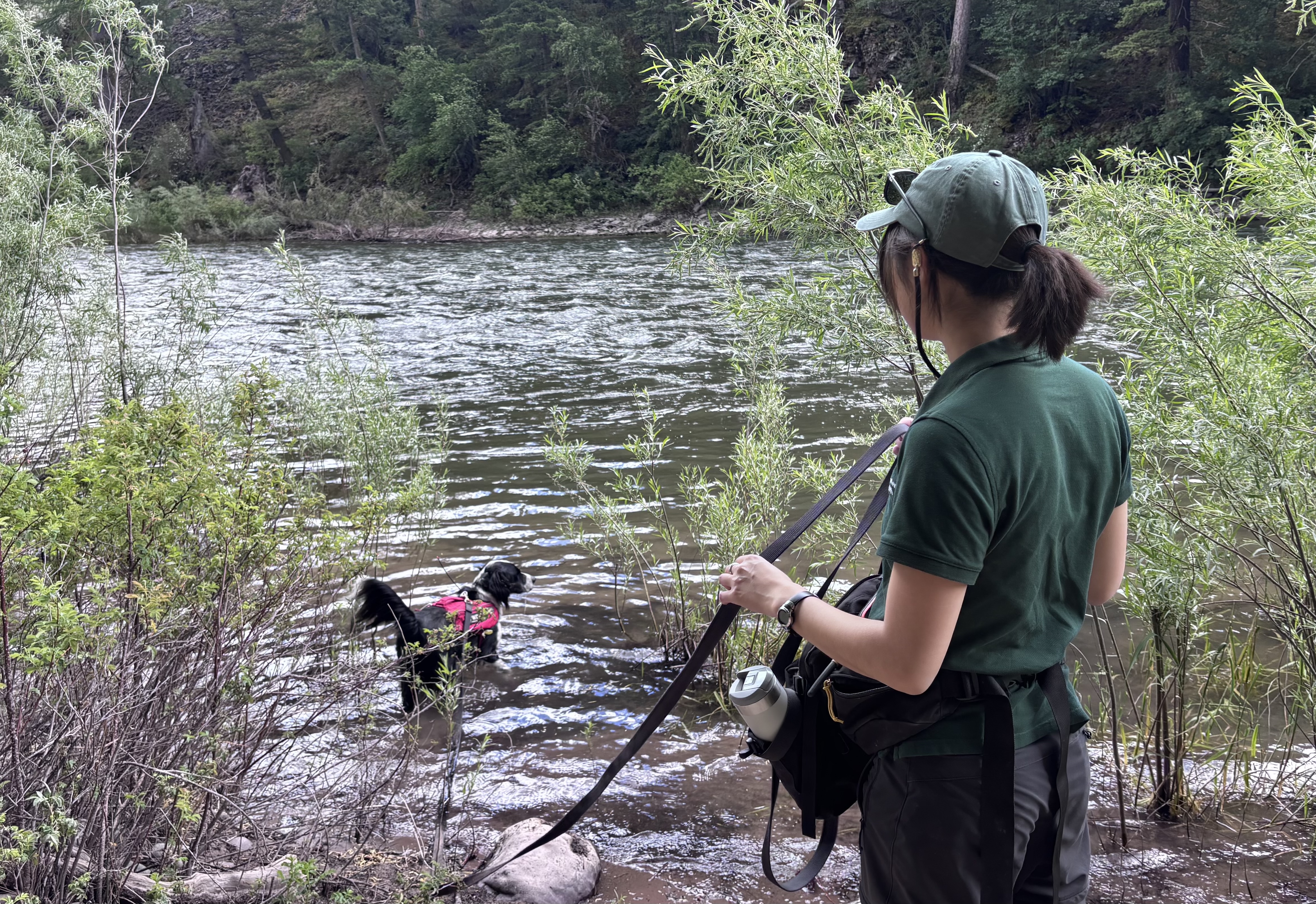
Here was Moose, on the banks of the Clark Fork; before him, the remains of a crayfish he had mistaken for otter scat. It was a false alert, but it was another symbol of the interconnectivity all conservationists aim to protect. The lives of otters and crayfish so inextricably linked that a trained dog considers them synonymous. And beside us, anglers were fishing; above us, eagles soaring…
Though he had not quite earned his ball, I gave Moose a cookie for his effort, and we continued upriver with a three-word command I might as well have been saying to myself.
You have found something. Now… “Go find more!”
This experience was sponsored by Jake Holshuh '67, DVM '69, through the Student Support Fund at the Cornell K. Lisa Yang Center for Wildlife Health.
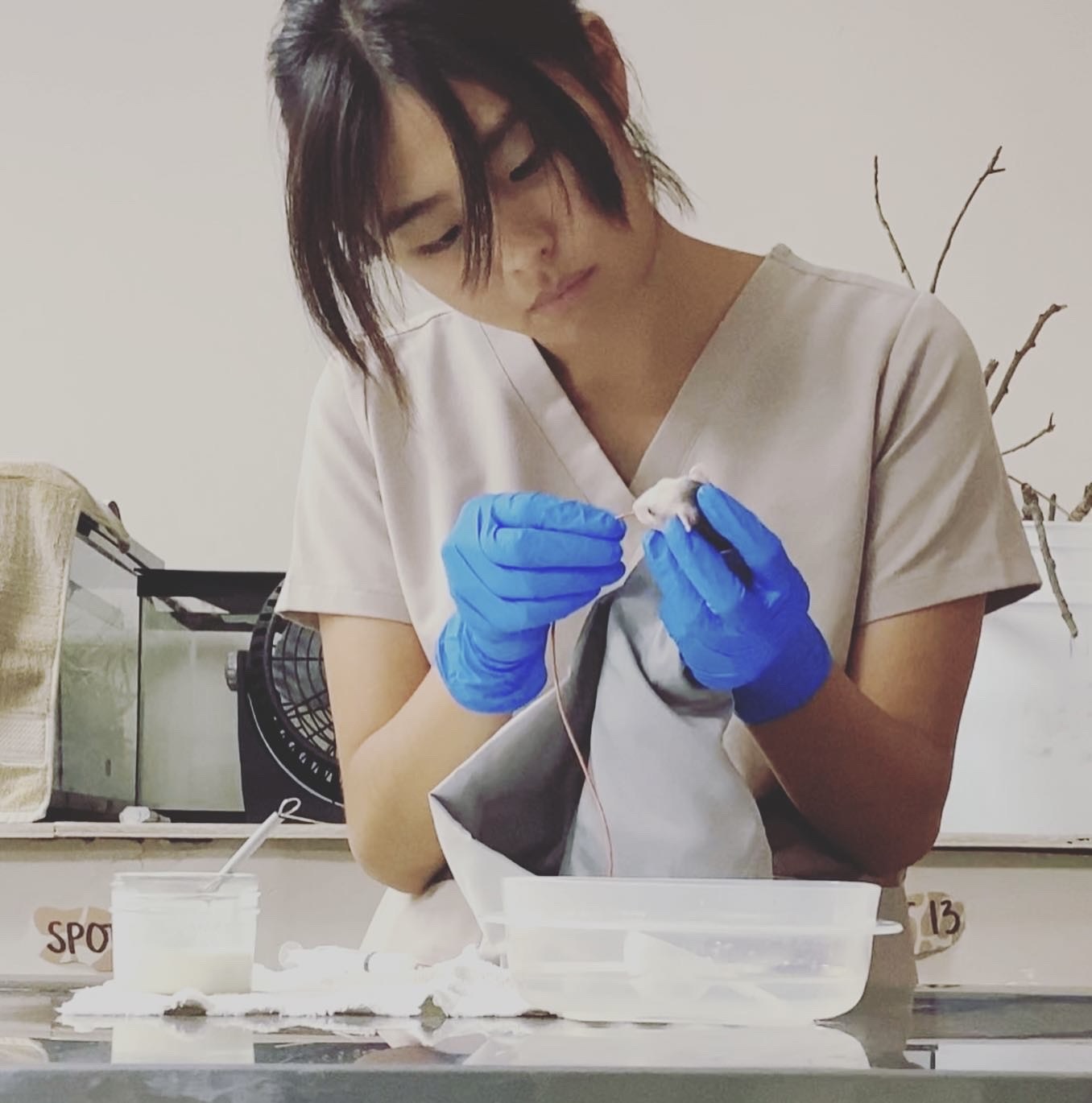
Jessica Park is a Cornell veterinary student, Class of 2029, and the WildLIFE Blog Editor. Originally from Rye, New York, Jess graduated from Cornell with an undergraduate degree in environment and sustainability. As she continues her journey in the veterinary field, she hopes to take a One Health approach to integrating medicine with her passion for wildlife and environmental conservation/restoration. Outside of work, Jess is a passionate archer, rock climber, and creative writer.
Photos provided by Jessica Park.
Please consider giving to the Cornell Yang Center for Wildlife Health Student Support Fund to help provide more hands-on experiential learning opportunities for students passionate about wildlife health and conservation.