
Stepping Through the Gates of Zoo Medicine
By Christine Zhang, DVM ‘25
As a young girl, I was captivated by the majestic animals and wild landscapes I saw on television—so different from the concrete jungle that surrounded me. They seemed magical, distant, and almost unreachable from my urban home in Queens, New York. But I was determined to get closer, and I saw veterinary medicine as my gateway into that world.
Over the past decade, I have crossed many thresholds on my path to becoming a veterinarian. Now, as a recent graduate of Cornell’s College of Veterinary Medicine, I know there are still many more doors ahead before I achieve my dream of becoming a specialized zoo veterinarian. However, with each step, I move forward with momentum and gratitude, knowing every challenge brings me closer to my goal.
A Giant First Step
One of the most formative experiences along this journey was my veterinary preceptorship at the Smithsonian's National Zoo and Conservation Biology Institute (NZCBI) in Washington, D.C. This program offered me a behind-the-scenes look at the Wildlife Health Sciences (WHS) division—a hub of veterinarians, pathologists, laboratory diagnosticians, and reproductive biologists in collaboration to find solutions in wildlife health and conservation. With its rich history dating back to 1889 and its interdisciplinary approach to zoological medicine, NZCBI has long been a leader in the field.
My first week at NZCBI was action-packed. On my very first day, I joined the veterinary and animal care teams in responding to a young elephant that needed medical attention. Watching more than ten experts—including veterinarians, diagnosticians, and animal care specialists—come together for a single patient was awe-inspiring.
Equally impressive was the elephant's willingness to participate in the medical exams, a result of years of bonding and positive training with its caretakers. Despite abrupt changes to its daily schedule, temporary separation from the herd, and sleep disruption, the elephant stood steady throughout the procedures. Even fellow herd mates played a part; all elephants are trained to position themselves and remain still for blood draws from their ear veins. This allowed the team to collect blood for transfusions, a treatment that can save lives when administered in a timely and appropriate manner.
Behavioral Participation: Animals as Partners in Their Own Care
A recurring theme throughout my preceptorship was the importance of behavioral training that teaches zoo animals to cooperate in their own healthcare, allowing caretakers to provide a higher level of care with less risk than would otherwise be possible. Sea lions, for example, are often associated with show performances, but their training goes far beyond entertainment—it serves primarily as a bonding exercise with their caretakers, ensuring safety and enabling high-quality medical care when needed. At the Smithsonian National Zoological Park, the sea lions participated in full physical exams by presenting various parts of their bodies, including their flippers, tails, mouths, and eyes. During my time there, we also leveraged their trained behaviors to perform radiographs and vaccinations with minimal stress.
Other species demonstrated similar cooperation in their own care. Orangutans would sit with their backs to a gate to receive therapeutic laser treatments for back pain. Even animals that aren’t as social or known for complex learned behaviors contribute to their own well-being in simple but meaningful ways, such as willingly taking their medications or entering transport carriers to facilitate medical procedures.
Diving Deeper
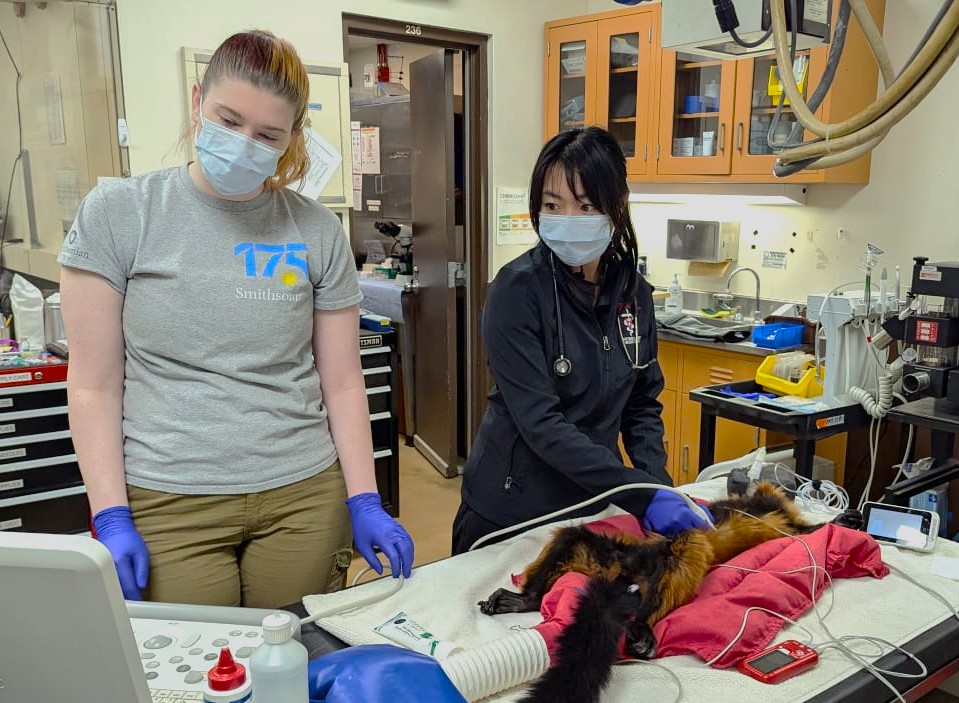
Throughout my five-week preceptorship, I had the privilege of working with many species: small primates like lemurs and slow lorises, carnivores like bat-eared foxes and lions, and even reptiles like Henkel’s leaf-tailed geckos. Most patients aligned with my original image of zoo medicine involving mostly four-legged mammals and furry faces.
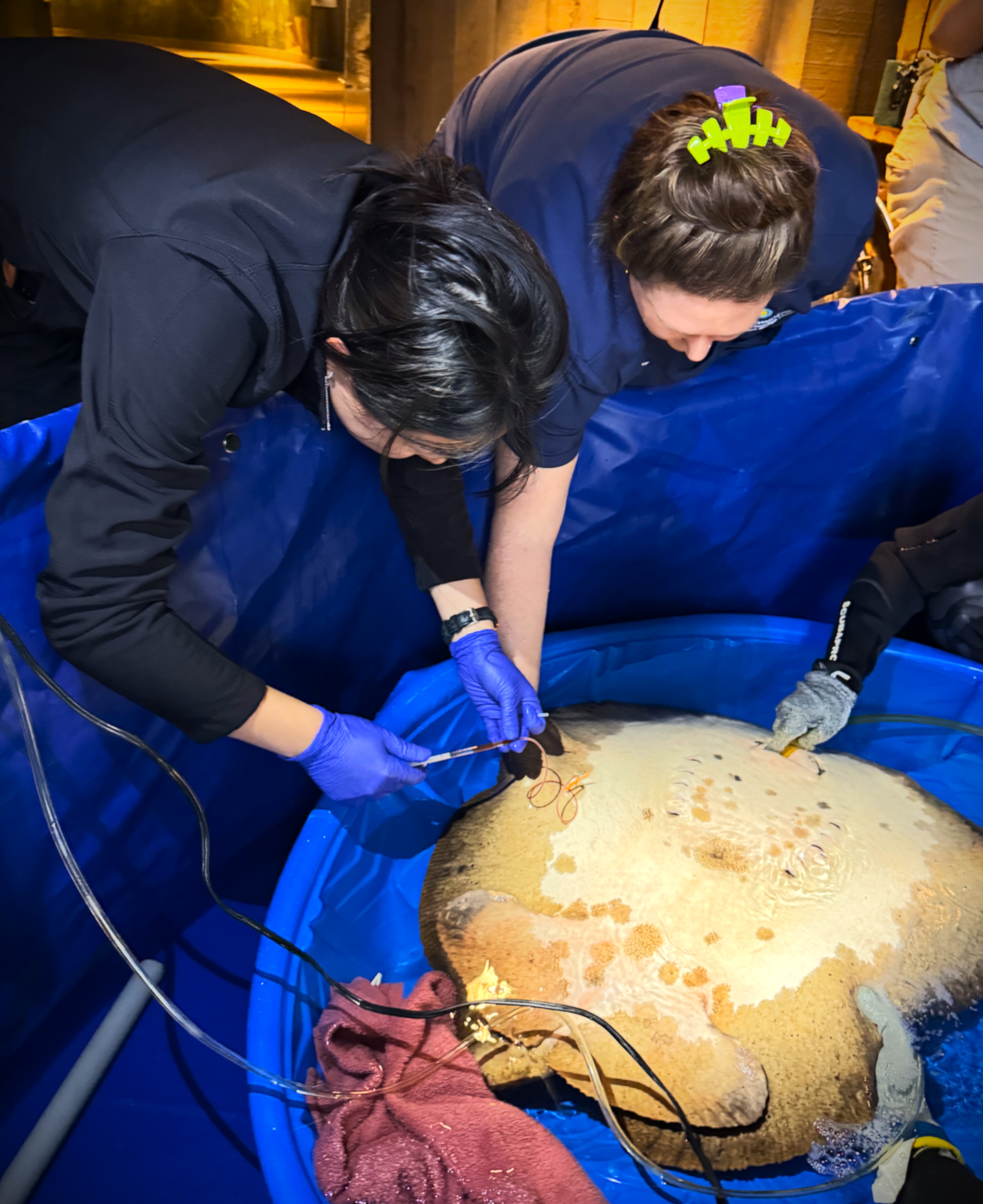
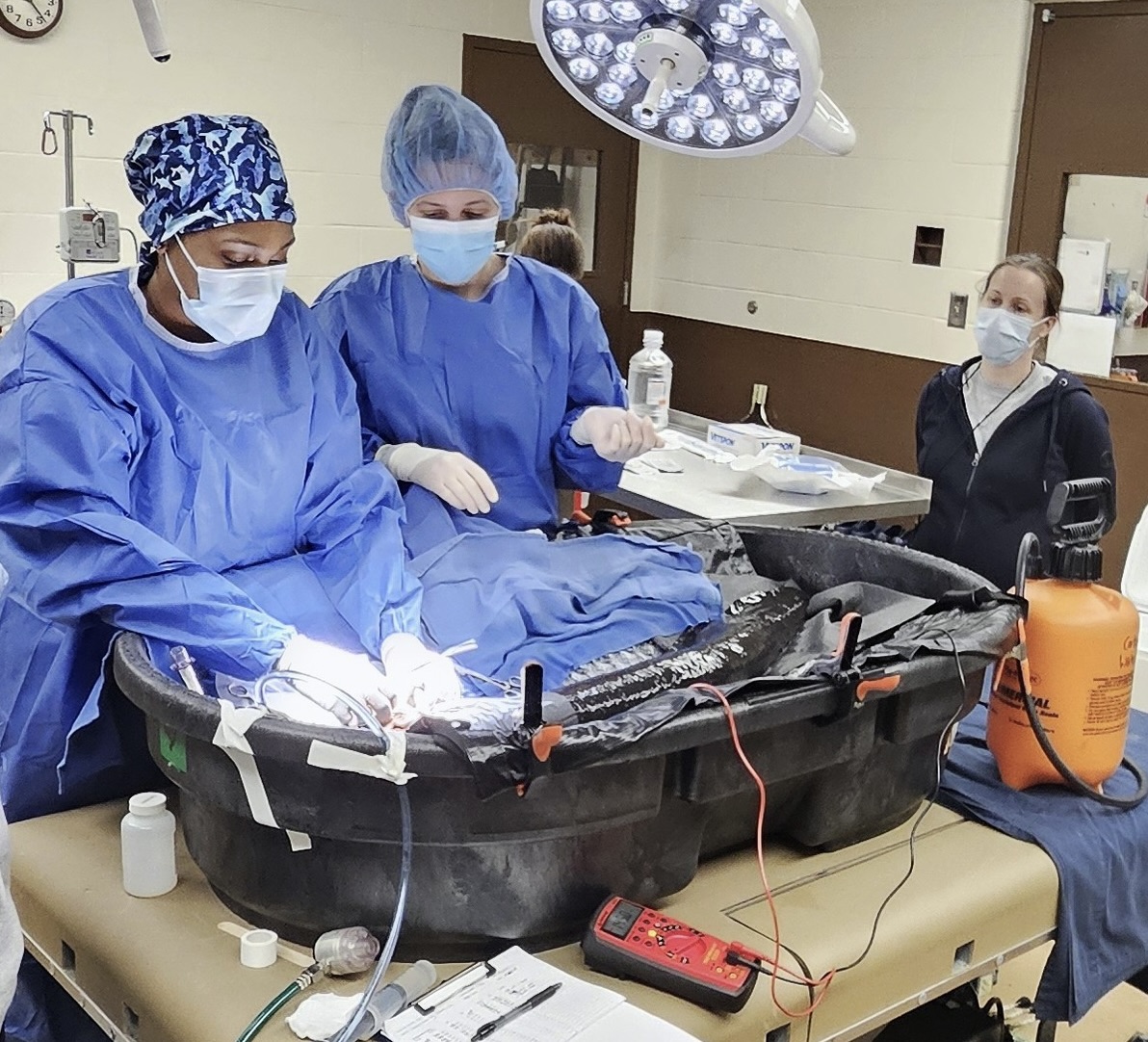
However, NZCBI also challenged me to go outside of my comfort zone. My favorite unexpected discovery was the Amazonia building, home to a diverse aquatic collection. I was both fascinated and intimidated by species like electric eels and sting rays that can be dangerous when handled. Under the guidance of veterinarians, technicians, and animal care specialists, I learned about the complexities of fish medicine. A fish procedure can be much more complex than one for a mammal because it requires careful control of the animal’s aquatic environment for both anesthesia and life support. This process requires multiple tubs of water and pump systems. From this experience, I became aware of how much (and how little) we know about fish medicine, and I was inspired to learn more on my own.
From Learning to Teaching
At the end of my time at NZCBI, I had the opportunity to present to the WHS team—a small token of my appreciation for everything I had learned. I chose to highlight an electric eel case I had followed from diagnostics to necropsy, discussing safe handling, anatomy, and neoplasia of Gymnotiformes (the family of fish that includes electric eels and other knifefish).
Beyond providing amazing clinical experiences, this preceptorship played a crucial role in my professional development. I refined my skills, built relationships within the field, and deepened my understanding of what is expected of specialized zoo veterinarians—including the importance of a strong resume, published research, extensive study, and a diverse case log. The experience was invaluable, complementing my veterinary education by reinforcing my passion for zoological medicine and providing clarity on how to advance my career within the field.
A Grateful Reflection
I am deeply grateful to the Cornell K. Lisa Yang Center for Wildlife Health Student Support Fund for supporting this opportunity, and to the veterinarians, pathologists, and technicians at the NZCBI who welcomed me with such generosity.
This journey has been a testament to the power of curiosity, dedication, and the doors that open when you follow a dream. Though there are more gates ahead, I look forward to stepping through each one with the same wonder and resolve that have carried me this far. After obtaining my Doctor of Veterinary Medicine degree and license, I am now completing a small animal rotating internship at NorthStar VETS in New Jersey to gain further experience in specialty medicine and surgery.
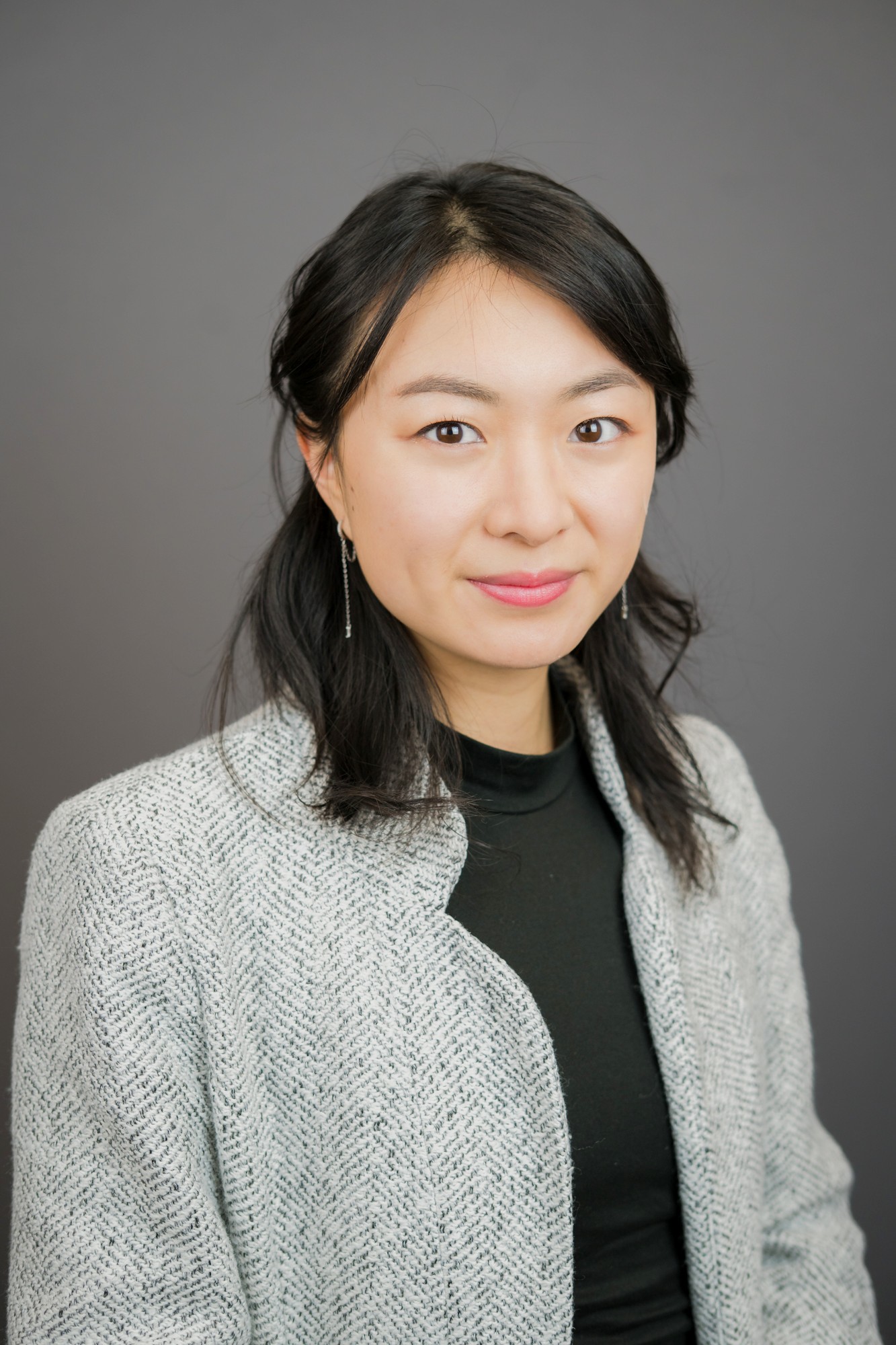
Christine Zhang, DVM ’25, is a recent graduate from Cornell University’s College of Veterinary Medicine. She is from Queens, New York. She previously studied biological sciences and Chinese language and literature at the George Washington University in Washington, D.C. Christine is passionate about zoological medicine as a bridge between wildlife conservation and public education, with a secondary interest in anesthesiology. She has previously worked with endangered rhinoceroses in Indonesia and stray dog colonies in Thailand, and hopes to integrate veterinary medicine with cultural competency in both domestic and international settings.
All photos provided by Christine Zhang.
Please consider giving to the Cornell Yang Center for Wildlife Health Student Support Fund to help provide more hands-on experiential learning opportunities for students passionate about wildlife health and conservation.