
Presenting, Collaborating, and Learning at the Wildlife Disease Association Conference
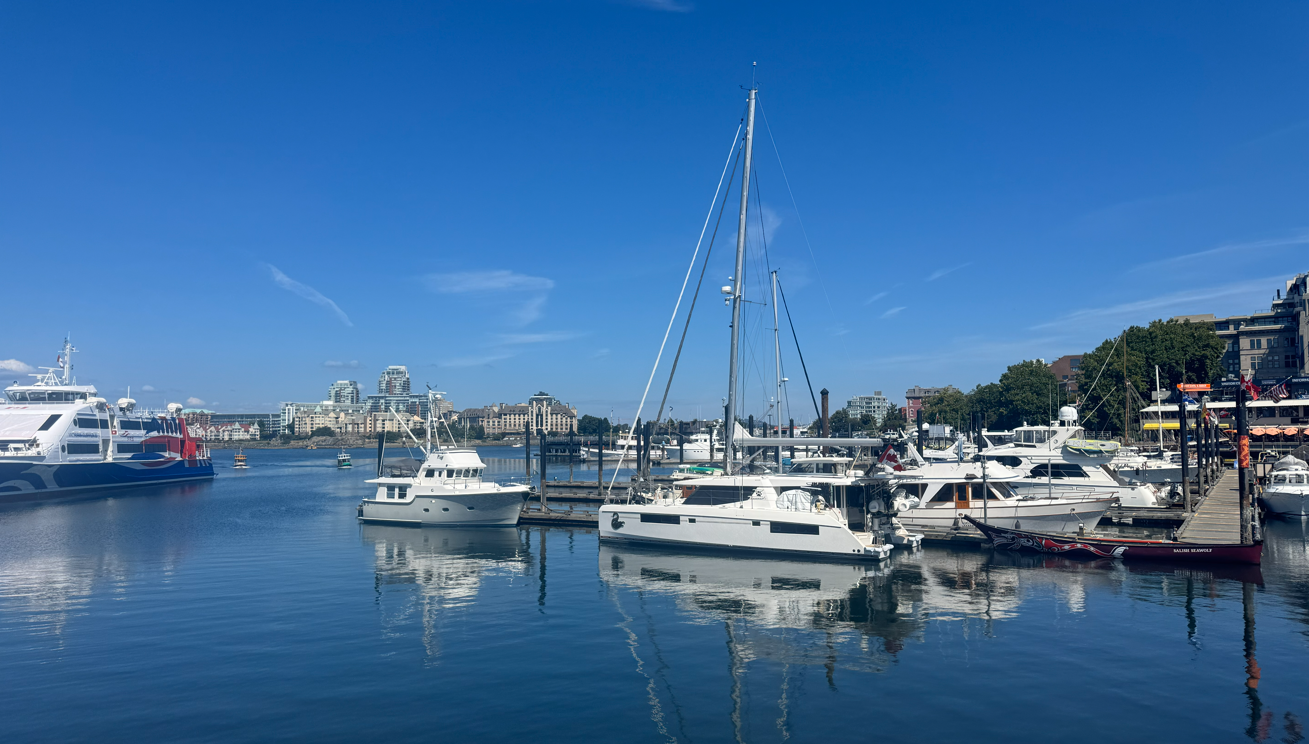
The phone rings. It’s a call about a crude oil spill off the coast of Port Angeles, Washington. There are 3,500 shorebirds suspected to be affected by the oil. Orcas have been spotted in the area, and the spill is close to where harbor seals are frequently seen lying on the beach. As a wildlife veterinarian responding to the call, what is your next step? How do you organize teams to capture and triage oiled birds? What kinds of facilities will you need to provide initial medical care, washing, and hospitalization while the birds recover? This was a fictional but realistic scenario I faced on my first day at the 2025 Wildlife Disease Association (WDA) Conference in Victoria, British Columbia, Canada.
The theme for this year’s WDA conference was “Communities, Collaboration and Communication for Change.” This scenario was part of an exercise during the “Oiled Wildlife Readiness and Response: Conservation, Command, Capture and Care” workshop, co-led by experts from Focus Wildlife and the Oiled Wildlife Care Network, a program of the Karen C. Drayer Wildlife Health Center at the University of California, Davis. This event taught me so much about the different types of oil that can damage marine ecosystems and the frequency of oil spills—most don’t make the news! In 2021, there were over 3,000 oil spills of varying magnitude in California alone.
Most importantly, I learned about the immense amount of communication required between governments, the company responsible for the spill, and the response groups that care for oiled wildlife and the environment. And if you’re wondering about the answer to my previous question about the types of facilities needed to tend to oiled wildlife, an airplane hangar is about the size you’ll be looking for to accommodate volunteers, hundreds of injured animals, triage and washing stations, and outdoor pools.
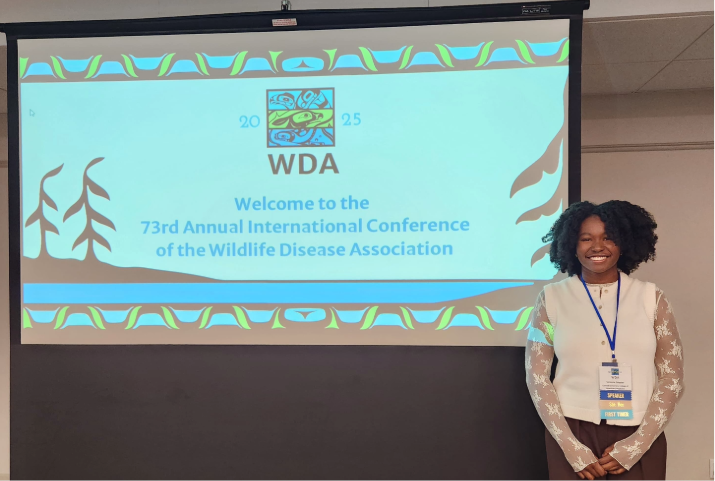
While attending the WDA conference, I also had the honor of representing the Jane Goodall Institute (JGI) to discuss their work collaborating with communities in the Kasongoire forest region of western Uganda. My presentation was part of a speaker session entitled “Collective Action and Collaboration.” I presented the methodology and findings from a 2024 project I participated in through the Engaged Cornell Program, where we conducted household interviews, tracked chimpanzees, and visited human hospitals to gather data for One Health disease surveillance. It was an incredible honor to present to an audience of wildlife veterinarians whose work I have long admired. Sharing JGI’s methodology for interviewing community members as a form of One Health surveillance, and hearing how other organizations have partnered with indigenous people for the benefit of wildlife, renewed my commitment to partnering with communities living near wildlife in my future career.
Besides delivering my first conference presentation, one of the best parts of my time at WDA was connecting with current Cornell faculty and alumni. I had so much fun getting to know other members of the Cornell K. Lisa Yang Center for Wildlife Health at dinners and social events, like the picnic at Hatley Castle. Alumni of the Cornell University College of Veterinary Medicine work in every corner of the U.S. and around the world on critical wildlife health issues, and as an aspiring wildlife veterinarian, the time spent talking to them, hearing about their journeys, and receiving advice was invaluable.
Meeting other wildlife veterinarians and conservationists also reminded me of the power of storytelling to spread awareness of conservation issues worldwide. Disease surveillance studies and traditional scientific publications are incredibly important for (for example) uncovering and describing new pathogens that threaten the health of wildlife and humans. However, a conservationist’s influence is only as strong as their ability to communicate with people outside their field. While I will continue to focus on developing strong clinical skills over the next few years, my conversations at WDA reignited my desire to be more creative as a conservationist. Short stories, novels, visual art, and film are all powerful ways to create the change I hope to see for the environment and the endangered species that live in it.
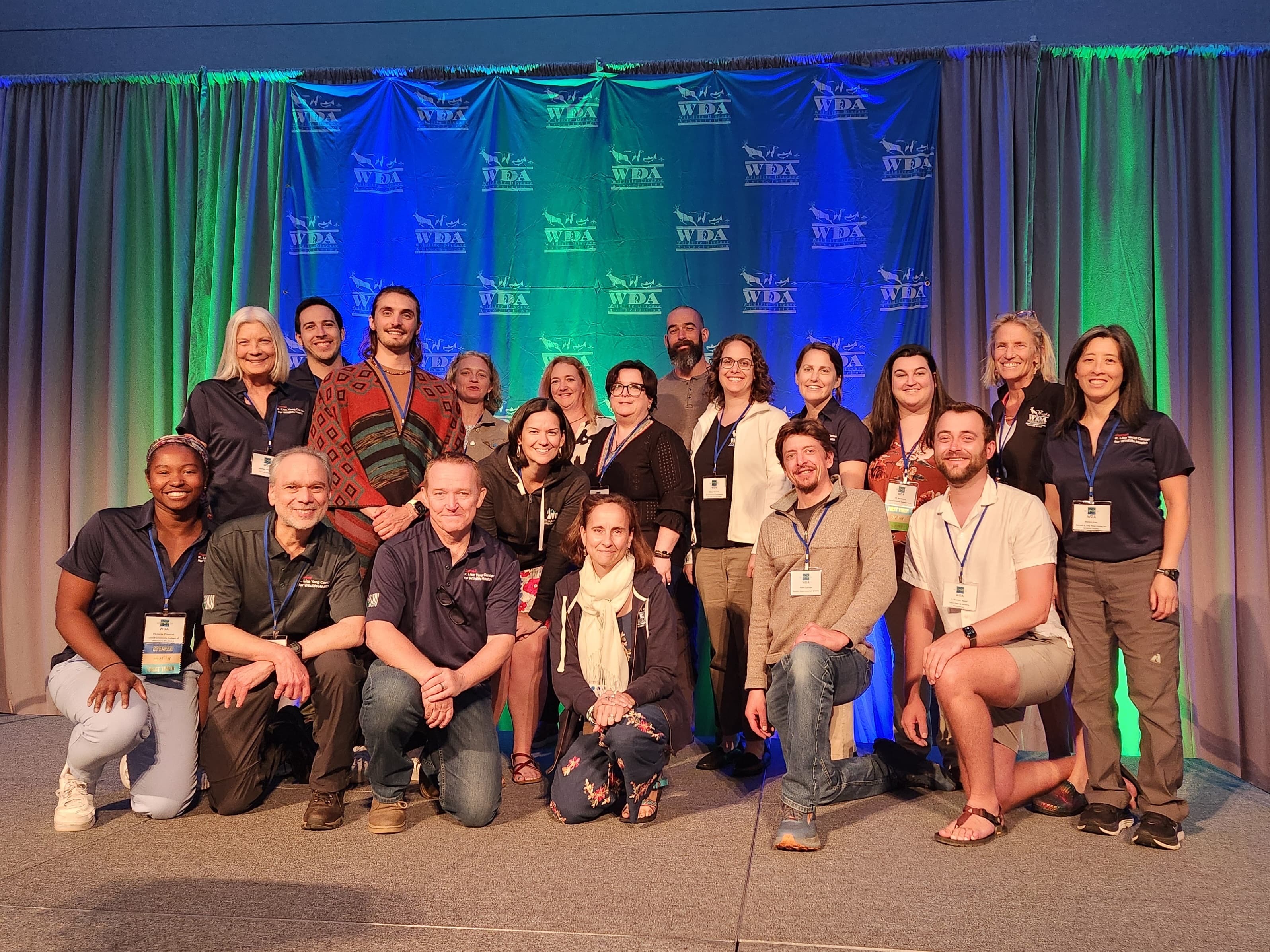
When I first registered for CVM associate professor Robin Radcliffe’s Conservation with Communities course in 2023, I never imagined that my subsequent summer experience working with communities and chimpanzee conservation in Uganda would lead to a presentation at an international conference. I am grateful to Dr. Radcliffe for sending me to Uganda the summer before my third year of veterinary school—not only was that experience a core part of my education during veterinary school, but the project that came out of it allowed me to meet other conservation-oriented professionals at this conference. This conference experience was made possible by funding from the Cornell K. Lisa Yang Center for Wildlife Health Student Support Fund, and specifically by Dr. Steve Osofsky, who encouraged me to submit an abstract to the WDA meeting. I am also grateful to the Jane Goodall Institute Uganda for entrusting me with presenting their ongoing One Health disease surveillance work in communities living near fragmented chimpanzee habitats.
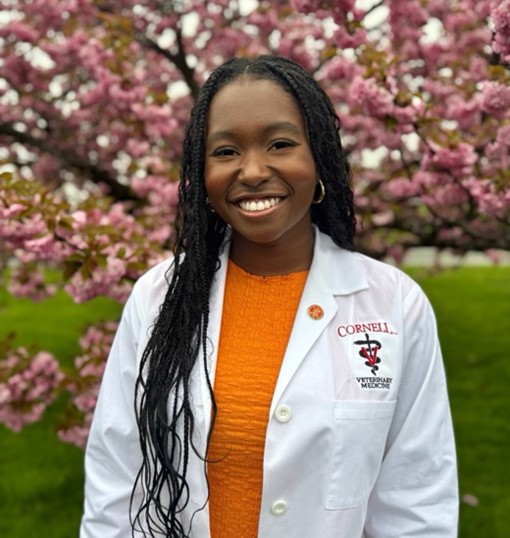
Victoria Priester is a veterinary student in the class of 2026. She hopes to work in free-ranging wildlife health and conservation.
Photos provided by Victoria Priester.
Please consider giving to the Cornell Yang Center for Wildlife Health Student Support Fund to help provide more hands-on experiential learning opportunities for students passionate about wildlife health and conservation.