
In the News
September 30, 2020
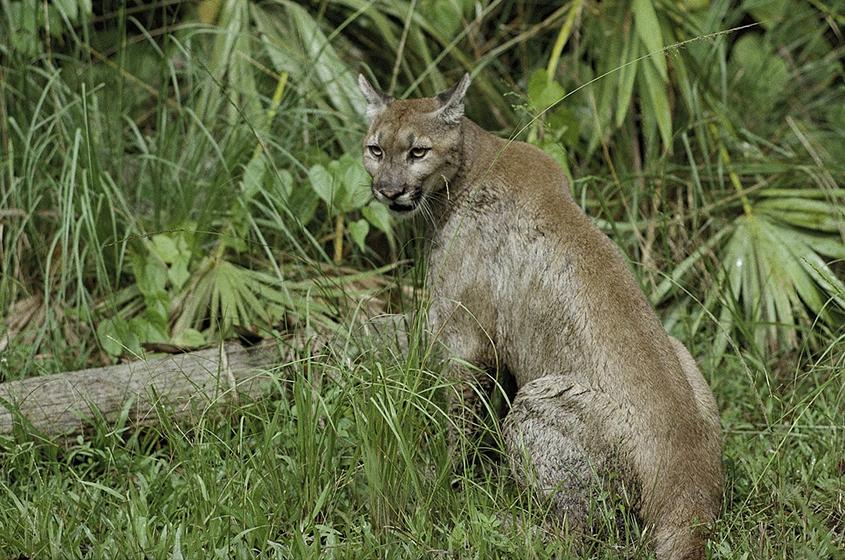
The slowdown in human activity during the COVID-19 pandemic, particularly travel, has created a unique opportunity for scientists to better understand human-wildlife interactions.
December 10, 2019
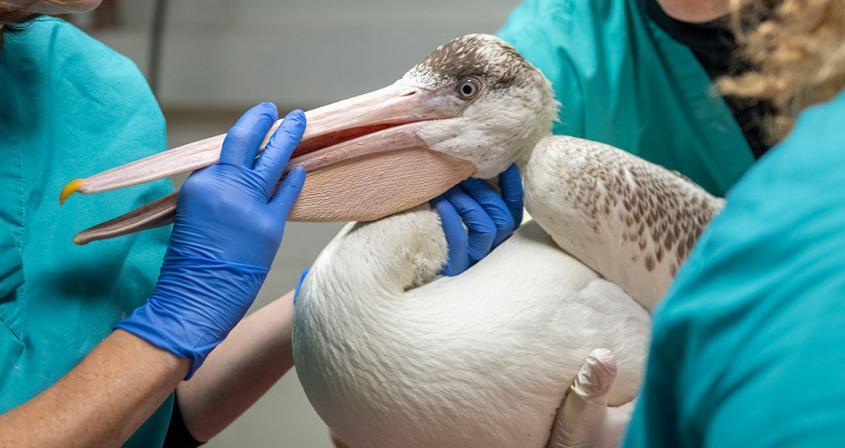
This juvenile American white pelican — which had only one working eye and was suffering from weakness and parasites — was brought to the Janet L. Swanson Wildlife Hospital, making history as the first of its species to be treated there.
For Your Information
December 10, 2019
The November/December 2019 issue of the Cornell Alumni Magazine features the heroic work of the Janet L. Swanson Wildlife Hospital.
October 10, 2019
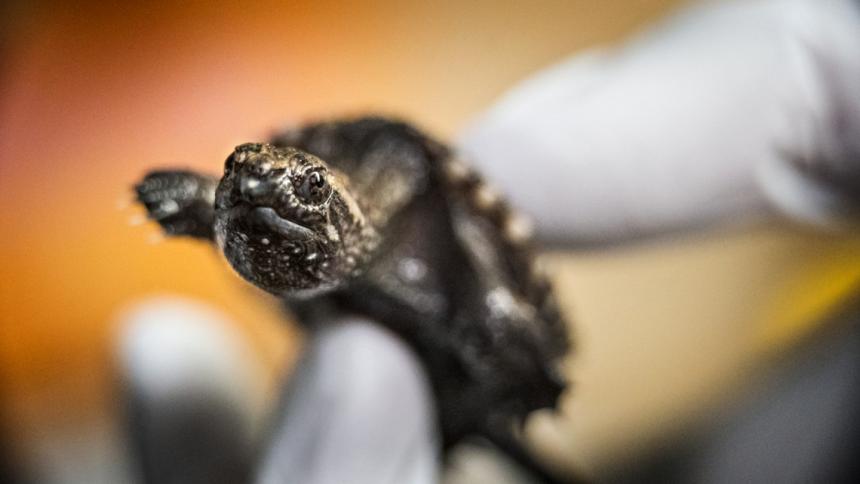
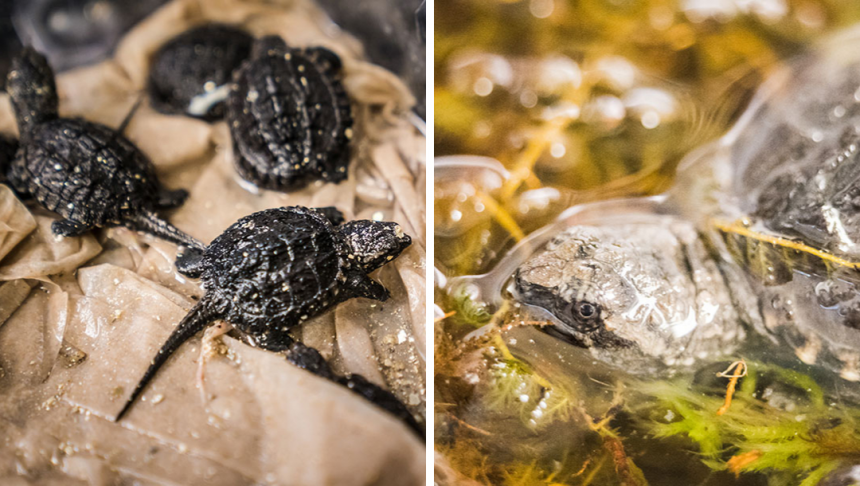
Between May and July of this year, the Swanson Wildlife Hospital rescued approximately 150 eggs from pregnant snapping and painted turtles that were hit by cars and too injured to survive and lay eggs on their own. Most of the successfully hatched turtles were released in September, and some will be cared for through the winter by Cornell veterinary students and volunteers.
Video
October 10, 2019
The Janet L. Swanson Wildlife Hospital at the Cornell University College of Veterinary Medicine rescued approximately 150 eggs from pregnant turtles that were hit by cars and too injured to survive and lay eggs on their own. Watch this video on how our experts rescued and subsequently released the hatchling turtles into their natural habitat.
Video
September 17, 2019
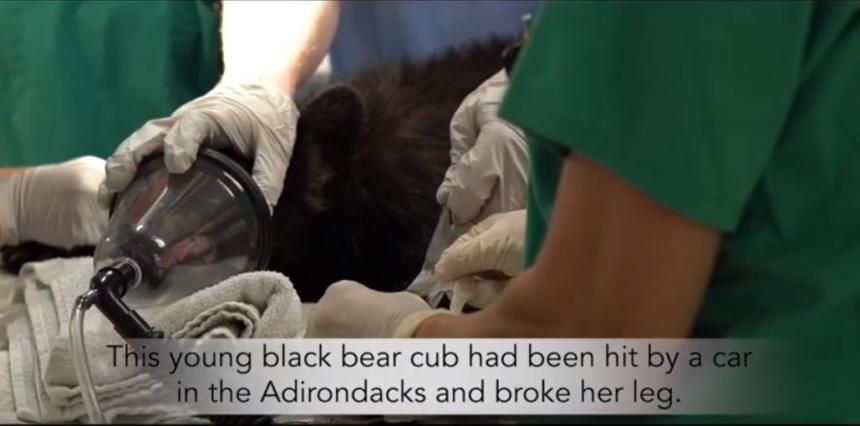
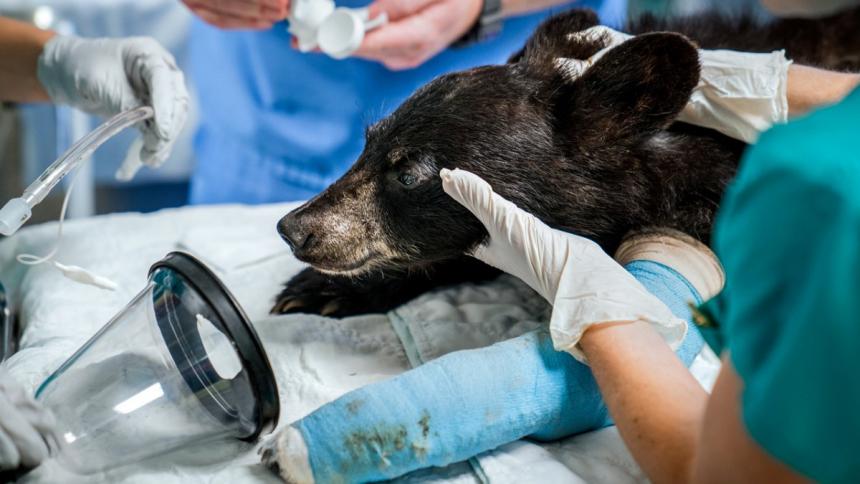
Watch this video of Swanson Wildlife Hospital veterinarians treating a black bear cub after she was hit by a car in the Adirondack Park. After spending time with a wildlife rehabilitator in Oswego County, the bear will be returned to the wild.
September 17, 2019
After being hit by a car in the Adirondack Park, a female black bear cub was brought to the Janet L. Swanson Wildlife Hospital where it received care to repair its broken left foreleg.
August 28, 2018
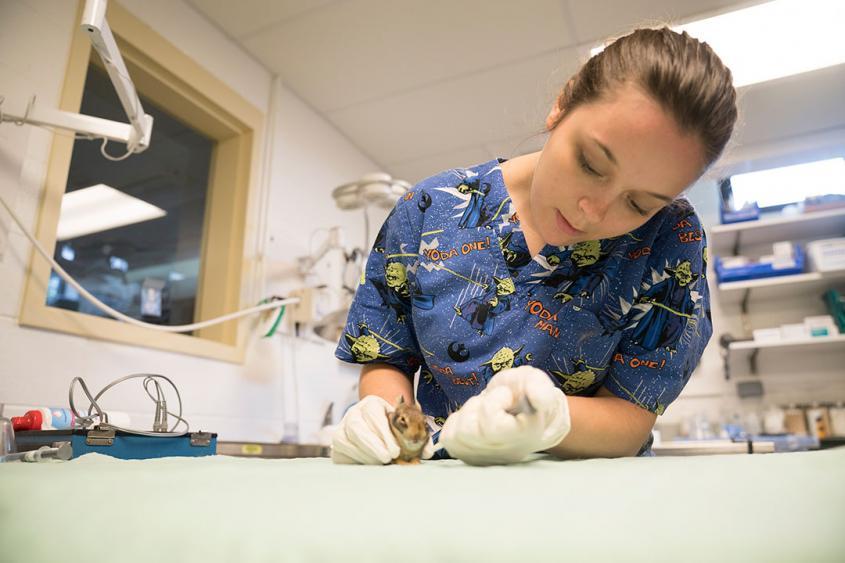
Cornell sets the bar for training vet techs in wildlife medicine. The Veterinary Technician Student Preceptorship in Wildlife Medicine is the first of its kind in the northeast U.S., and gives veterinary technicians-in-training concentrated wildlife-focused experience.
April 18, 2018
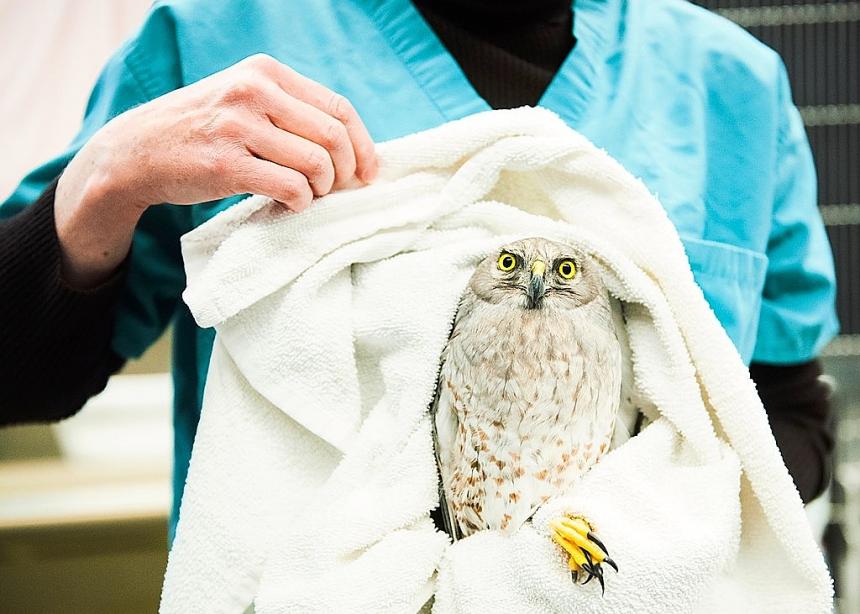
A northern harrier, also known as a marsh hawk, was successfully treated at Cornell's Janet L. Swanson Wildlife Hospital after having been poisoned by eating prey contaminated with man-made toxins. Watch this video to see the harrier being released back into the wild at Montezuma Wildlife Refuge.
January 26, 2018
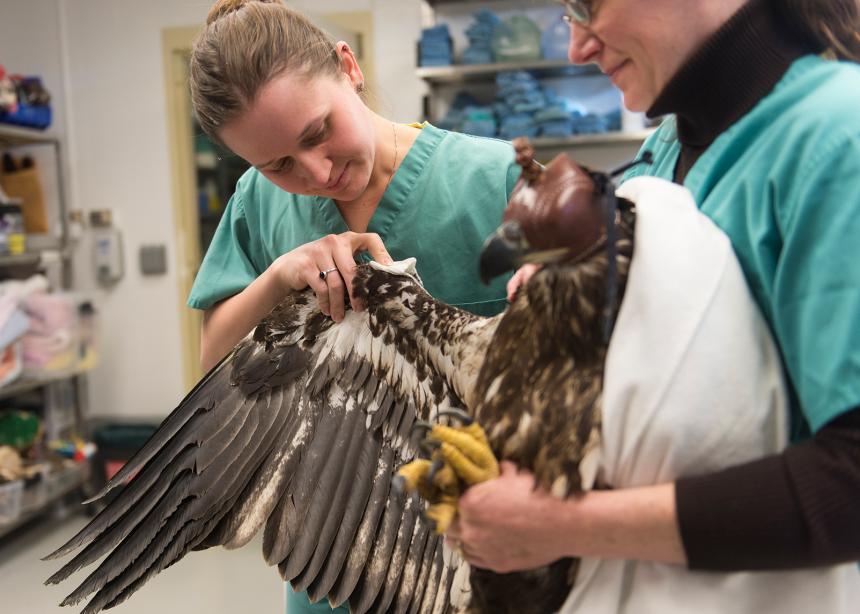
A bald eagle and northern harrier poisoned by lead and a rodenticide, respectively, are expected to make full recoveries after receiving treatment from Cornell veterinarians at the Swanson Wildlife Hospital.