
Postdoctoral Fellow to Build a Transcriptome-Informed Framework for Chronic Wasting Disease Surveillance
Chronic wasting disease (CWD), a fatal transmissible neurodegenerative disease of white-tailed deer and other cervids, continues to spread across North America. It threatens wildlife, impacts biodiversity, and requires wildlife agencies to invest heavily in surveillance, management, and public outreach. Caused by misfolded proteins known as prions, CWD progressively damages the animal’s brain and is always fatal.
Yet despite decades of research, one fundamental question remains: Why do some white-tailed deer become infected quickly while others living in the same environment remain disease-free?
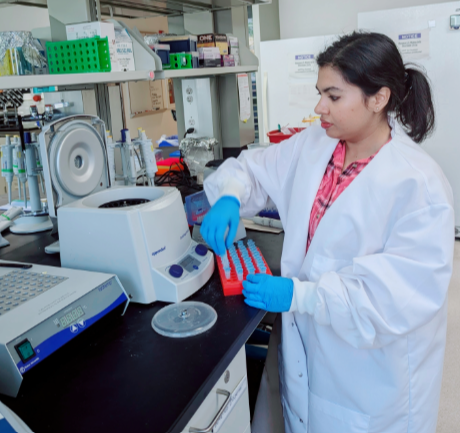
Wildlife geneticist Dr. Chandika Rani Ganesh Babu, a 2026 Cornell K. Lisa Yang Postdoctoral Fellow in Wildlife Health, believes the answer may lie within the animals’ genomes. Her research seeks to uncover the genetic and molecular mechanisms that influence susceptibility to CWD.
The prion protein gene (PRNP) plays an important role in determining susceptibility to CWD. Although variants of PRNP have been found to influence susceptibility and disease progression in white-tailed deer populations, they explain only part of what scientists have observed in wild populations. Findings indicate that additional genes and the ways they are regulated shape disease susceptibility.
Wildlife agencies use surveillance models that incorporate ecological, management, and other factors to monitor CWD, such as deer density, harvest pressure, habitat characteristics, and human activity. The Surveillance Optimization Project for CWD (SOP4CWD), started by the Cornell Wildlife Health Lab, brings together wildlife agencies, application developers, and modelers to share data and develop tools that can help identify high-risk areas and help determine where to sample animals and how to allocate limited resources. However, the current models largely overlook one important factor: an understanding of genetic susceptibility.
“Although demographic and ecological variables provide strong foundations for surveillance, the absence of host genetic information constitutes a critical gap,” said Rani Ganesh Babu.
“Focusing on the transcriptome provides a powerful avenue for discovery.”
To close this gap, she will undertake a unique approach: a transcriptome-wide association study (TWAS). This approach examines how inherited DNA variants affect gene activity in different tissues of the animal. Unlike traditional genome-wide association studies (GWAS), TWAS helps identify underlying regulatory mechanisms that influence disease susceptibility. “My project represents the first effort to apply a transcriptome-wide association study framework to a wildlife disease system,” said Rani Ganesh Babu. “Focusing on the transcriptome provides a powerful avenue for discovery.”
Scientists have used TWAS to improve understanding of complex human diseases, such as cancer and Alzheimer’s disease. In livestock, TWAS has identified genes underlying reproductive success and milk production. Rani Ganesh Babu believes extending this framework to CWD will help uncover the regulatory mechanisms that cannot be detected in a genome study. “Regulatory elements may influence protein folding, cellular transport, or clearance pathways that mitigate prion accumulation and disease onset. Capturing this regulatory landscape requires moving beyond GWAS to approaches that integrate gene expression with genetic variation,” she explained.
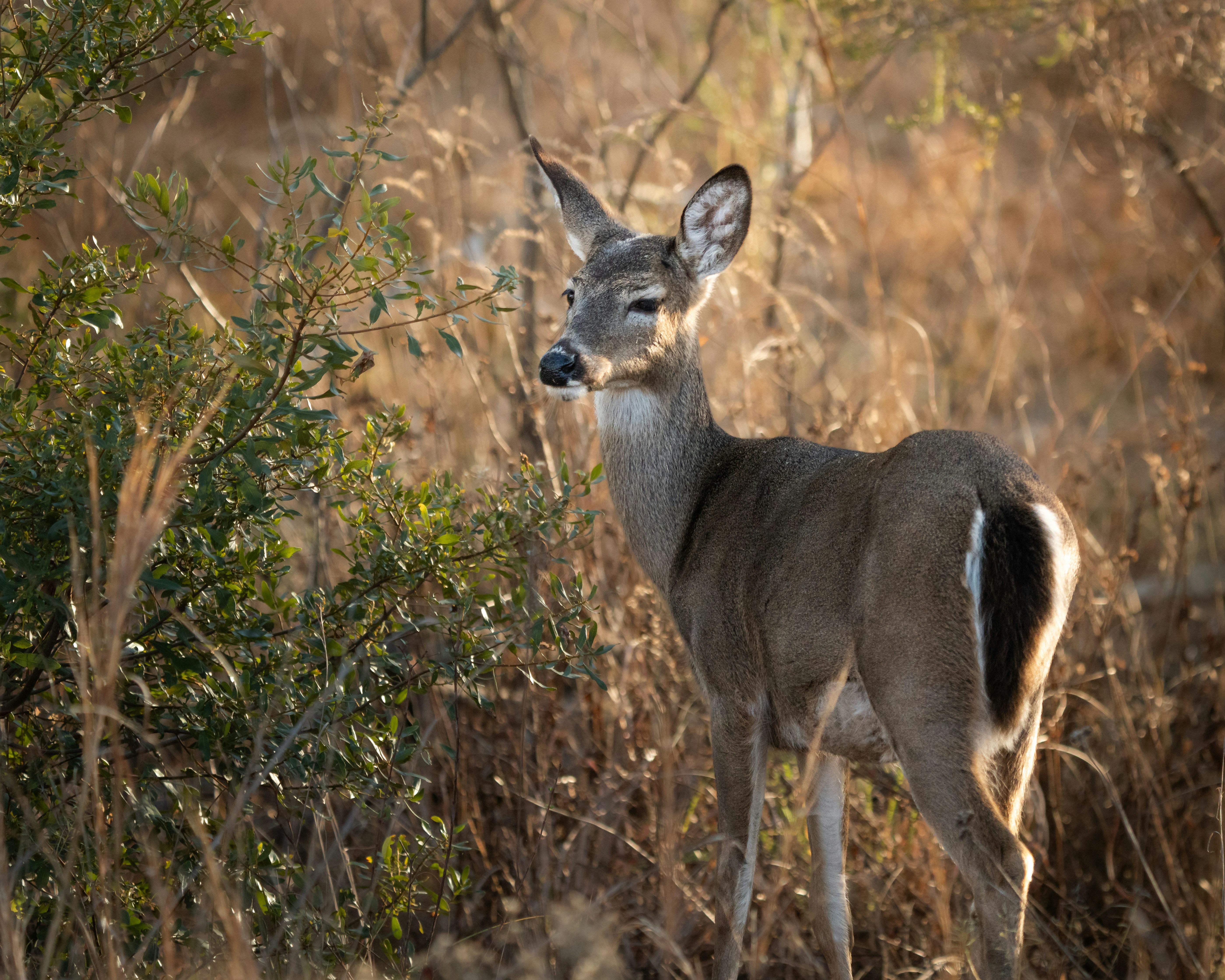
Rani Ganesh Babu will evaluate tissue samples from healthy and infected white-tailed deer in regions where CWD is endemic. She will analyze both DNA and RNA from tissues where prions are first encountered and accumulate in an animal (the nasal mucosa, salivary glands, intestinal epithelium, gut-associated lymphoid tissue, tonsils, and obex) to identify molecular pathways associated with susceptibility.
Then, using predictive computational frameworks and machine learning, Rani Ganesh Babu will explore potential connections between inherited genetic variation and patterns of gene expression to identify regulatory networks that may help explain why some animals resist infection while others do not. Insights into host genetics will be integrated into the SOP4CWD, complementing existing models to improve surveillance and management by helping to estimate the proportion of at-risk individuals within family groups and broader populations.
“Following the identification of CWD-associated genes, we will construct omics-informed risk scores by aggregating these genetic signals across loci,” Rani Ganesh Babu explained. “Once validated, these population-level genomic risk maps will be integrated into existing surveillance frameworks to refine surveillance intensity, prioritize high-risk herds, and support early response to outbreaks.”
Rani Ganesh Babu brings extensive expertise in applying genomic techniques to wildlife conservation and management of various species. She has studied how habitat affects gene flow in endangered Nilgiri tahr, evaluated the genetic background of captive and wild red pandas, and analyzed the geographic and genetic history of rhesus macaques. Most recently, her doctoral work focused on white-tailed deer, on delineating genetic markers of disease while developing tools to help wildlife agencies better manage white-tail populations and CWD.
For her postdoctoral project, Rani Ganesh Babu will work under the mentorship of Dr. Krysten Schuler, an associate research professor at Cornell’s College of Veterinary Medicine and director of the Cornell Wildlife Health Lab, alongside Nick Pinizzotto, president and CEO of the National Deer Association. Under their guidance, Rani Ganesh Babu will access sampling data, integrate her findings into SOP4CWD, and develop outreach workshops and educational materials for hunters, wildlife managers, and policymakers.
“Chandika’s work is incredibly timely as state legislatures are considering solutions to CWD.”
“Chandika’s work is incredibly timely as state legislatures are considering solutions to CWD,” said Schuler. “We will help policymakers understand how disease processes work and if genomic-based approaches can be used in free-ranging species.”
Looking ahead, Rani Ganesh Babu hopes her study and the TWAS approach can contribute to a broader paradigm shift. “Prion diseases pose risks to wildlife health and ecosystem resilience, and my framework can be extended beyond white-tailed deer to other cervids,” Rani Ganesh Babu said. “In the long term, I hope my research will support other initiatives embedding genomic and multi-omics data into adaptive wildlife management, conservation policy, and cross-jurisdictional collaboration.”
Written by Caroline Stamm ‘24