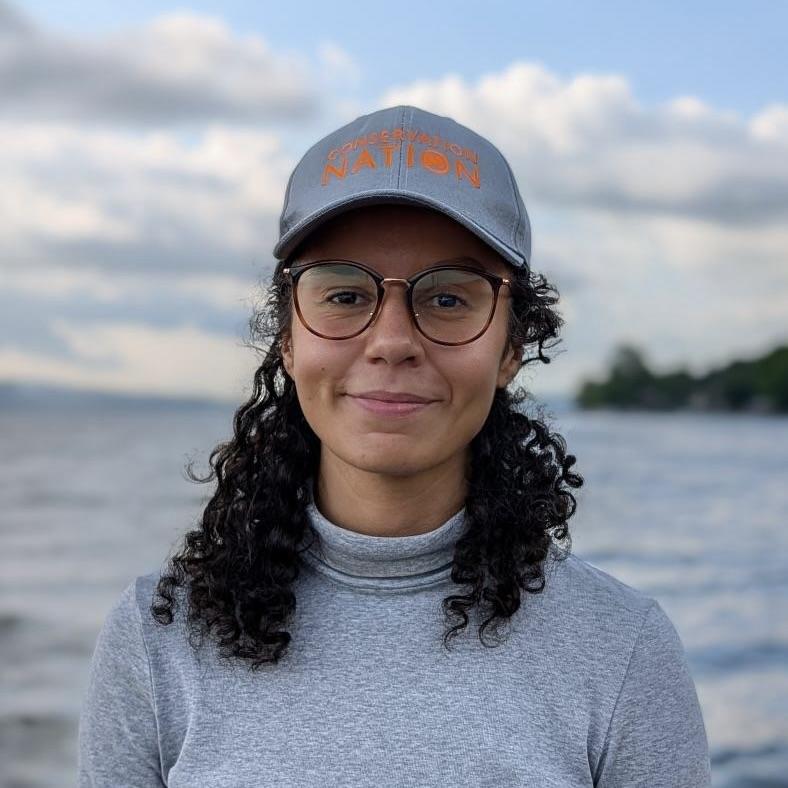
Rachel Davis
PhD Fellow
As the inaugural Cornell K. Lisa Yang Center for Wildlife Health PhD Fellow, Rachel Davis is determined to safeguard threatened and endangered wildlife by integrating conservation genomics, population genetics, and infectious disease surveillance within a collaborative, One Health framework.
Rachel earned her MS in Biology from the College of William & Mary under the supervision of Dr. John Swaddle, where she studied the impacts of chronic methylmercury exposure on developing avian telomeres. She later expanded this research at the National Institutes of Health (NIH) as a postbaccalaureate fellow in the Vaccine Research Center’s Genome Analysis Core. Working within this high-throughput sequencing facility during the COVID-19 pandemic was eye-opening, and provided firsthand training in advanced molecular tools that could be adapted for wildlife conservation.
Rachel’s previous research involved several pre-professional appointments, including as a Fulbright Student Research Award grantee for work in Norway in 2022 to study Greenland shark haplotype diversity using deepwater environmental DNA (eDNA), as well as an Okinawa Institute of Science & Technology (OIST) research intern in Japan, where she trained in genome assembly using long-read sequencing technology. Beyond her research, Rachel has also designed and led hands-on workshops for students around the world, connecting local citizen science to the global challenge of microplastic pollution. Through these youth-focused programs, students screened beach sand using filtration systems designed by the nonprofit Sea Turtles Forever.
At Cornell, Rachel will complete her dissertation under the primary mentorship of Dr. Laura Goodman at the College of Veterinary Medicine’s Baker Institute for Animal Health. As a CYCWH PhD Fellow, Rachel will continue to bridge the deployment of cutting-edge genomic and bioinformatic tools with adaptive conservation management planning, supporting international, on-the-ground partners, such as those carrying out captive-rearing and genomic monitoring of the critically endangered spoon-billed sandpiper.