
K. Lisa Yang Wildlife Health Fellow to Evaluate Wild Bee Recovery After Neonicotinoid Restrictions
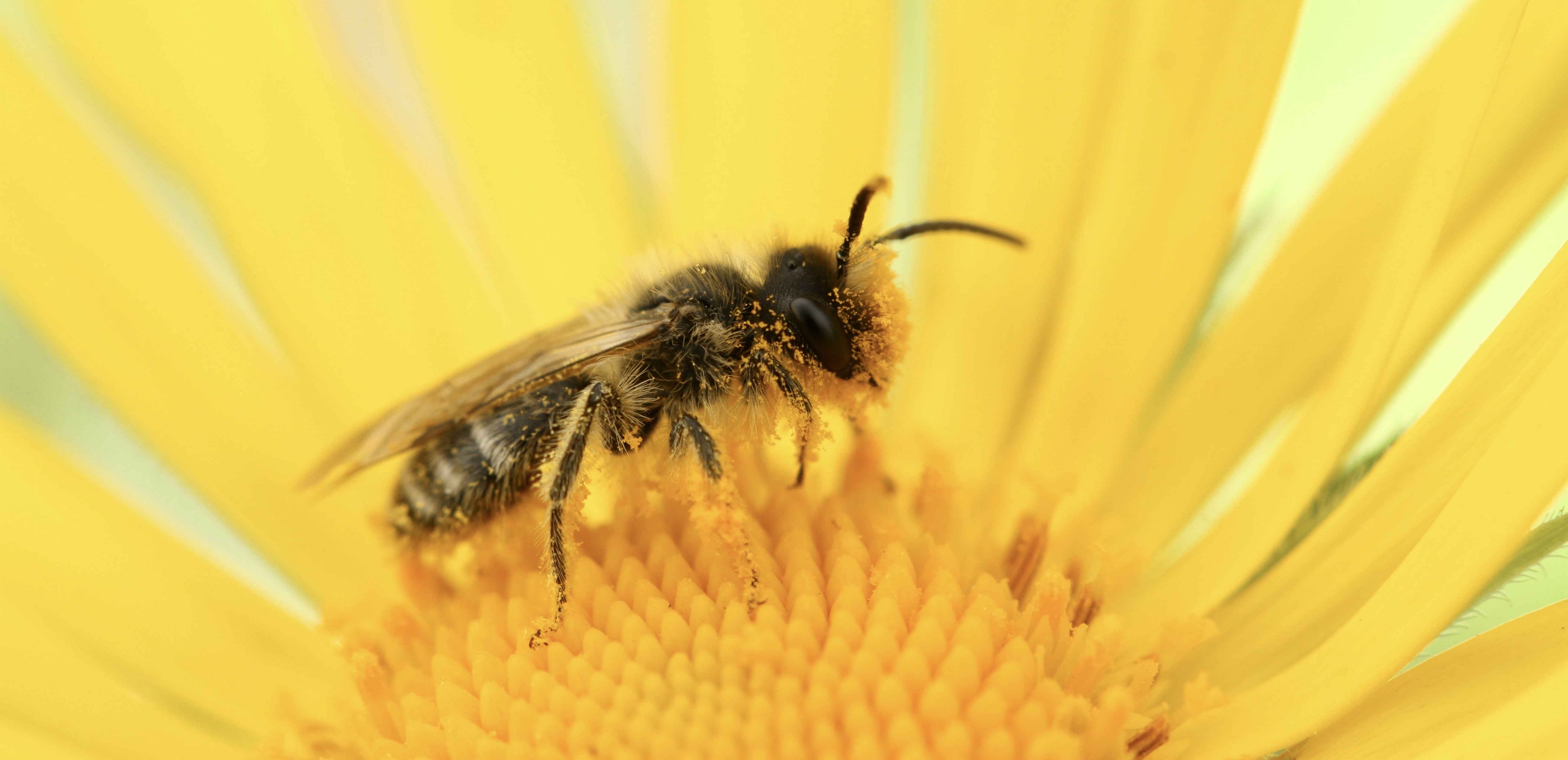
The ongoing decline of bee species and other pollinators threatens global food security and agriculture. Insect pollination generates an estimated $275 billion in economic value worldwide each year and supports 70% of human food crop species. Yet wild bees and managed honeybees have experienced severe population drops in recent decades. While multiple environmental stresses contribute to these declines, researchers point to widespread use of neonicotinoid insecticides as one of the leading drivers.
Commonly used as coatings on corn and soybean seeds or applied to residential lawns and gardens, neonicotinoids are absorbed throughout a plant’s tissues, including its pollen, and can spread to nearby wild plants. As bees forage, they are exposed to the chemicals, which can reduce their ability to reproduce, impact their metabolism, and make them more vulnerable to disease and parasites. At higher levels, the pesticides can be lethal.
In response, governments have begun restricting neonicotinoid use. The European Union and Ontario, Canada, have banned neonicotinoid seed coatings, while several U.S. states have limited noncommercial use. New York and Vermont are scheduled to implement seed coating bans beginning in 2029.
But important questions remain: Have these pesticide regulations actually helped bee populations recover? Or do they prompt farmers to switch to alternative pesticides that may be just as harmful?
A new research initiative aims to address these critical questions. Led by Dr. Wendy Leuenberger, a quantitative ecologist and K. Lisa Yang Postdoctoral Fellow in Wildlife Health, the project aims to evaluate whether state and regional neonicotinoid regulations are successfully reversing pollinator declines.
“Despite the increasing awareness of the role of neonicotinoid insecticides on insect declines in the United States, and the rallying towards limiting the use of these compounds, there has been no systematic evaluation of the effect of these restrictions on improving biodiversity,” Leuenberger said. “My research will evaluate whether neonicotinoid regulations are impacting wild bee communities in the United States.”
Assessing the effects of these pesticide policies is challenging because data about neonicotinoid seed treatment use are not available. Treated seeds, considered “pesticide-treated articles,” are not tracked through the same federal data programs as field-applied pesticides. The private industry group that previously tracked seed treatments until 2014 no longer does so because logistical challenges limited its ability to identify compounds applied with a given seed treatment. As a result, no publicly available datasets provide sufficient data on neonicotinoid use over time. “Due to the lack of data, the effect of neonicotinoid regulations must be modeled without access to information about the quantity of pesticides being applied,” Leuenberger said.
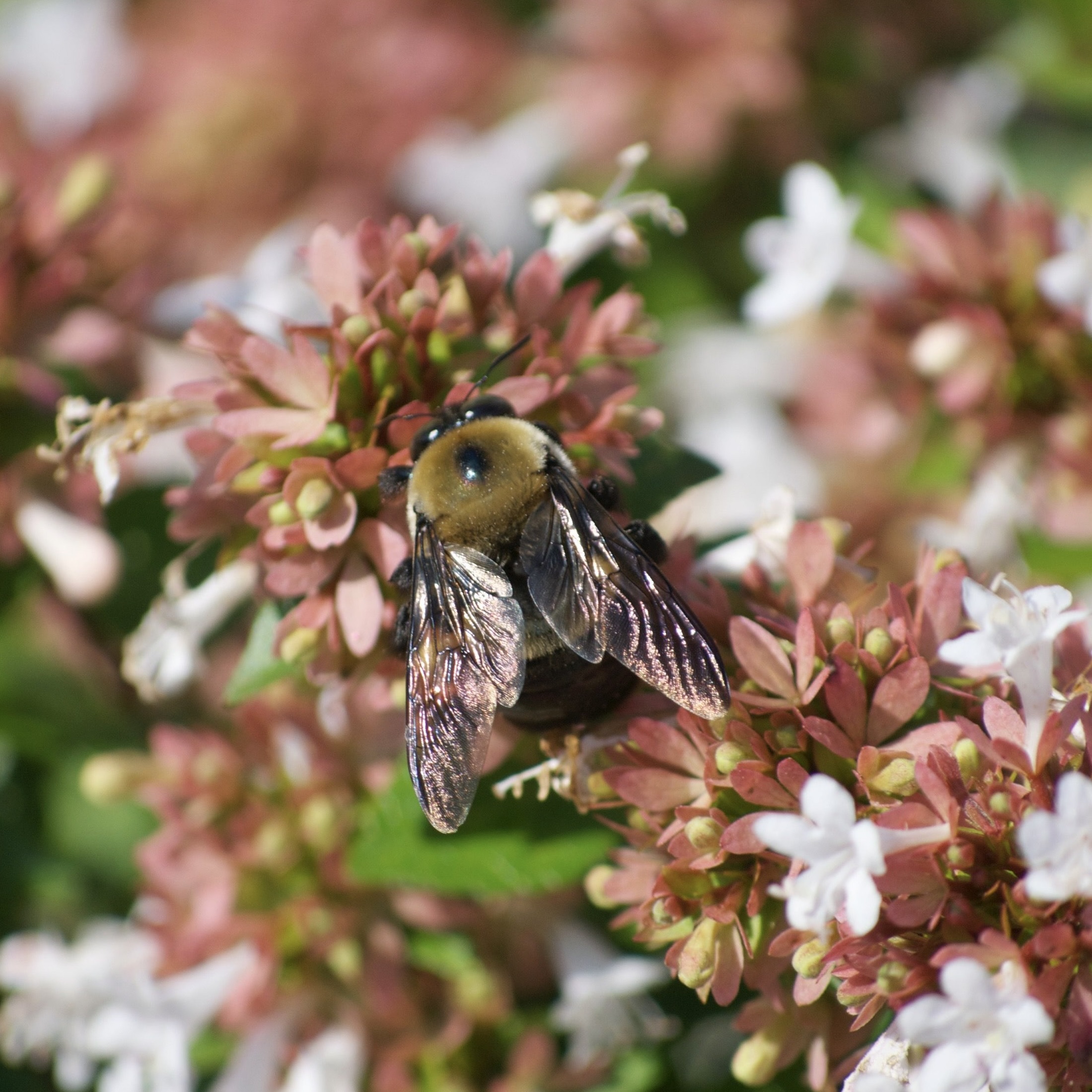
To overcome the data availability challenge, the project relies on two complementary approaches to evaluate the impact of neonicotinoid policies. One method, synthetic controls, builds a model of a comparison group of similar, unregulated areas to reveal what would have happened to bee populations if the rules had never been passed. A second tool, structural causal modeling, filters out factors such as shifting weather patterns or changing land use to pinpoint the direct effects of the laws.
Together, these approaches isolate true cause-and-effect to measure the impact of neonicotinoid regulations. Leuenberger’s innovative research will also bring together millions of bee observations from community science programs and biodiversity databases, including iNaturalist, the Global Biodiversity Information Facility, and the Bumble Bee Atlas. The unified dataset will provide an accurate picture of where different bee species occur and how bee communities are changing over time. This will allow Leuenberger to evaluate responses among bee species and groups of bee species with different ecological niches. Ground-nesting bees, for example, may be especially vulnerable because pesticides accumulate in the soil.
The project aims to achieve two objectives. First, Leuenberger will examine U.S. states where regulations target residential lawns and gardens. Although these states are not major grain producers, noncommercial products can contain much higher concentrations of neonicotinoids than agricultural applications, leaving residues that can exceed levels known to harm bees.
"We need to support and implement evidence-based conservation policies that benefit biodiversity, preserve native pollinators, and protect pollinator-dependent crop yields."
Second, Leuenberger will analyze bee population trends following Ontario's seed coating ban to help forecast how bee communities may respond when New York and Vermont implement similar policies in 2029. While Leuenberger hypothesizes that restrictions on noncommercial uses will increase bee populations, seed coating bans are more complex. Without neonicotinoids, growers may switch to alternative insecticides, such as pyrethroids or diamides, to prevent pest damage and crop loss. In some cases, these alternatives could be equally or even more toxic to bees.
With deep experience tracking species declines and guiding conservation policy, Leuenberger is well positioned to lead this project. She specializes in using advanced statistical modeling and large participatory science datasets. In a landmark 2025 study published in Proceedings of the National Academy of Sciences, Leuenberger integrated 90,000 hours of volunteer survey data across 32 years, revealing that none of the 136 Midwestern butterfly species studied increased in population and implicating insecticide use in the widespread decline.
Mentored by Dr. Laura Melissa Guzman of Cornell University's Entomological Data Science Lab and Dr. Alejandro Calixto, director of Cornell University’s Integrated Pest Management Program, both part of Cornell University’s College of Agriculture and Life Sciences, Leuenberger hopes the research will provide practical guidance for both policymakers and farmers.
“Wendy’s proposed work will be critical to improving outcomes for insects in North America due to the implications for pesticide policies,” said Guzman. “Demonstrating whether these policies have the intended effects for biodiversity will be crucial to keeping science-based advocacy to protect pollinators on the right track.”
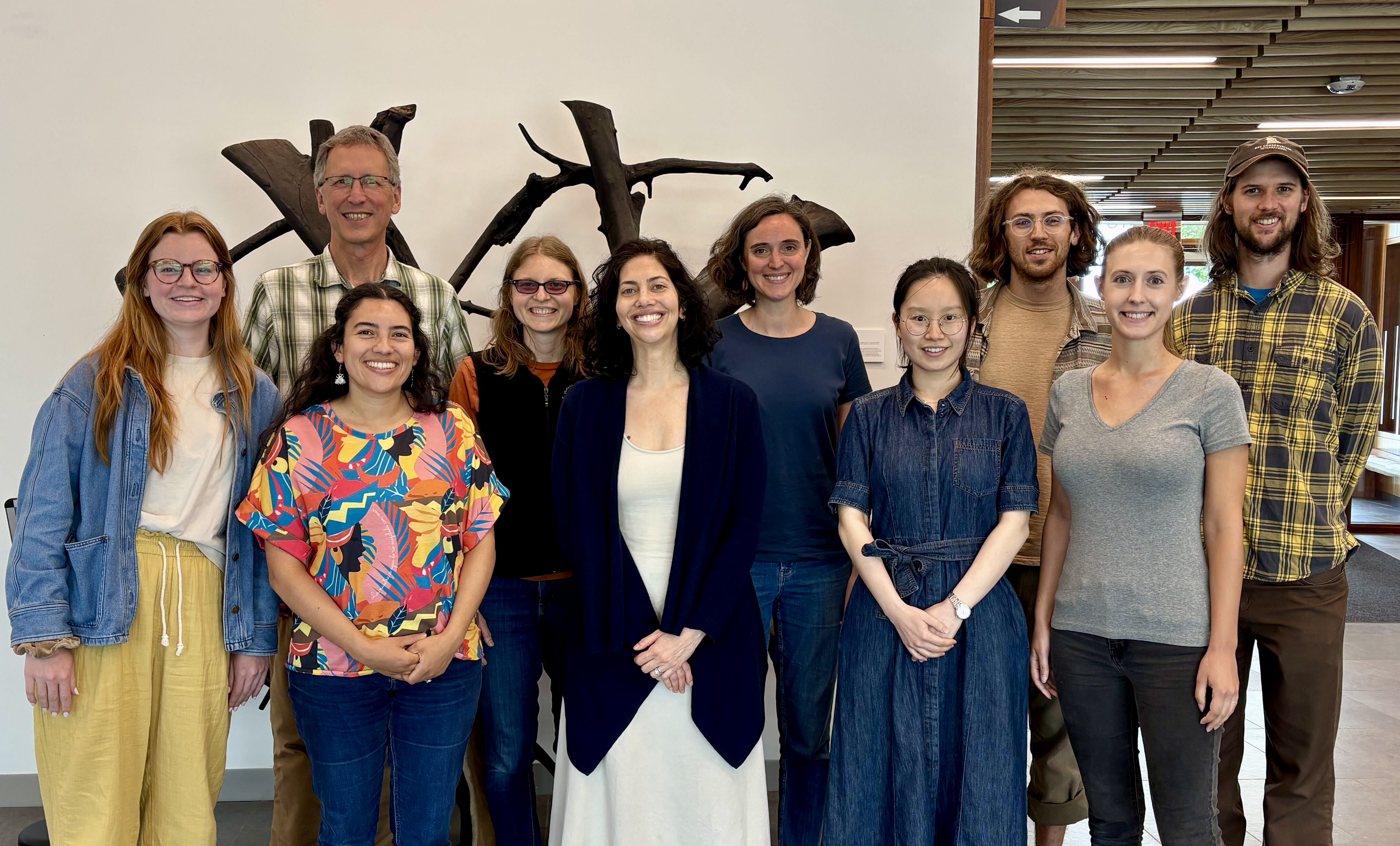
To ensure this research advances agricultural policies that will benefit both farmers and biodiversity, Leuenberger has also established a multidisciplinary Neonicotinoid Working Group that brings together scientists, conservation organizations, government agencies, policymakers, and agricultural stakeholders. The team will develop policy recommendations for states considering new regulations, such as Illinois and California; identify strategies to help farmers transition away from neonicotinoid seed treatments; support policy campaigns with environmental advocacy groups; and coordinate research on how pesticide regulations affect other pollinators and wildlife, including birds and butterflies.
“Given widespread declines of wild bees and the potential loss of pollination services, policies to conserve bee biodiversity and protect the future of food security are of utmost importance,” Leuenberger said. “It is necessary to verify that regulations help bee communities and to adjust recommendations as needed. We need to support and implement evidence-based conservation policies that benefit biodiversity, preserve native pollinators, and protect pollinator-dependent crop yields. My research will fill a critical gap while engaging with stakeholders who support, promote, and implement these types of policies.”
Written by Caroline Stamm ’24